
A Sikh havaldar leads Indian cyclist troops near Mametz, Somme, July 1916. Colorised by Royston Leonard.

British bicycle troops in India, 1920s ...



 The stamp issued in portugal to commemorate 450th anniversary of founding of portuguese Bacaim (Vasai)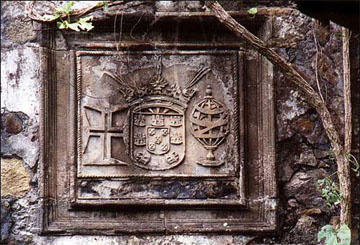


Vasai past and present
Today’s Vasai-Virar area has rapidly changed and starting in the 1980′s, the change is brought about by a large influx of people due to availability of more affordable housing than in Mumbai (Bombay). History of Vasai dates back to Puranic ages. The present day name of Vasai originates from Sanskrit, Sanskrit word “waas” meaning dwelling or residence. The name was changed to Basai by Muslims who occupied Vasai before the Portuguese. The Portuguese named it Baçaim. The Marathas renamed it Bajipur. The British named it Bassein and today it is called Vasai. The most significant past in Vasai’s history is the rein of the Portuguese, since they largely influenced or changed to what Vasai-Virar area is today. Historically, the entire region has attracted traders and merchants from Rome, Greece and Middle East. In 1295 AD the famous Marco Polo visited Thana/Vasai area.
The Bassein region ruled by Portuguese in not just Bassein but included areas far away as Bombay, Thane, Kalyan and Chaul (Revdanda) It is located about 50 Kilometers North of Bombay, on the Arabian Sea, at approximately (19°20′N – 72°49′E). Bassein, was important trading center, it’s sources of wealth and trade were horses, fish, salt, timber, stone quarry (basalt and granite) and shipbuilding. It was a significant trading center long before the Portuguese arrived. (Ancient Sopara was a important port in trade with the Arabs and Greeks, Romans and Persians.). It was also a wealthy agricultural region with rice, betel nut, cotton, and sugar-cane as some of the crops.
The Portuguese with their naval power and their crusading valor were unquestioned masters of the Indian Ocean. When the Portuguese arrived, Bassein was under the rule of Bahadur Shah, the Sultan of Gujarat.
In 1530 Antonio de Sylveria burnt the city of Bassein and continued the burning and looting to nearby Bombay, when the King of Thana surrendered islands of Mahim and Bombay. Subsequently, the towns of Thana, Bandora (Bandra Photo), Mahim (Mahim-Mumbai fort photo) and Mombaim (Bombay) were brought under Portuguese control. In 1531, Antonio de Saldahna while returning from Gujarat to Goa, set fire to Bassein again – to punish Bahadur Shah of Gujrat for not ceding Diu. In 1533 Diogo (Heytor) de Sylveira, burnt the entire sea coast from Bandora, Thana, city of Bassein and areas up to Surat. Diogo de Sylveira returned to Goa with 4000 slaves and spoils of pillaging.
For the Portuguese, Diu was an important island to protect their trade, which they had to capture. While devising the means to capture Diu, Portuguese General Nuno da Cunha, found out that the governor of Diu was Malik Ayaz whose son Malik Tokan was fortifying Bassein with 14,000 men. Nano da Cunha saw this fortification as a threat. He assembled a fleet of 150 ships with 4000 men and sailed to Bassein. Upon seeing such a formidable naval power, Malik Tokan made overtures of peace to Nano da Cunha. The peace overtures were rejected. Malik Tokan had no option but to fight the Portuguese. The Portuguese landed north of the Bassein and invaded the fortification. Even though the Portuguese were numerically insignificant, they fought with skill and valor killing off most of the enemy soldiers but lost only a handful of their own.
On 23 December 1534, the Sultan of Gujarat, signed a treaty with the Portuguese and ceded Bassein with its dependencies of Salsette, Mombaim (Bombay), Parel, Vadala, Siao (Sion), Vorli (Worli) (Worli fort photo), Mazagao (Mazgao), Thana, Bandra, Mahim, Caranja (Uran). In 1536, Nuno da Cunha appointed his brother-in-law Garcia de Sá as the first Captain/Governor of Bassein. The first corner stone for the Fort was laid by Antonio Galvao. In 1548 the Governorship of Bassein was passed on to Jorge Cabral.

In the second half of 16th century the Portuguese built a new fortress enclosing a whole town with in the fort walls. The fort included 10 bastions, of these nine were named as: Cavallerio, Nossa Senhora dos Remedios, Reis Magos Santiago, São Gonçalo, Madre de Deos, São Joaõ, Elefante, Saõ Pedro, Saõ Paulo and São Sebastião, São Sebastião was also called “Potra Pia” or pious door of Bassein. It was through this bastion that the Marathas would enter to defeat the Portuguese. There were two medieval gateways, one on seaside called Porta do Mar with massive teak gates cased with iron spikes and the other one called Porta da Terra.

There were ninety pieces of artillery, 27 of which were made of bronze and seventy mortars, 7 of these mortars were made of bronze. The port was defended by 21 gun boats each carrying 16 to 18 guns. This fort stands till today with the outer shell and ruins of churches. In 1548, St. Francisco Xavier stopped in Bassein, and a portion of the Bassein population was converted to Christianity. In Salsette island, the Portuguese built 9 churches: Nirmal (1557), Remedi (1557), Sandor (1566), Agashi (1568), Nandakhal (1573), Papdi (1574), Pali (1595), Manickpur (1606), Merces (1606). All these beautiful churches are still used by the Christian community of Vasai. In1573 alone 1600 people were baptized.

This seal in the fort indicates the nature of Portuguese mission in the territories they held. The cross indicates spread of Christianity, crown for expansion of territory under their control and the globe for worldwide commerce and trade. As Bassein prospered under the Portuguese, it came to be known as “a Corte do Norte” or “Court of the North”, it became a resort to “fidalgos” or noblemen and richest merchants of Portuguese India.
Bassein became so famous that a great Portuguese man would be called “Fidalgo ou Cavalheiro de Baçaim” or Nobleman of Bassein. The dwellings of the Hidalgos, or aristocracy, who alone were allowed to live within the city walls, are described (I675) as stately buildings, two stories high, graced with covered balconies and large windows.
Bassein during the Portuguese period was known for the refinement and wealth and splendor of it’s buildings, palaces and for the beauty of it’s churches. This Northern Province, included a territory which extended as far as 100 kilometres along the coast, between Damao (Daman) and Mombaim (Bombay), and in some places extended for 30-50 kilometres inland. It was the most productive Indian area under Portuguese rule.


From 1611, Bassein and the whole region under the Portuguese had a mint or “Casa da Moeda”. These old coins were found occasionally during digs and were locally called “Firgi paisa”.
In 1618 Bassein suffered from a succession of disasters. First it was struck by a disease then on May 15, the city was struck by a deadly hurricane/cyclone. It caused considerable damage to the boats, houses and thousands of the coconut trees were uprooted and flattened. The winds pushed sea water into the city. The monasteries and convents of the Franciscans and Augustinians were ruined. The roofs on three largest churches in the city and both the house and the church of the Jesuits were ripped off and ruined almost beyond repair. This storm was followed by so complete a failure of rains which resulted in near famine conditions. In a few months the situation grew so precarious that parents were openly selling their children to Muslim brokers into slavery rather than to starve them to death. The practice was stopped by the Jesuits, partly by saving from their own scanty allowances partly by gifts from the rich.
In 1634, Bassein numbered a population of 400 Portuguese families, 200 Christian Indians families and 1800 slaves (possibly from it’s African colonies). In 1674, Bassein had 2 colleges, 4 convents and 6 churches.
At the end of 17th century Bassein reached the height of the prosperity. In 1675, Dr. Fryer who came to treat the daughter of the Captain of Bassein, João Mendes, reports that the Captaincy of Bassein was rotated between certain descendants of the conquerors of Bassein. Towards the end of the seventeenth century Bassein suffered severe outbreak of the plague, so deadly that in 1695 one-third of the population died.
In 1719, the province of Bassein numbered about 60,000 inhabitants, of these were 2,000 Portuguese and 58,000 Christian Indians.
As the Portuguese power waned towards the end of the seventeenth century Bassein suffered considerably. In 1674, 600 Arab pirates from Muscat landed at Bassein. The fort garrison panicked and was too scared to oppose the pirates outside the fort walls. The pirates plundered all the churches outside of the fort walls and spared no violence and cruelty towards people of Bassein.
In 1674, More Pundit stationed himself in Kalyan, and forced the Portuguese to pay him one-fourth of the Bassein revenues. Two years later Shivaji advanced near Saivan.
The importance of Bassein was reduced by transfer of neighboring Bombay island to the British in 1665 (It was a wedding dowry from Catherine Braganza of Portugal to Charles the Second of England). The British had coveted and eyed Bombay for many years before it came into their possession under the terms of the marriage treaty. They had ventured to seize it by force in 1626 and had urged the Directors of the East India Company to purchase it in 1652.
The Portuguese in India were however opposed to the cession of Bombay. They retained their hold upon the northern portion of the island, declaring that it was private property but after show of force by the British, Portuguese finally relinquished island of Bombay.
The intolerance of the Portuguese to other religions seriously hindered the growth of Bassein or Bombay as a prosperous settlement. Their colonization efforts were not successful because they had gradually divided the lands into estates or fiefs, which were granted as rewards to deserving individuals or to religious orders on a system known as “aforamento“ whereby the grantees were bound to furnish military aid to the king of Portugal or where military service was not deemed necessary, to pay a certain rent.
The efficiency of the Portuguese administration was weakened by frequent transfers of officers, and by the practice of allowing the great nobles to remain at court and administer their provinces. They soon became a corrupt and luxurious society based upon slave labor. The cruelties of the Inquisition (from 1560) alienated the native population and the union of Portugal with Spain (1580) deprived the Indian settlements of care of the home government. The Portuguese trade monopoly with Europe could henceforth last only so long as no European rival came upon the scene.
By 1736 the Portuguese had been at work for 4 years constructing the fortress of Thana, and aside from the long delays, the workers were unpaid and unfed. The people were tired of the oppression, finally invited the Marathas to take possession of the island of Salsette, preferring their rule to the oppression of the Portuguese. These were some of the factors that weakened Bassein and set stage for attack by Marathas.
In 1720, one of the ports of Bassein, Kalyan, was conquered by the Marathas and in 1737, they took possession of Thane including all the forts in Salsette island and the forts of Parsica, Trangipara, Saibana (Present – Saivan, south bank of the Tansa river), Ilha das Vaccas – (Island of Arnala), Manora (Manor), Sabajo (Sambayo/Shabaz (near Belapur) – present day Belapur fort photo) the hills of Santa Cruz and Santa Maria.
The only places in the Northern Provinces that now remained with the Portuguese were Chaul (Revdanda), Caranja, Bandra, Versova, Bassein, Mahim, Quelme (Kelve Photo1) -(Kelve/Mahim), Sirgão (Present day Shirgao – Photo), Dahanu Sao Gens (Sanjan), Asserim (Asheri/Asherigad Photo1), Tarapor (Tarapur) and Daman.
In November 1738, Marathas led by Chimaji Appa, captured the fort of Dahanu and on 20 January 1739, Mahim capitulated, the loss of Mahim, was speedily followed by the capture of the forts of Quelme -(Kelve/Mahim), Sirgão (present Shirgao), Tarapor (Present day Tarapur – Photo), and Asserim (Asheri/Asherigad Photo2) on 13 February 1739.

On 28 March 1739 Portuguese lost the island and the fortress of Caranja. The Marathas first attacked lha das Vaccas – (Island of Arnala) (Arnala Photo 1) before attacking the fort of Bassein.
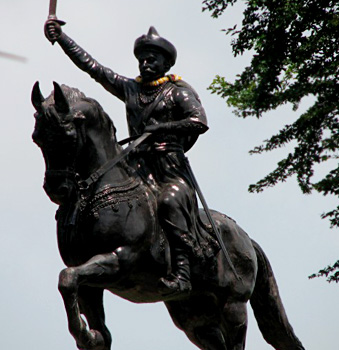
This was the prelude to final loss of the city. In February 1739, Chimaji Appa, the Maratha ruler Bajirao Peshwa’s younger brother, attacked Bassein. He first occupied the Versova, Dharavi and blockaded Bassein Creek. The Portuguese sought help from the British in Bombay but they instead sent ammunition and three of their gunners to assist the Marathas. The Marathas were encouraged when they managed to kill the brave Portuguese commandant, Sylveria de Menezes. They then laid 12 mines, two of which exploded causing a breach in the fort wall. When they mounted an assault on the fort, a third mine exploded killing hundreds of Maratha warriors. The Portuguese kept up their defenses by throwing hand grenades and throwing huge stones from mortars, causing havoc among the Marathas. The Marathas finally exploded more mines in the breached wall causing the tower of St. Sebastian to collapse. The Marathas secured a position in the fort from where the Portuguese could not longer defend the fort. The Marathas casualty was about 12,000 killed or wounded while the Portuguese casualty was about 800 killed or wounded, among those killed on the Portuguese side were General Martinho da Sylveira, General Pedro de Mello and Lt.-Colonel João Malhão. After a desperate resistance on 16 May 1739 the Portuguese signed surrender. The treaty of surrender stipulated that all the garrison would be allowed to march out of town with full honors of war. Those who wanted to leave had 8 days to take all their movable property and move out. The Portuguese lost eight cities, four chief ports, twenty fortress, two fortified hills, the island of Salsette with the city and the fortress of Thana, Ilha das Vaccas – (Island of Arnala), the island of Caranja, and 340 villages. On 19th May 1739, Captain Caetano de Souza Pereira capitulated and handed over the Court of Bassein. They left Bassein on 23 May 1739.
The churches and almost all the buildings from fortress were destroyed and looted by the Marathas. The church bells were paraded, carried off on elephant backs as victory souvenirs. One church bell was carried to and located at Naroshankar Temple on the banks of Godavari river in Nasik, Panchavati area. Another church bell is located at Bhimashankar Temple is located in the village of Bhorgiri, near Khed. Third church bell is located at Meneswar temple in Menavali, near Panchgani. The Maratha ruler Madhavrao Peshwa offered free land grants to Hindus who would settle in Bassein and imposed a tax system to encourage purification/conversion of Christians back into Hinduism.


After 205 years of uninterrupted Portuguese rule, Bassein was progressively neglected, and the neighboring English Bombay assumed importance in trade and commerce.
The English and the Marathas tried not to clash with each other, however when the British heard of Portuguese expedition was being prepared for the recovery of Salsette and Bassein, the British Bombay Government seized that island in 1774. The British tried to negotiate the surrender of the fort but when negotiations failed, a British force was dispatched to take it by force. On December 28, 1774, the fort was stormed, and the greater part of the fort garrison was killed.
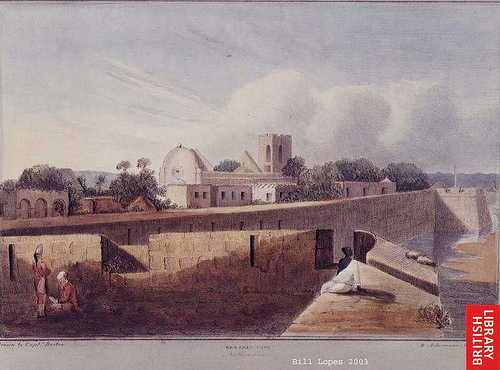
When Narayan Rao became the fifth Peshwa in 1772, the atmosphere changed. He was killed by his uncle Raghunath Rao, which resulted in a conflict between the Marathas. Raghunath Rao asked the English for help, and they agreed and concluded the Treaty of Surat on March 7, 1775. This ended the neutral relationship between England and India. The English provided 2,500 men. On January 9 1779, they met the Maratha army and were defeated. This completely shattered the prestige of the British army. To retrieve this prestige, the Governor-General, Warren Hastings, decided to send a strong force under the command of Colonel Goddard. Goddard took possession of Ahmedabad on February 15 of 1780 and captured Bassein on December 11, 1780 after 12 days of seige. (Pencil drawing of Vasai/Bassein/Baçaim fort after capture by the British)
In 1801 in Poona, Jaswant Rao Holkar rose in rebellion with a huge army and defeated the combined armies of Daulat Rao Sindhia and Peshwa Baji Rao II and captured the city of Poona. Peshwa Baji Rao took refuge in Bassein. The defeated Baji Rao had no hesitation in accepting the Subsidiary Alliance with the British and signed the Treaty of Bassein with East India Company on December 31, 1802. Bassein was renamed to Bajipura or Bajipur. This was restoration to the original name and not to be confused with the fact that Peshwa Baji Rao had taken up residence in Bassein.

The provisions of the treaty provided an English force of 6,000 to be permanently stationed with the Peshwa. In turn and for the maintenance of the army, districts yielding twenty six lakh rupees were given to the East India Company. The treaty restricted Peshwa from entering into any treaty or declare war without consulting the East India Company. The Peshwa also renounced his claim over Surat.
On May 13, 1803 Baji Rao II was restored as Peshwa under the protection of the British. The treaty of Bassein eventually led to expansion and influence of the East India Company over the Indian subcontinent.
In 1860 the Great Indian Peninsular (GIP) (present Central Railway) and the Bombay, Baroda and Central India Railway (BB&CI) (present Western Railway) were started and a regular service of steamers on the west coast was commenced in 1869. These included railway stations of Naigaon, Bassein, Nalasopara and Virar. The Bassein creek was connected by a steel bridge called Cooley Bridge (Bhyander Bridge) (Vasai Fort as seen from Bhyander Bridge in 1850 – Photo). In 1927 the first electric locomotives manufactured by Metropolitan Vickers of England were put into service up to Poona and Igatpuri on the GIP railway and later electric multiple rake commuter trains ran up to Virar on the BB&CI railway.
Stamps issued in Portugal to commemorate 450th anniversary of founding of Portuguese Baçaim (Vasai) and Portuguese Mombaim (Bombay/Mumbai)


This post is also available in:  Português
This post is also available in: Português

