Friday, May 31, 2013

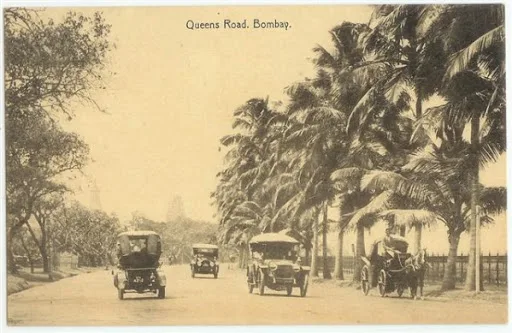
FARE WELL to Fiat taxi fleet ; other taxis of Bombay1700 ONWARDS


An august farewell for iconic Bombay cab

A

An august farewell for iconic Bombay cab


Double whammy for Fiat cabs- maximum age of taxis reduced from 25 years to 20 and deadline for scrapping ageing taxis brought forward by five years to July 31

The Fiat taxis - as much a sign of Mumbai's history as its decaying infrastructure - are set to go off the city's roads by August this year.

A government resolution (GR) issued on Tuesday has reduced the maximum number of years a taxi can run on Mumbai roads from 25 years to 20. Since a large part of the city's 10,000-odd Fiat taxi fleet - also called Premier Padminis -- falls in this age bracket and the GR mandates that they be taken out of service before July 31, the days of the dove-tailed yellow-tops are numbered.

The GR, however, has angered taxi unions as it, in just one stroke, shaves off five years from the earlier deadline - 2018 -- for getting rid of ageing taxis.

The same GR has also fixed the maximum age of autos at 16, which means 8,000 of these three-wheelers could be headed for the scrap yard or Mumbai's fringe towns where vigilance is lax.

Transport Commissioner V N More said the move is aimed at bringing in a younger fleet of cabs for commuters. "We completed the due process of sending the relevant papers to the chief minister's office on May 24.

The government acted promptly and issued the GR," he said.

Mumbai Taximen's Union chief A L Quadros, however, described the new GR as "needless pressure" on taximen, who are anyway struggling to cope with commuters' preference for newer, more modern taxis. "Why should the government do this when 1600 Premier Padmini taxis were voluntarily scrapped between January and May this year," he asked.

According to RTO records, the Premier Padmini is based on the long-obsolete Italian Fiat 1100D model that has been relegated to the history books in Italy.

Production of the 900 kg Padmini began in 1964 under a Fiat license, and only in 1973 were the vehicles, being built on the Premier Automobiles Limited production lines at Kurla, given the name Padmini.

While the production of Padminis -- named after a 14th century Rajput princess -- was scaled down drastically, it was stopped only in 2008.

"Many cabbies have replaced their cars with newer models despite some of them having been purchased as late as 2005-06. Hence, the number of Padminis taxis in Mumbai today is only around 10,000," he said.

More said with the Hakim Committee recommendations for fare hike came the demand for better taxis. "Since the Hakim Committee plan for fare hike has been implemented, it would have been unfair to wait till 2018 for taxis' upgrade," he added.

The hike implemented in October last year had raised fares by up to 40 per cent and it only aggravated commuters' anger over rickety, smelly Padmini taxis. "This is a good move by the government. None of these taxis are in good shape and they give a poor impression of the city. Many do not even have cabin lights," Nitin Dossa of the Western India Automobile Association said.

While Quadros does not have figures of how many Padmini taxis will remain on Mumbai roads beyond the July 31 deadline, he reckons there will be very few left. "That really will be sad because these taxis were solid, durable, and required little maintenance unlike the lighter, modern cars of today," he said
.

 
=================================================


Taxi Driver 1954 


OLD CHURCH GATE STATION 1940


The Apollo Bunder, Bombay
BEFORE GATE WAY OF INDIA WAS MADE:- THE PLACE WAS OCCUPIED BY 'VICTORIA'S

Bombay 100 Years Ago


 Old Bollywood & Indian Films : The Best Archives for Old Cars-img_3726.jpg
 
Cars out side Taj Mahal Hotel 1930
 
  Bombay Byculla Hotel 1925 now khada parsi
 View of Bombay Green

 https://blogger.googleusercontent.com/img/b/R29vZ2xl/AVvXsEiWQR3KfNYaxg4t-PUGP94CxPU5vrhn_GqkXiNf5Qdaw7exHeqatUzV-Dv4AVnpSt44cDwDeq5ikfWRRyTa-cZIqyBjzIeK7k7653AzNgFZ0XnleRbXbCWJalIWvmcsQZRq_FLXFnk5Vq_r/s1600/Apollo+Gate%252C+Bombay.+1833.jpg

 Saint Thomas's Church, Bombay.
 
  1. Gateway To India - Bombay 1932

    A tour of the Indian city of Bombay (now Mumbai) in the 1930's. Footage from this film is available for licensing from ...
    • OFFICIAL
  2. 1930's Bombay, India: Sacred Cattle of Brahma

    1930's Bombay India: Shots of: Ancient Temples in Forest Areas; Cattle and cows lying down in the streets; cattle and cows ...
  3. Bombay, Mumbai, India in 1930. Film 6361

    Bombay, Mumbai, India in 1930. Amateur home movie Bombay bazaars: Kackaria Musjid, Chuckla, Pydoni and others.





Wednesday, May 29, 2013

Japan’s Rs 4K crore push for Mumbai Metro

TOKYO: In a double bonanza for the city, Japan has agreed to lend 71 billion yen (Rs 3,943 cr) in soft loan for the development of the underground third line of Mumbai Metro between Colaba and Seepz in Andheri as well as conduct a joint feasibility study for a high speed railway link with Ahmedabad.

This was decided at a meeting between Prime Minister Manmohan Singh and his Japanese counterpart Shinzo Abe in Tokyo.

The Metro route which includes 27 stations is expected to cost around Rs 24,700 crore. Mumbaikars can now expect the third metro line by 2020, four years after the original deadline of 2016.

The two sides have already completed a joint feasibility study on upgrading the speed of passenger trains on the Delhi-Mumbai route to 160-200 kmph.

Japan has also offered 17.7 billion yen (Rs 983 crore) for phase 2 of the campus development of IIT Hyderabad, and assistance for Indian Institute of Information Technology, Design and Manufacturing in Jabalpur.

The loan for Metro III will be given by the Japan International Cooperation Agency ( JAICA) at an interest of 1.44%. The overall cost to lay the 33-km underground route between Colaba and SEEPZ in Andheri via Bandra and the airport (27 stations in all) is expected to be Rs24,700 crore. Though the initial deadline was 2016, work is now expected to be over in seven years. "We can speed up the tendering process. The Japanese institution will monitor all developments and will assist us in implementing the project," said additional metropolitan commissioner SVR Srinivas. The loan is the first of three instalments that are expected to cover 40% of the project cost.

Regarding the Mumbai-Ahmedabad high-speed rail corridor, Indian Railways and the French National Railway Company (SNCF), too, have decided to carry out an operations and development feasibility study. The project cost is estimated to be Rs63,000 crore, the route length being 534 km. The project will take 10 years to finish. With trains running at 300 kmph, travel time between the cities will be cut down to two and a half hours, against seven hours taken by Duronto, the fastest train on the route at present.

There is also a plan to introduce trains on the Mumbai-Delhi corridor that can achieve speeds of 200 kmph—double the speed of the Rajdhani Express.

Thursday, May 23, 2013


Soon, crime scene simulator for UT police


CHANDIGARH: Chandigarh Police is all set to introduce the facility of crime scene simulator to train its staff to deal more efficiently and swiftly with an emergency situation.

The simulator, which will be set up at a budget of Rs 35 lakh, will create a crime or an accident scene and help policemen learn under controlled conditions.

"Police have to deal with many unpredictable situations at crime spots. Many cops face them for the first time and these require utmost precision to ensure that crucial evidences are not lost. Crime scene simulators will train our force to deal with actual crime situations more efficiently," said Alok Kumar, UT deputy inspector general of police.

"Many crime investigation agencies in America and Europe use these simulators and the results are very fruitful. It will help reduce the reaction time of cops significantly," he added.

The simulator labs will be set up at Police Lines in Sector 26. Police officers said training would be compulsory for all cops.

On May 7, the UT police had drawn flak for its "insensitive" approach while dealing with an accident case. Cops had taken Sharmila Sharma, a 34-year-old woman, to a hospital two hours after she was hit by a CTU bus.

Wednesday, May 22, 2013


Cabinet seeks to let Gavit off in graft case


MUMBAI: The state cabinet on Wednesday recommended to governor K Sankaranarayanan that it did not intend to prosecute medical education minister Vijaykumar Gavit in a decade-old corruption case. The decision will do little to change public perception that the Maharashtra government is not serious about checking graft.

Chief minister Prithviraj Chavan approved the cabinet's recommendation to be submitted to Raj Bhavan after a cabinet note was read out by social justice secretary R D Shinde amid prolonged silence from fellow ministers. Showing no signs of hesitation, the cabinet overruled an 11-page report of the state home department favouring prosecution of Gavit for his alleged involvement in fraud of Rs101 crore.

The cabinet went by a commissioner-of-inquiry report and the opinion of the then advocate general Ravi Kadam, both ruling out criminal foul play, but finding the NCP leader guilty of "dereliction of duty, lack of supervision and a victim of manipulation by lower level officials". The evidence, the cabinet ruled, was not enough to pursue a case against Gavit.

The decision was taken without vetting any case papers, documentary evidence or examining the presence of malafide intention. "This is a shameful day for Maharashtra politics and hopefully the governor will take note of this by taking the advocate general's view," said a cabinet source. The governor had asked the chief secretary to place before the cabinet the proposal to decide if Gavit should be prosecuted. The governor can overrule the cabinet decision if he so desires.

The case pertains to the grant of financial assistance to the poor under three centrally sponsored schemes between 1998 and 2000. The state government has already given sanction for prosecution against 49 public servants, including divisional commissioners and collectors, involved in the scam.

A source said that though the home department was in favour of prosecuting the minister, senior Congress and NCP members were opposed to it fearing an adverse effect on the government's image at a time when elections are near. Approval to open Gavit's case file would have opened the floodgates of demand for prosecution of other high-profile individuals figuring in corruption cases. At least a dozen senior leaders of the NCP and the Congress, including senior ministers, are facing graft charges.

"Both the chief minister and the deputy chief minister were opposed to Gavit's prosecution since sanction for it would have affected the stability of the government," said a senior minister. "Nobody wanted this sanction to come through as the rest of us would have met the same fate when our turn came. We just cannot prosecute ministers on the basis of mere allegations."

Re 1 rent for 1,672 square metres in Matunga


MUMBAI: * In 1873, K S Thakkar and four others were given 2,350 square metres of land in Mazgaon for next to nothing. The lease rent was Rs 1.53 a year. The lease expired in 1972, but the collector has not bothered to renew it and meekly collects the rent set 140 years ago

* Yahyabhai Adamji Jasdanwala and two others leased a land measuring 1,814.39 sq m in Byculla in 1885. The lease lapsed in 1994, but the amount collected continues to be Rs 5.65 a year

* M/s Prithvi Cotton Mills has two leased properties admeasuring 1,597.83 sq m in Malabar and Cumbala Hill, for which the lease expired in 1996. But the rent the state gets stands at Rs 4.98 a year.

* Yo San Ching Than Bing and two others leased a 1,672.25 sq m property in Matunga. Despite the lease ending in 1998, the collector's office collects a pittance of Re 1 annual rent, which was set in 1889.

* The lease rent of Rs 1,592.94 a year for Retreat House in Bandra, with an area of 94,200 sq m, has not been revised since the lease expired in 1950

Lease deals for close to 700 properties in the island city and suburbs have run out of time. For most, the leases ended years ago. Yet the lessees continue to pay rents set over a century ago, sums that amount to a trifle today.

Former central information commissioner Shailesh Gandhi sought information under the Right to Information ( RTI) Act on lands that Mumbai's two collectors let out. Gandhi estimated that the city collector books an annual loss of about Rs 1,550 crore and the suburban collector a loss of about Rs 1,200 crore because leases have not been renewed.

What is shocking is that the city collector's office is clueless about another 103 properties that have been given out and hence does not know when those leases end. "Some leases are renewed, while some are allowed to continue at the old rates. What are the reasons for such irrational actions? This is due to carelessness or corruption," said Gandhi.

Currently, the annual revenue from all the 1,278 properties leased out by the city collector is Rs 48.82 crore and the 295 plots let out by the suburban collector fetch Rs 20.59 crore. City collector Chandrashekhar Oak said it is true that the leases for about 550 properties have ended, but his office had started sending out letters asking lessees to shell out the new rent or buy out the property. Mumbai suburban collector Sanjay Deshmukh said his office had already sent out 129 notices for expired leases.

Both the collectors reasoned that there had been a delay in collecting new rents because the 1999 rent renewal policy of the state had been challenged in the Bombay high court and the state had drawn up a fresh one only in December 2012.

Gandhi said citizens must speak against the state policy of selling off these properties at subsidized rates of 20% for residential, 25% for industrial and 30% for commercial. Applying an average of 25% on all plots, Gandhi said the ownership rights would be given out for Rs 2,248 crore by the city collector and Rs 1,841 crore by the suburban collector if all the properties were sold. "Citizens must protest before the government dispossesses us of our land and legitimate revenue. If we can get the government to auction off the leases in Mumbai and all over Maharashtra we could have a revenue stream of over 25,000 crore each year," said Gandhi.
Share your views

Maharashtra has not used most funds for modernization of police


MUMBAI: State home minister R R Patil's claim on Tuesday that his government had utilized most funds from the Centre for modernization of the police force is hollow.

Union minister of state for home Mullappally Ramachandran, responding to a question raised by Congress member Ambika Soni in the Rajya Sabha on May 8, submitted that Maharashtra was among the 10-odd states that has not utilized the funds. Soni had sought information on the release of financial aid to state governments for modernization of state police forces, total funds granted, released and utilized during each of the last three years and whether the Centre had received requests from state governments to sanction additional funds for modernization in view of increased terrorist activities in the country.

Ramachandran had said that the Centre had been releasing funds for the construction of police stations, outposts, barracks, police lines, residential quarters for lower and upper subordinate police personnel, procurement of vehicles, communication and security equipment, modern weaponry and creation of training facilities. Last year, special funds were released to some states, including Maharashtra, to acquire vehicles, weapons and equipment. "Based on fund availability and on assessment of needs, additional funds have been released to state governments out of the contingency reserve fund of the modernization,'' he said.

The Centre had released Rs 42.26 crore to the state, out of which it utilized Rs 35.30 crore in 2010-11, as per the statement tabled in Parliament, while in 2011-12, out of Rs 64.72 crore released, the entire amount was not utilized. For 2012-13, the Centre released Rs 29.63 crore, but no information has been submitted to the Centre on utilization. In addition, the Centre released Rs 5 crore in 2012-13 for purchase of vehicles, communication equipment, and weapons and equipment to fight anti-national operations.

A senior bureaucrat said replies to questions in Parliament are given on the basis of information submitted by the state government. "When the issue was raised in Parliament, information was sought from the state home department on utilization of modernization funds and the reply was based on that information. If the state government did not provide specific information, the Centre assumed that the state did not utilize the funds. We have no option but to accept the reply,'' he said. Even the comptroller and auditor general ( CAG) had passed strictures against the state home department for non-utilization of funds.

Patil was unable to furnish specific details of utilization of funds and senior home department bureaucrats were unable to explain it.