


.jpg&docid=5m2UDmfallyC5M&tbnid=MPMFi29DTf8WxM&vet=12ahUKEwi418-l-f2TAxXbWHADHRfDKhwQnPAOegQIFBAB..i&w=950&h=687&hcb=2&ved=2ahUKEwi418-l-f2TAxXbWHADHRfDKhwQnPAOegQIFBAB)
.jpg)


Page Navigation
The rest of the results might not be what you're looking for. See more anyway
More Nuranis in Mumbai than in their Kerala village
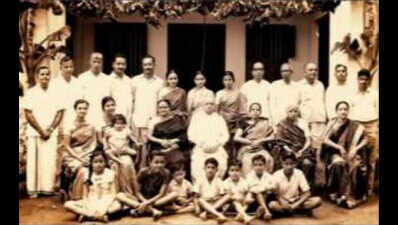

No one can quite recollect the precise date when the first settlers arrived in Mumbai, or for that matter, their full name. They're now remembered by their pet names. There was a Chama Pata (grandfather) whose name was possibly Swaminathan, and a Nana Mama whose name may well have been Narayan. At 95, N Y Krishnamoorthy is the oldest Nurani in Mumbai. He arrived in the city in 1940, when he was only 19. He says he wasn't the first to get here. A settlement of Nuranis already existed in Matunga, a suburb known for its concentration of Tamil Brahmins. Nuranis, too, are Tamil Brahmins settled in Kerala, who speak a dialect borrowed both from Tamil and Malayalam; a dialect used for Nurani's rhythmic folk songs for which the village is popular.
On a Friday night in early January, as these folk songs reach a crescendo in a Matunga temple, one of the Nurani devotees goes into a frenzy. He is supposed to have been possessed by Lord Ayyappa and treated as a deity for the night. This is part of the Thulasi Amman pooja for the local village goddess. Next morning, there's a large pooja to celebrate Lord Ayyappa. Celebrated every year in January, the Thulasi Aman Pooja and Sastha Peethi festival hold Nuranis scattered across the city.
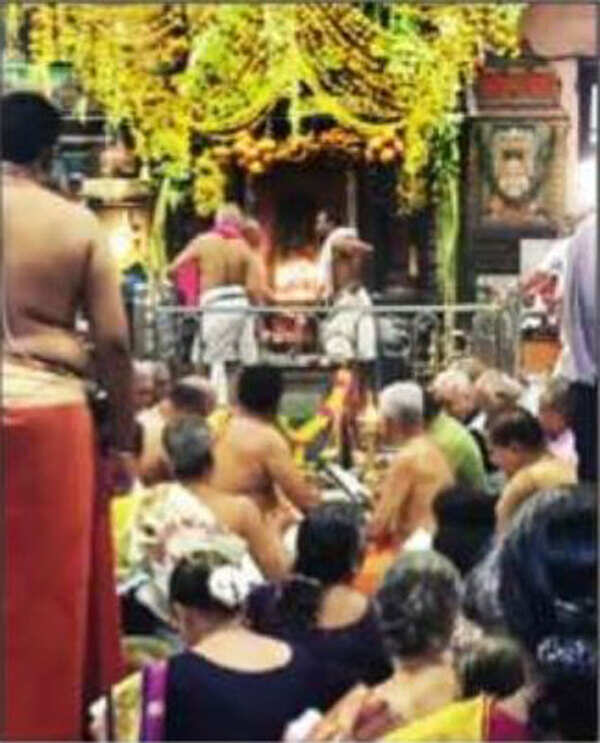
The festival owes its origin to a temple in the center of Nurani village, where it has been celebrated for centuries. "Earlier, migrant Nuranis in Mumbai wouldn't get leave from work to return home for the festival, so it was celebrated in Mumbai on the same day as in Nurani," says D Bharat, a Matunga-based doctor whose father migrated to the city from Nurani.
But with increased mobility, the festival is now celebrated a week later in Mumbai, giving Nuranis the option of celebrating it in both places. While the festival has been celebrated in the Matunga temple for 90-odd years, legend has it that Mumbai's first Sastha Peethi was celebrated in a Parel chawl called Nurani Chawl. Unfortunately, nobody knows where it is today.
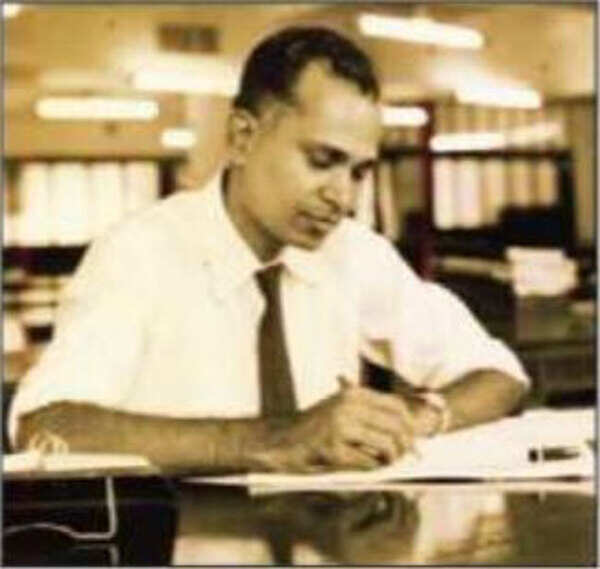
Nuranis were once clerical staff at Mumbai's mills, says Bharat. "Much like other migrants, Nuranis headed for Mumbai as it was a hub for jobs. Nuranis were proficient in English and typing, and readily got work as clerks and stenographers under the British administration," says Bharat. Krishnamoorthy, too, began as a junior clerk at a petroleum company when he arrived in Mumbai in 1940.
"Nuranis were originally landowners who lived off agriculture. With land reforms, they lost much of their land, and so they turned to education, learning English, stenography and accounting, for which they had an acumen. Mumbai had the most jobs for them," says NV Sivaramakrishnan, a member of Nurani's temple committee, speaking to TOI from the village. He himself lived in Mumbai in the late 1970s. Even today, every other family from the village has some connection with Mumbai.

