Back
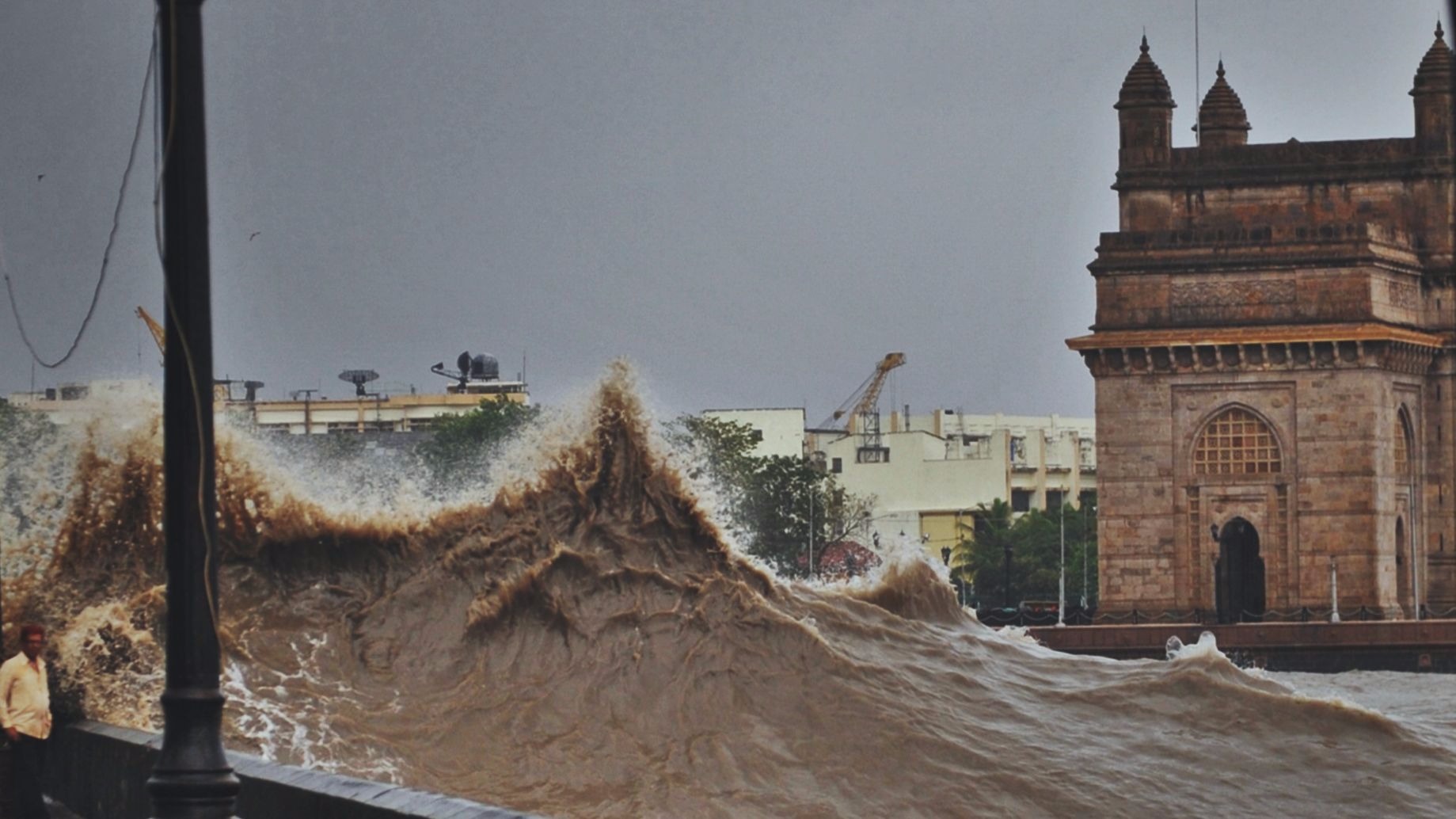
in November 1940, when cyclones didn't have names, the Arabian Sea
threw an unprecedented, untimely night-long tantrum that cost the city
more than Rs 25 lakh. In the aftermath, bodies floated at Apollo Bunder,
Colaba, Mazgaon docks and other sea faces even as piles of planks,
broken masts and other pieces of timber turned the harbour from Colaba
to Sewri into one long graveyard of ships.
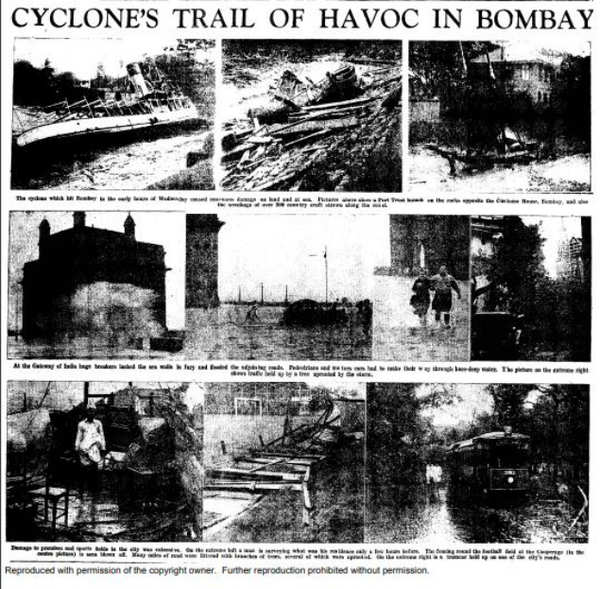
Glimpses of the cyclonic havoc in 1940Wreckage
from cargoes carried by around 300 "country craft"--plying between
Bombay, Malabar and Kathiawar--littered Colaba, Ballard Bunder, Mazgaon
Dock apart from fishing villages in Versova, Danda and Thana.About
100 lives, chiefly crew and owners of ships and boats, were feared lost
in this cyclone and a 1000-ton Norwegian steamer called 'Marly'--which
left Bombay with a cargo for the Malabar coast--vanished in this
tragedy. Stout-hearted seafaring men from Malabar, Kathiawar and Konkan
coasts were stranded in the city, desolate and anxious. All that most of
them had on landing were their loincloths.
Among the survivors was
an eight-year-old boy who braved the waves for about seven hours,
clinging to a plank. He had been onboard a barge that brought timber and
bamboos from Calicut for a local merchant in Bombay.
Reports
indicated that Colaba and Ratnagiri districts had suffered less damage
than Thane and the suburbs of the city. Collectors of the various
districts affected by the disaster had been authorized to spend upto Rs
50,000 for immediate relief to those rendered destitute.
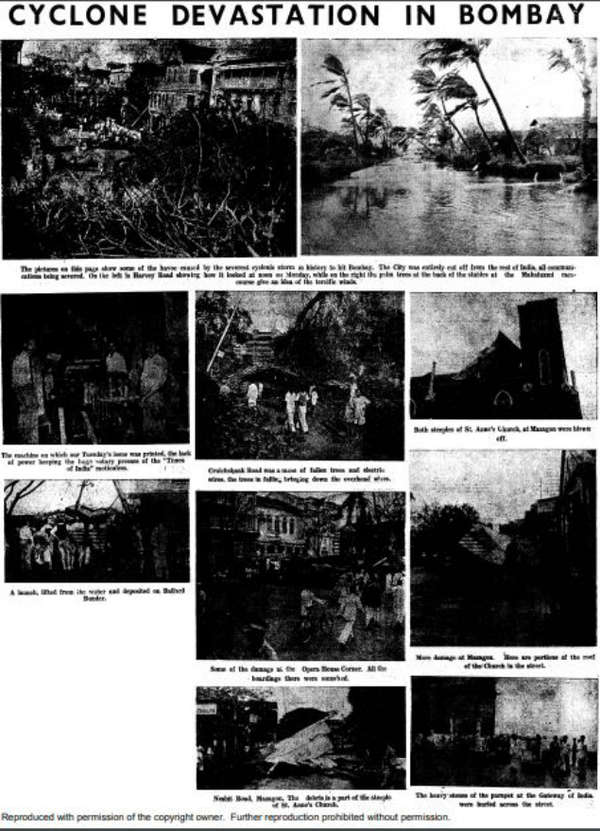
Scenes of devastation caused by cyclone in November, 1948On
the next such furious visit on September 11, 1742, the storm would
force all the ships in the harbour from their anchors. Royal ships
called Somerset and Salisbury, were damaged, a large vessel of a Muslim
owner ran aground and several small guard houses were blown down. Then,
on June 15, 1837, 400 houses in the town were destroyed and the roofs of
the terraces in the Fort area were carried away and "were seen floating
along on the wind as if they had been but mere Pullicut handkerchiefs,"
states a report. Out of nearly 50 vessels in harbour, scarcely more
than six were to be found untouched by the winds.
In his book 'Shells
from the sands of Bombay', D E Wacha, writes about a storm he witnessed
in the city as a kid of ten years in November, 1854. Emerging from his
house into East Rampart Row, now known as Mint Road, he saw acres of
bodies of the drowned brought to the shore. "Time hallowed banyan trees
were uprooted and the entire road was full of scattered leaves and
trunks and barks. West Rampart Row and Esplanade road were one vast area
of fallen trees, which floated on sheets of water. Fallen windows,
portions of back walls and so on intermingled while it was afterwards
reported that the terraces had been blown away and fallen elsewhere.
Mahim foreshore and Mahim woods told the same story," writes Wacha.





![[General+view+of+Bombay+1881.jpg]](https://blogger.googleusercontent.com/img/b/R29vZ2xl/AVvXsEgK1lgoDk29O-Bm7ZUxFPVnWvy29CFTpEJca_brZX47x74GD7CgTEcnOEzWevgF47m4ZiCy5GPFeCm-7ZRFnptPwTecFa5ocZjgY7ALRhmehl01uU0ZPYzk0FQmB2pl6IauGHZq3modzOLs/s640-rw/General+view+of+Bombay+1881.jpg)

