Sunday, January 30, 2011

BOMBAY CRICKET ,1883, AT HOG ISLAND, ON BOMBAY HARBOR;AND CRICKET ON HORSE BACK;3RD PHOTO SHOWS[SOME PLAYERS ARE IN LUNGI];

Hindu Cricket, Hindoo Cricketers ...

Anyone for quintain? The sports that ...

Cricket-Playing Horse | Old Book ...


Bombay 1883 -cricket by "hindoos" playing cricket with just loin cloth


Cricket Players, in Costume with Cricket Bats[SOME PLAYERS ARE IN LUNGI]


Page Navigation

The rest of the results might not be what you're looking for. See more anyway


m

BOMBAY-1800 :-amusements of .animal baiting, balls,dinners ,ship launch

1800 bombay :-amusements of .animal baiting, balls,dinners ,ship launch


HMS Minden A SHIP made in bombay(later the American national anthem was made in this ship in 1815 ;IN war of chespeake


GRAND BALL DRESS OF 1800


ANIMAL(BEAR)BAITING FOR FUN (FOR SPECTATORS) 1800

GLIMPSES OF OLD BOMBAY AND WESTERN INDIA. Here is an amusement that has not been seen in our day in Bombay. The date is January, 1800, when a great number of genttemen and some ladies attended on a Saturday at the Riding School, to witness the baitjng of a horse, a wild boar, and some buffaloes by a leopard. The first object of attack was a dummy man, which leopardus tore to pieces in a twinkling. He then essayed the wild hog, for which he soon showed a Muslim aversion, and " backed," with his tail between his legs, which did not suit the spectators, who goaded him into fury by squibs and crackers until the brute, becoming exasperated by its tormentors, suddenly, by one tremendous leap, alighted on the edge of a high bamboo palisade which divided the spectators from the arena. You may well believe that, as he hung in mid-air, there was a great consternation. The account says that " each waived all ceremony in the order of his going, to establish his own right of precedence." The riding-master, who happened to have a loaded pistol in his hand, was equal to the occasion, and shot the leopard dead on his perch, his body falling with a thud into the enclosure, while the crowd flew helter-skelter. > The staple of amusement in these days was, no doubt, balls, dinners, reviews, and launches. The driving of the silver nail when the keel was laid down was always a big day. When, on May 4th, a ship of 1,250 tons, the Bombay, was launched, and christened, by Sir Edward Pellew, with a bottle of good English porter, the affair drew the principal people of the Settlement. But some more expensive liquor, was, no doubt, used at the launch, in 1810, of the Minden, of seventy-four guns. That was an event of which Bombay was very proud, according to the Chronicle : " Bombay has the singular credit of being the first place out of the British dominions at which a British seventy-four was ever built." The Duncan Dock was completed on June 23rd, 1810 ; and it is a singular fact that the Minden' s keel was laid down while the dock was being constructed, the two works going on simultaneously. Then as to reviews. On June 4th, 1801, the old King's birthday, still sacred at Eton, the 74th Regiment marched past the Governor, their war-worn colours, which they had carried for fourteen years in Asia, on many a battle-field, waving in the breeze.

Saturday, January 29, 2011

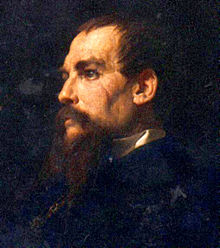
Richard Francis Burton, An Adventurer in Disguise IN BOMBAY-1842

Captain Sir Richard Francis Burton KCMG FRGS (19 March 1821 – 20 October 1890) was a British explorer, translator, writer, soldier, orientalist, ethnologist, spy, linguist, poet, fencer and diplomat. He was known for his travels and explorations within Asia and Africa as well as his extraordinary knowledge of languages and cultures. According to one count, he spoke 29 European, Asian, and African languages.
Burton's best-known achievements include travelling in disguise to Mecca, an unexpurgated translation of One Thousand and One Nights (also commonly called The Arabian Nights in English after Andrew Lang's abridgement), bringing the Kama Sutra to publication in English, and journeying with John Hanning Speke as the first Europeans led by Africa's greatest explorer guide, Sidi Mubarak Bombay, utilizing route information by Indian and Omani merchants who traded in the region, to visit the Great Lakes of Africa in search of the source of the Nile. Burton extensively criticized colonial policies (to the detriment of his career) in his works and letters. He was a prolific and erudite author and wrote numerous books and scholarly articles about subjects including human behaviour, travel,fencing, sexual practices, and ethnography. A unique feature of his books is the copious footnotes and appendices containing remarkable observations and unexpurgated information.
He was a captain in the army of the East India Company serving in India (and later, briefly, in the Crimean War). Following this he was engaged by the Royal Geographical Society to explore the east coast of Africa and led an expedition guided by the locals and was the first European to see Lake Tanganyika. In later life he served as British consul in Fernando Po, Santos, Damascus and, finally,Trieste. He was a Fellow of the Royal Geographical Society and was awarded a knighthood (KCMG) in 1886.

Richard Burton was fascinated by foreign places, so much so that he risked death to visit Muslim Arabia, where Christian "unbelievers" were banned.

in 1842, when 21-year old Richard Burton arrived in Bombay (Mumbai), he was one of numerous young men, most of whom travelled to what was then the British Raj in India intent on getting rich and then returning home to a life of idle luxury in England.

Exploring the Mysterious East

Burton’s intentions were different. Making a fortune did not interest him. Instead, he wanted to get under the skin of the Oriental world, to learn its languages, observe its customs and probe its many faiths.
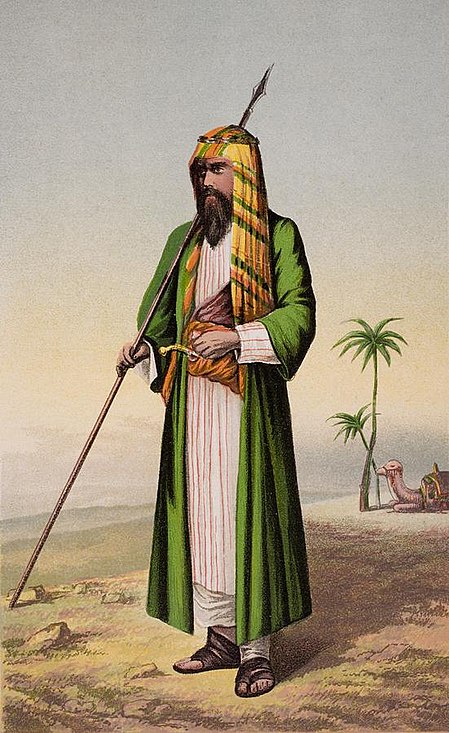
In order to do so, Burton would stain his white skin brown with henna, wind a turban round his head, dress in long, loose robes and wander unnoticed through the native bazaars, markets and city back streets absorbing the atmosphere.
During the seven years he spent in India, Burton had more than achieved his aims. He was fluent in five Indian dialects, as well as in Persian and Arabic, and had even learned to think, walk, talk, gesture and even pray like a native of the East.It was this expertise that enabled Burton to remain undetected during the most dangerous expedition a European could undertake in his time.

Arabia, an Arcane World

By the mid-19th century, Arabia had been clandestine territory for hundreds of years, closed to all non-Muslims. Specifically forbidden to infidel “unbelievers” were the two Arabian cities, Mecca and Medina, that were most closely associated with Mohamed, founder of the Islamic religion.
Inevitably, Richard Burton regarded this vast stretch of the unknown an irresistible challenge. On April 3, 1853, a brown-skinned, bearded Afghan - in reality, Burton in his Muslim disguise - hurried on board a steamer bound for Egypt. He soon made friends with the other passengers, identified himself as Mirza Abdullah, and told them that, like them, he was going on a “haj” or pilgrimage to the holy city of Mecca.

Encounter with an Englishman

No one doubted that Mirza was telling the truth, particularly after he happened to brush against the arm of a British Indian Army officer while strolling on deck.
The officer turned fiercely on Mirza and in language heavily laced with swear-words cursed him for daring to approach that close to a white man. Mirza backed away, bowing low and apologizing in the servile manner the Englishman - and the onlookers - expected.
Burton was so convincing that no one guessed his true identity on the crowded vessel that took Muslim pilgrims across the Red Sea, nor on the long caravan trail across the Arabian desert.

At the Holiest Muslim Shrine

BURTON IN ARAB DRESS 1853
In September 1853, Burton even managed to penetrate safely into the holiest of all Musllim shrines, the “Kaaba” or sanctuary in Mecca. He prostrated himself in the Muslim manner, intoned the appropriate prayers, then bent down to kiss the Holy Black Stone in the southeast corner of the “Kaaba”.
Once again, Burton’s “performance” remained so flawless that none of the ecstatic pilgrims who hemmed him in on all sides suspected for a moment that an “unbeliever” was in their midst.
By the end of September, Burton was back in Egypt and his most daring adventure was over. When his book on the experience “Pilgrimage to Al-Medinah and Mecca” was published in 1855, readers were thrilled at the picture he painted of the exotic world of the Muslims.

Burton’s African Adventures

By then, however, Burton had completed yet another exploit: exploring the dangerous deserts of Somalia in northeast Africa. He was so avid for adventure that once an expedition had ended, his only interest lay in the next one.
This was why his life was so full of hectic activity. After Arabia and Somalia, Burton searched for the source of the River Nile and discovered Lake Tanganyika in a three year expedition between 1856 and 1859.
He went on to explore Dahomey, the Gold Coast (Ghana) and Nigeria between 1861 and 1864, served as British consul in Brazil, Syria and Italy, revisited India in 1865-6 and for four years, until, 1880, prospected for gold near the Red Sea.

An Adventurer to the End

By this time, Richard Burton was nearly sixty years old, an advanced age for the time, and an age when most people had settled down to quiet, uneventful lives. Burton never settled down: his wanderlust burned on to the end.
When he died in 1890, he was in Trieste, on the Adriatic Sea in northern Italy and had just returned from a tour of Europe. In addition, he had already planned his next journey, to Greece and Turkey.
Burton's tent tomb, Mortlake, London, Rgciegg

Burton's tent tomb, Mortlake, London -
Burton’s wife, Isabel, brought his body back to England and had him buried in the most appropriate tomb this compulsive wanderer could possible have had. It was a marble and copper replica of the tent which wandering nomads used in the deserts of Arabia.
He translated kamasutra into english  IN 1849


THE OTHER BOOKS BY BURTON:-


Personal Narrative of a Pilgrimage to Al-Madinah & Meccah — Volume 1 by Burton


http://www.gutenberg.org/catalog/world/readfile?fk_files=1456600http://www.gutenberg.org/catalog/world/readfile?fk_files=1456600

Works