Page Navigation
The rest of the results might not be what you're looking for. See more anyway


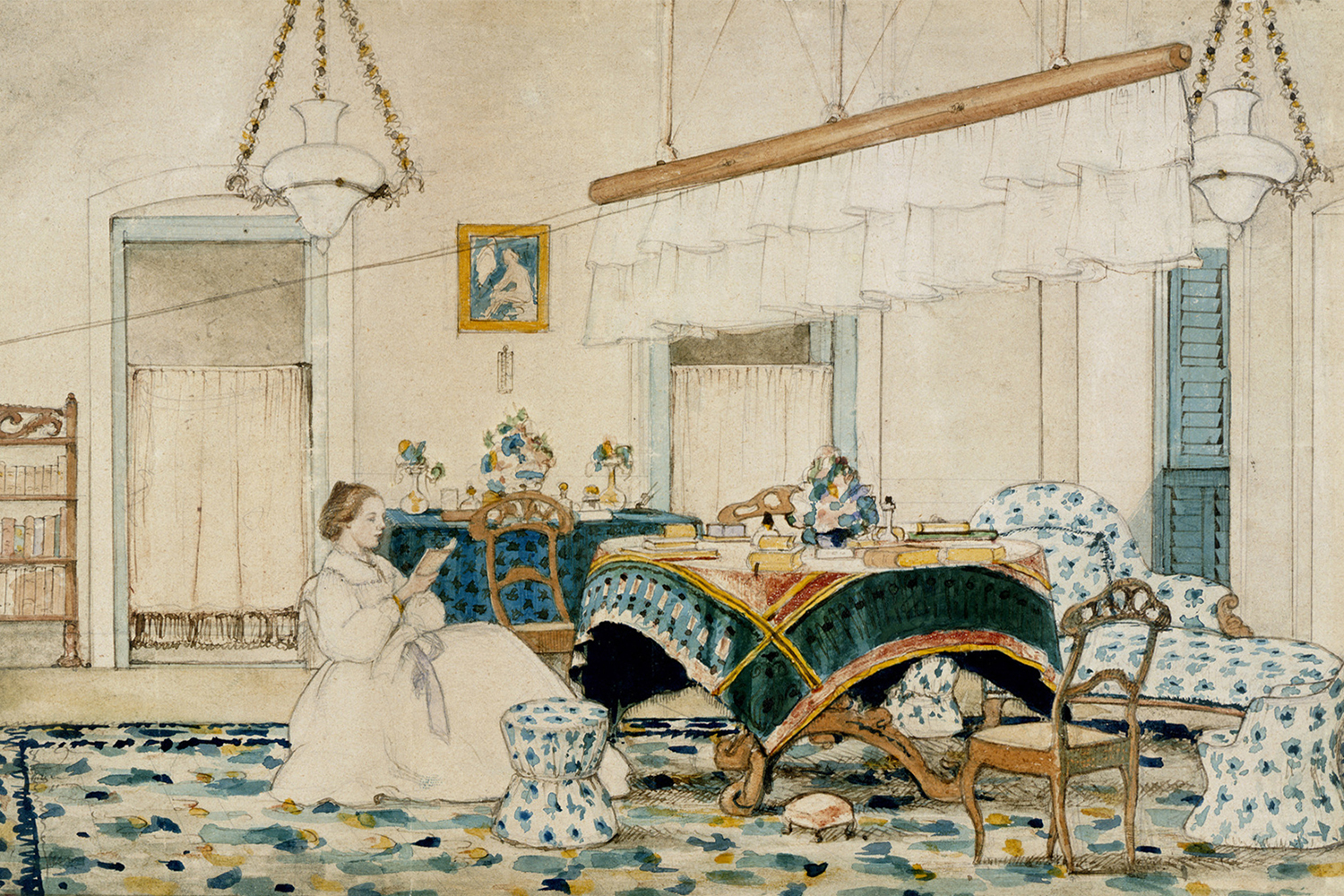
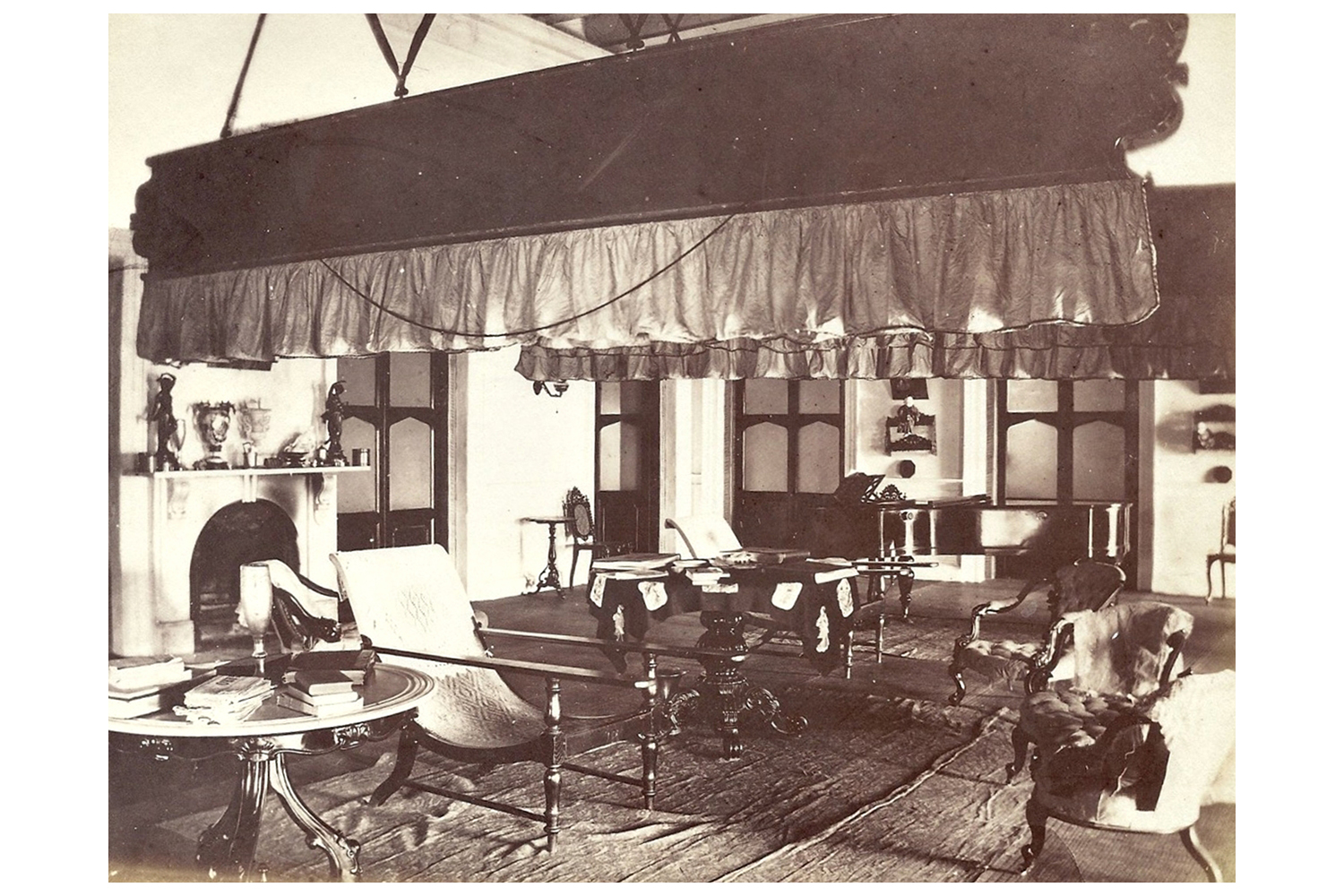
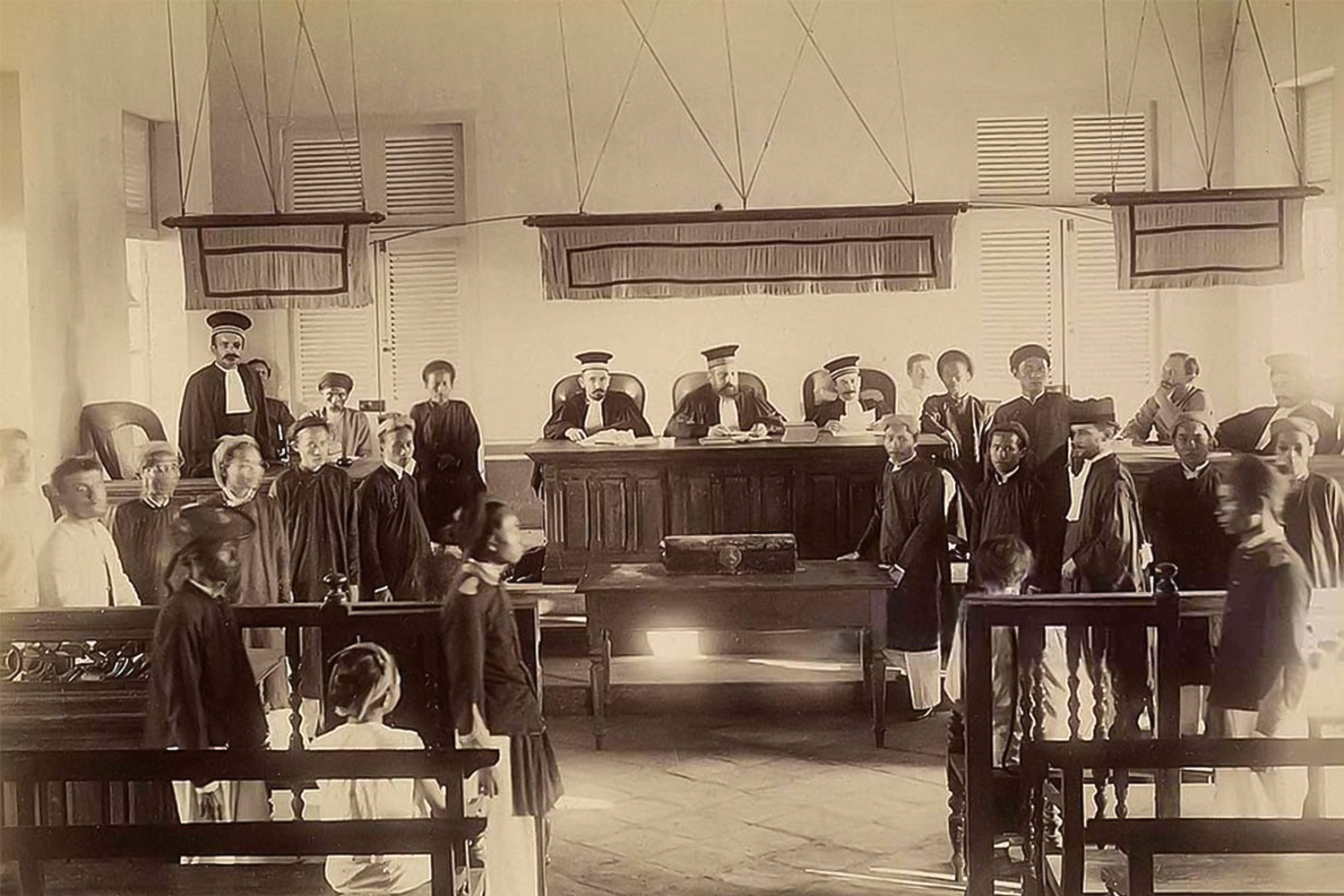
Punkah designs varied based on various factors, including where the fan was meant to be used — a singular punkah might be installed in the centre of a room, whereas larger halls might be fitted with rows of punkahs along their perimeter. A typical punkah was a flat rectangle around four and half metres wide and a little over a metre tall: it could comprise a long wooden beam or slab with a wide strip of cloth hanging from its edge, or a cloth panel stretched over a wooden frame, with a strip left to hang freely along the bottom edge. The cloth used was most often plain and white calico or canvas, but sometimes had a decorative border along the perimeter and often featured flounces or a short fringe along the bottom edge. More expensive fabrics such as heavy silks may have also occasionally been used. One account from 1857 also mentions the use of special paper to cover the punkah frame. The beam or frame was often fitted with metal hooks or loops to allow it to be suspended. The punkah was hung from the ceiling with ropes, which were sometimes criss-crossed to stabilise larger, heavier fans. It was operated from the ground usually by means of a second set of cords, which were attached along one side of the fan and then combined into a single long cord. Varying mechanisms, including pulleys, were employed in different types of punkahs.
When pulled, the fan created a powerful draft; when released, its weight caused it to swing back, creating a gentler current of air. In popular speech at the time, the two drafts were often compared, respectively, to the south-westerly and easterly monsoon winds of India — consequently, the side of the punkah facing the puller was nicknamed the ‘Bombay’ side, and the reverse the ‘Bengal’ side. When the fan was still restricted to public spaces, punkah-pullers typically sat in one corner of the room. Once it came to be installed in more private areas of the house, the cord was threaded through a hole in the wall and pulled from outside the room. The ubiquity of the punkah in colonial India led to efforts to optimise its operation. One such development was the invention of a row of punkahs that could be operated simultaneously by one person, attributed to the British Lieutenant RN Cook.
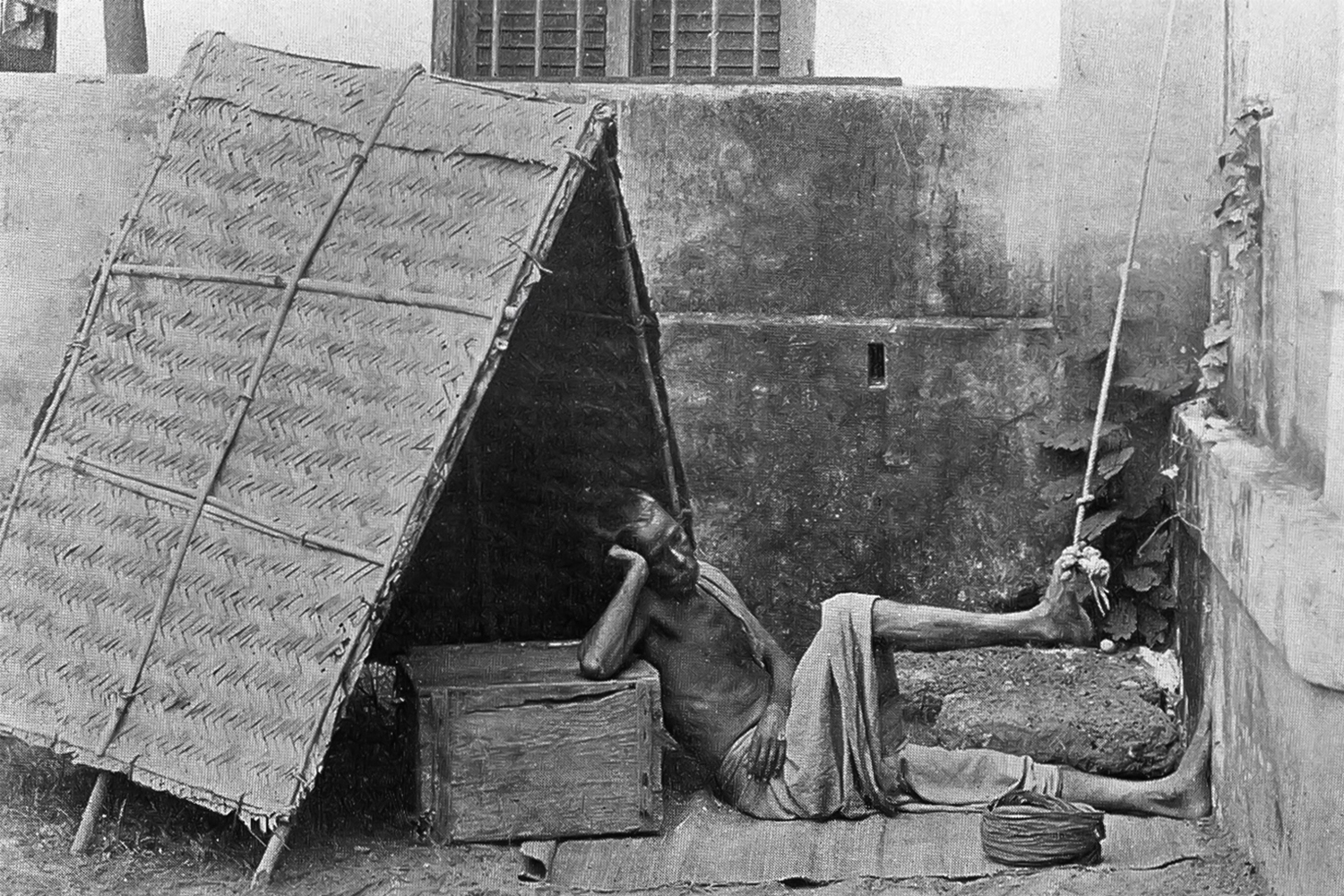
Punkah-pullers were typically from lower castes, many of which were historically sweepers or palanquin-bearers, positions that were low in the domestic hierarchy of servants in colonial India. While they were initially hired to operate the punkah during the hotter months between March and October, they would eventually become permanent additions to household staff. They were termed ‘punkah-wallahs’ — the common Hindi suffix –wallah denoting their occupational association with the punkah.
As the use of the punkah at night became more common, punkah-pullers worked in shifts to keep their employers cool while they slept, pulling the fan from an adjacent room, sometimes with their feet as they lay on their backs. They were often deliberately made to work in uncomfortable conditions that would keep them awake. Employers often subjected punkah-pullers to brutal punishment for falling asleep, which in some cases is known to have led to death. As the colonial government bore the cost of installing and operating punkahs by the mid-nineteenth century, pressure to keep the cost low resulted in exploitatively low wages for punkah-pullers and a reluctance to adopt electric punkahs, which had only recently been invented. While there are few records of punkah-pullers’ resistance to these conditions, they are known to have gone on strike in 1898.
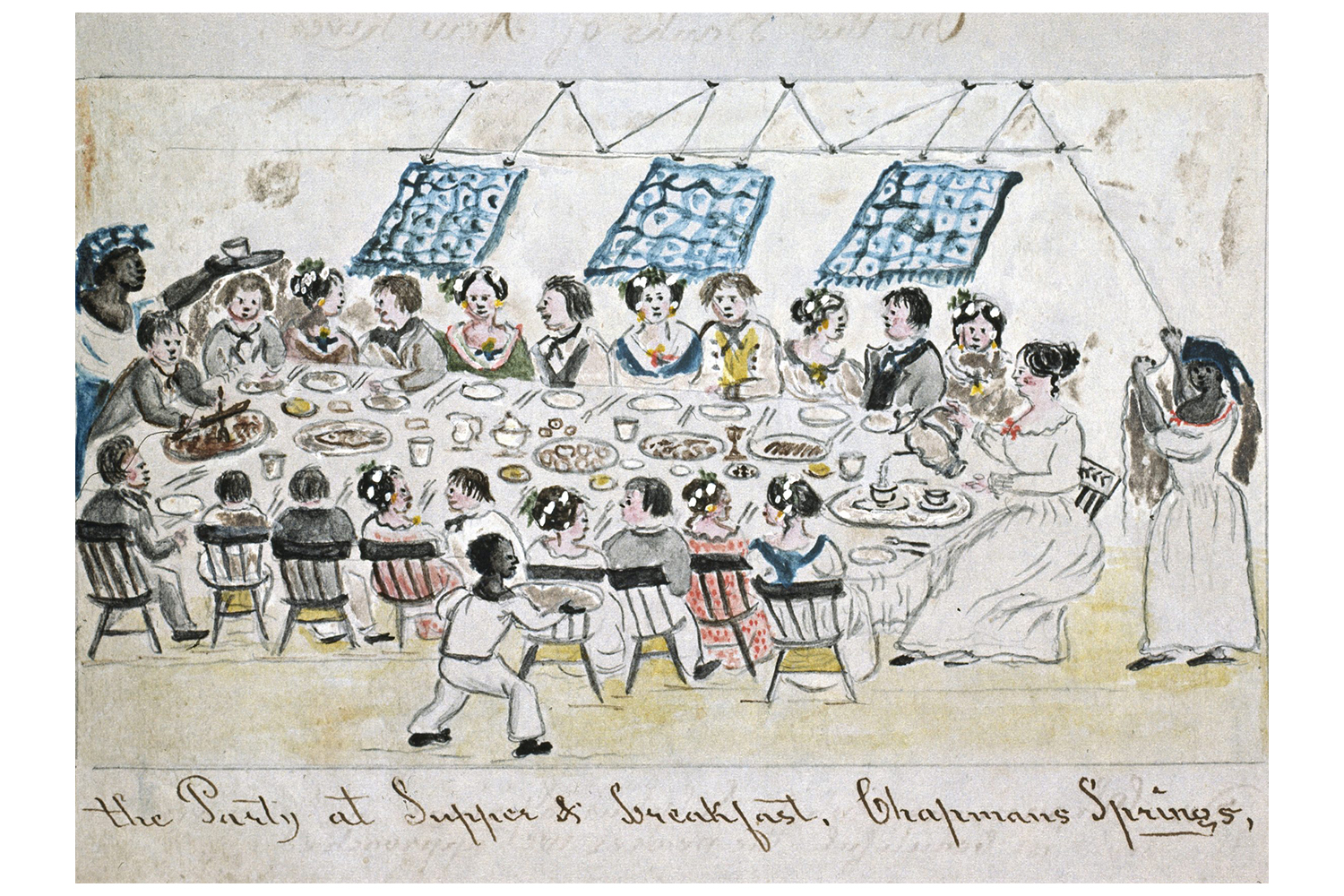
By the nineteenth century, the punkah was widely used in colonial territories outside the Indian subcontinent, most notably in public and private spaces in Southeast Asia and in the plantation homes of the southern United States, where punkahs were operated by enslaved people. The American punkah, also known as a shoo-fly, had broadly the same mechanism as the Indian one — suspended from the ceiling and operated via a rope pulled from an adjacent room — but differed greatly in design. Scholars note that the early to mid-nineteenth century was one of great American interest in Indian goods; while no official export records are available, at least one American account from the period mentions mechanised punkahs purchased from the East India Company.
While the electric punkah was not widely adopted in India, the growing discontentment among punkah-pullers, including their 1898 strike, likely put pressure on the colonial government to seek out alternatives. In the early twentieth century, the now commonplace electric ceiling fan was developed and the punkah became obsolete. Historic punkahs can still be found across India, usually in colonial buildings both public and private, such as the barracks at Agra and the Kanpur Memorial Church, both in Uttar Pradesh, and the Church of St. Francis in Fort Kochi in Kerala.