Thursday, October 13, 2011

Round Temple Sandhurst Road


The Round Temple of Bombay is also known as the Gol Dewal and is located on
Sandhurst Road. Around the temple is a ‘stone’ market said to be the city’s oldest;
here, one can choose from a wide variety of stones to use to furnish one’s home.
Nearby are theatres of Alankar and Moti, though the area has come to be known more
for the activities on
Falkland Road. Called “Pillhouse”, the neighbourhood acquired
notoriety in later years as Bombay’s infamous red-light district.
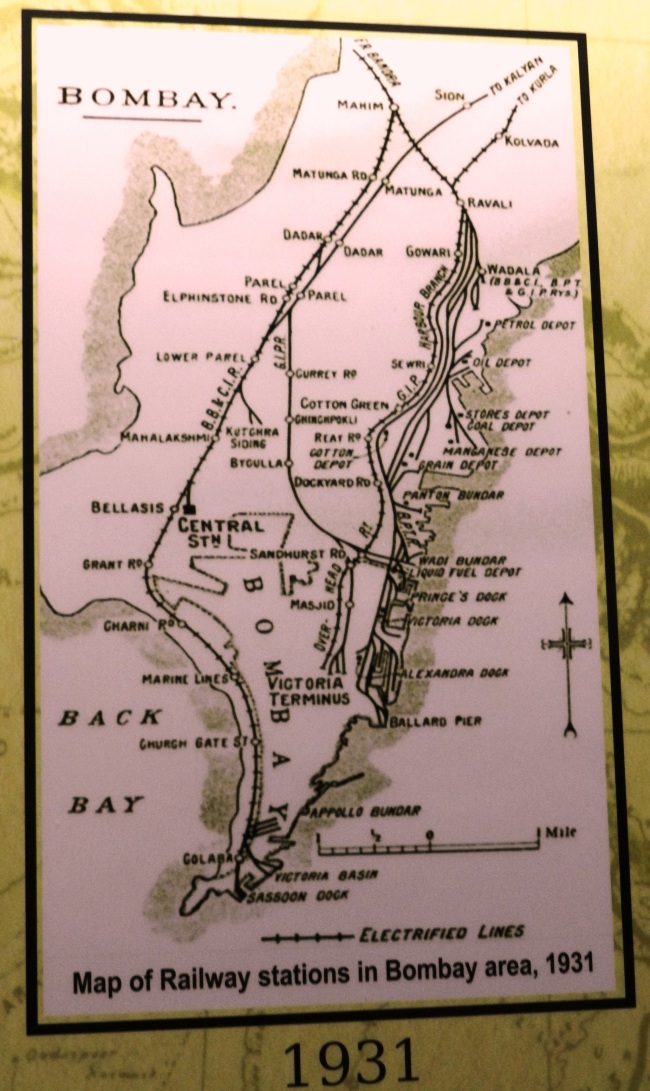
Sandhurst Road is also a railway station on the Central Railway. The area is named
after Lord Sandhurst, who was the Governor of Bombay from 1895 to 1900.


As Bombay's superintendent of police in 1885, Charles Forjett was a favourite of the Indian people. Many wept openly when he returned to England. He sacked British constables who unduly harassed the locals and cracked down on the Parsi mafia which was involved in the liquor business in the Falkland Road area, which included the famous "Play House" which the locals corrupted to "pillhouse". The "Pillhouse" area would acquire notoriety in later years as the infamous "cages" area housing Bombay's infamous red-light district.


Page Navigation

The rest of the results might not be what you're looking for. See more anyway

Royal Opera House At Lamington Road-(Bombay - Year 1912)


At first, it was simply called the Opera House, but the prefix ‘Royal’ was added, as the
foundation stone was laid in 1909 during the British rule. King George V inaugurated
the building in 1911, though construction was completed in 1912. Additions were made
up till the year 1915.The Opera House, built in baroque design featuring a blend of
European and Indian architectural style, was conceived in 1908 by Maurice Bandmann
and Jehangir Framji Karaka. It was made from exquisite Italian marble on a leased land
close to the Kennedy and Sandhurst bridges. Till today, the opera house is the only one
of its kind in the country.

Times of India Building BOMBAY


The building of the Times of India is situated opposite the Victoria Terminus on the
Dadabhai Naoroji Road (formerly known as Hornby Road); it is a stretch that is studded
with Neo-Classical and Gothic Revival buildings constructed during the 19th century.
The Times of India building houses the offices of the Times of India newspaper owned
by the Indian firm Bennett, Coleman & Co Ltd and run by the family of Sahu Jain. It is
the oldest daily newspaper in the city and one of the leading newspapers in the country.
Founded as ‘The Bombay Times and Journal of Commerce’ in 1838, it was renamed
the ‘Times of India’ in 1861.

Esplanade Road (Kala Ghoda)(BOMBAY — YEAR 1880)


Renamed Mahatma Gandhi Road, Esplanade Road, like most parts of South Bombay,
is lined with heritage structures; Elphinstone College and the David Sassoon Library
are amongst the prominent ones.
Established in 1856, Elphinstone College is one of the oldest colleges of the University
of Bombay. During the British Raj, the college was amongst the most coveted.The
building, constructed in the ‘Romanesque Transitional’ style, cost Rs 750,000 to build.
The David Sassoon Library was the brainchild of Albert Sassoon, son of the famous
philanthropist, David Sassoon. Completed in 1870, the building was built using yellow
Malad stone. A white stone bust of David Sassoon rests above the entrance portico.

Cuffe Parade-(BOMBAY — YEAR 1906)


Bombay was faced with an epidemic of bubonic plague at the end of the 19th century,
which led to the formation of the Bombay City Improvement Trust. The Trust was created
to improve the sanitary and living conditions of the city, and to also later develop the
suburbs for residential purposes as the city area was getting overcrowded.The Trust
reclaimed 75,000 square metres (807,293 square feet) on the western shore of Colaba.
In 1906, a seafront road with a raised seaside promenade was completed, and called
‘Cuffe Parade’ after TW Cuffe of the Trust. Located at the southernmost region of the
city just north of Navy Nagar, Cuffe Parade is today an upmarket neighbourhood.

(COLABA RAILWAY STATION — BOMBAY — YEAR 1867)


Image

mm
Image result for COLABA RAILWAY STATION — BOMBAY — YEAR 1867
Colaba gets its name from ‘Kolabhat’, a word in the language of the Kolis, the indigenous
inhabitants of the islands. The Bombay, Baroda, and Central India (B.B.&C.I) Railway
established the Colaba Terminus, and started the first suburban railway in India between
Virar and Colaba in 1867. From 1896 to 1930, Colaba station served the residents of
Fort and the adjoining areas, but was increasingly rendered inadequate for the growing
passenger load and could not be extended. The station was shut down in the 1930s
.

Related image
Image result for COLABA RAILWAY STATION
Ballard Pier Mole railway station wih ship in the back ground
Related image
below same 1920
Related image
Image result for COLABA RAILWAY STATION