
That is a wonderful historic photograph! Looking at the image you shared:
The Location: You can see the grand pillared building of the Town Hall (now the Asiatic Society of Mumbai) in the background, facing the open expanse of the Horniman Circle (Elphinstone Circle) gardens area.
The Stock Exchange Tree: In the foreground, right around the cluster of trees and people gathered in the open space, is where the early stock and cotton brokers originally con
This classic archival photograph captures the early brokers gathered under the banyan tree when the stock exchange operated in the open air, long before it moved to Dalal Street

.

Summary
Find out what happened under the banyan tree. This blog shares insights and stories related to investing. This blog provides in-depth analysis and practical advice. These funds are suitable for long-term investors looking to save on taxes. They offer a unique combination of tax savings and potential for high returns over time.
Mumbai is a city of extremes, a place where people sing disparate tunes, and yet, are in harmony. Here, the differences not only co-exist but allow people and businesses to thrive. Nothing captures this essence better than Dalal Street - a place where fortunes are made and lost on a daily basis.
A trundle down the famed Dalal Street has never failed to quicken my pulse or imbue a general sense of elation and excitement. Effortlessly pedestrian, and fairly unassuming, Dalal Street is unlikely to invoke the glamour of its famed American counterpart. Yet, there is something to it that is hard to describe but easy to experience. The vicinity is the quintessential lofty old-world charm mingling with the plebeians. On the one hand, there is the majestic State Bank of India building with its bold Roman numerals, and on the other, there are a splattering of primarily Udipi restaurants that work with astounding speed and efficiency. At the ground level you will either see people jostling about with a sense of urgency or observe them sipping a cup of cutting-chai at the tapri while exchanging stock tips. Slightly higher than eye level, the electronic ticker, oblivious to the flurry of emotions it is causing, keeps moving languidly - one number after another from 9:15am to 3:30pm. And then there is the curved façade of the BSE building or Phiroze Jeejeebhoy Towers or simply, the stock exchange. This is where I feel like I have finally found my pulse.
The roots of the banyan tree
It is well-known that the Indian stock market dates back to the 19th century and is one of the oldest stock markets in Asia and the world. Its history is colourful, just like its present, and makes for an interesting story.
Stock markets in India and in the world have their roots in trading (not the stock kind). When trade started flourishing in the New World, merchants wanted to start large scale businesses to capitalize on emerging opportunities. However, this required a substantial amount of capital, which was challenging for standalone merchants to raise. So they decided to do the next best thing, i.e., pool their savings and conquer the world together.
As a result, merchants became business partners and co-owners with individual shares. This led to the creation of joint-stock companies. A concept established by the Dutch, joint-stock companies served as a viable business model even for struggling entities. In 1602, the Dutch East India Co. issued the first paper shares which enabled shareholders to conveniently buy, sell, and trade their stock with other shareholders and investors.
Almost two centuries later, somewhere in the neighbourhood of the 1830s, Indian corporate stocks and shares of banks and cotton press began trading in Bombay. In the two decades that followed, barely half a dozen brokers set up shop. However, activity picked pace, and in 1850, an unofficial group of 22 stockbrokers started trading under a banyan tree opposite the town hall of Bombay, each investing a (then) princely amount of Re. 1. However, it is interesting to note that this growing group of stockbrokers was a mobile lot, failing to lay roots at any one particular place and operating from various locales in and around its current home.
The first boom and bust
In 1861, the American Civil War broke out and with that, began the ‘share mania’ in India. Share prices of companies that didn't exist till a few years ago started rising astronomically. The Back Bay Reclamation share, with face value of Rs 5,000, traded at Rs 50,000, while the Bank of Bombay's Rs 500 share touched Rs 2,850.1 The Civil War choked the traditional source of cotton for the British who then turned to India to meet their demand for cotton. What followed was a sharp jump in the price of cotton and a period of unprecedented gains for those engaged in cotton trade in India. Correspondingly, stocks of companies producing and exporting cotton saw their prices skyrocket.
People flocked to the stock market like moths attracted to a flame. The number of brokers increased as there was a rush of investors looking to capture these gains. There was plenty of money to go around as cotton traders invested their profits back into stocks in an attempt to make higher profits. By 1865, the Civil War ended. This inevitably led to a decline in the demand for cotton. India witnessed its first stock market crash.
By the 1870s, the Indian stock market had witnessed its first boom and its first bust. It now needed a formal presence.
Finally, this informal group of stockbrokers organised itself as the Native Share and Stockbrokers Association which, in 1875, was formally organised as the Bombay Stock Exchange (BSE).
While not many people might know this, it certainly won’t come as a surprise that amongst its illustrious founding fathers was Mr. Purbhoodas Jeevandas Kothari- DSP Group’s Founder & Chairman, Mr. Hemendra Kothari’s great grandfather!
BSE’s first home was in an old building near the town hall. A few years later, the plot of land on which the BSE building now stands (at the intersection of Dalal Street, Bombay Samachar Marg, and Hammam Street) was acquired and the BSE finally found a permanent home.


=====================================================================
Unrestrained upward trend sweeps Indian stock exchanges
An unrestrained upward trend sweeps the nation's exchanges.


_020213122617.jpg)
But for weeks on end now, the stock-market has been more like the Brahmaputra in spate, flooding its banks and inexorably breaking through every predicted barrier. The four-year lull is over. The stock-market seems to know only one direction: up.
In just six months, between March and September 1990, the 30-share Bombay Stock Exchange (BSE) Sensitive Index has shot up from 774 to 1,260, an increase of 60 per cent. For a time, it seemed as if it would be arrested at the 1,000 mark.
Then, in one swift surge, that barrier was broken. There's been no stopping since. And it's not as if the boom is restricted to a handful of shares. During the same period, the Economic Times' all-India share index rose from 393 to 630, once again an increase of 60 per cent.
To slow down the rise and curb speculation, the BSE, which accounts for 70 per cent of the country's total trade in shares, has imposed stringent trading restrictions. And at various times, it has clamped margins on volatile scrips such as Associated Cement Companies (ACC) and Reliance Industries. It has even imposed trading limits on individual brokers.
But the intractable bull market refuses to be curbed. For instance, ACC, until recently regarded as the laggard of the cement industry, has turned around smartly to be 1990's star performer, its share price moving from Rs600 to a mind-boggling Rs 1,850. And Reliance Industries, thought to be in the doghouse after the National Front Government came to power, has rallied as well, its scrip registering an increase from Rs 60 to Rs 160.
A leading Bombay-based broker voices the belligerence of the broking community: "If they impose curbs on our trading, we will trade in the kerb," (carry out unofficial deals outside the purview of the stock exchange). Brokers insist that the stock exchange authorities are worrying unnecessarily, and that the boom, like the one in 1985, has sound underpinnings.
That view is backed by Pradeep Shah, managing director of the state-owned Credit Rating and Information Services of India Ltd (CRISIL). "The fundamental indicators, "he says, "are very strong: good monsoon for the third year consecutively, excellent corporate results and consistent liberalisation."
M.J. Pherwani, former chairman of the Unit Trust of India, agrees, arguing that at least a part of the current boom is a catching-up process with the fundamentals. But he also sounds a note of caution by saying that overspeculation should be avoided.
The fear of speculation may be legitimate. For weeks now, the market seems to have become totally oblivious to bad news. The deteriorating balance of payments position, political rumblings and the still-present threat of war with Pakistan haven't affected share prices even one little bit.
The recent Iraq-Kuwait tangle and gloomy prospects of a whopping oil import bill set stock-markets around the world on a downward tumble. The leading stock-markets of New York, London and Tokyo experienced minor crises. In India, on the contrary, every incident in the Iraq episode seems to have given share prices an added boost. Says S.A. Dave, chairman of the Unit Trust of India: "The lack of correlation between the state of the economy and the stock-markets is puzzling. It is not the sign of a mature market."
But the boom isn't really all that inexplicable. For one, the capital markets are attracting funds from other markets. Says S. Dharampal, general manager, Canbank Mutual Fund, one of the largest investment funds in the country: "Money from the diamond trade, real estate and textiles is now flooding the stock-markets." And while no one is willing to hazard a guess on the total amount of such funds, they are believed to be substantial.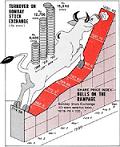
Stock exchange authorities argue that investments in such markets have traditionally been speculative, and that the effect of such speculators transferring their interest to the stock-market is not at all healthy.
Another factor that has contributed to the continuing boom in the stock-market is the paucity of new share and debenture issues. During the first six months of 1990, companies hitting the market with new issues collected just Rs700 crore, as compared with Rs2,300 crore in the corresponding period last year. With the primary market blocked, investors seem to have been compensated by putting their money in the secondary market-with expected results on share prices.
Shah of crisil feels the answer to the demand for investment options is to expeditiously clear new issues. Certainly, the investor's appetite for good new issues continues to be as healthy as ever. Raymond Synthetics' recent issue, for instance, was oversubscribed 30 times: it received a whopping 31 lakh applications.
Thankfully, the shortage may soon be over: new issues by Lloyds Steel and Tata Oil Mills, among several others, are in the final stages of clearance. Says G. V. Ramakrishna, chairman of the Securities and Exchange Board of India (SEBI), the watch-dog of the capital markets: "New issues worth Rs 900 crore are on their way. That should cool the market down to some extent."
The controller of capital issues, by delaying new issues, may have unintentionally contributed to the current boom in the market. But public sector financial institutions-the Unit Trust of India and the mutual funds of the nationalised banks such as SBI Capital Markets, Canbank Mutual Fund and a clutch of others-have also been directly responsible.
They are believed to have channelled as much as Rs 1,600 crore into the stock-market. Their resources are certainly phenomenal. And as the boom continues, they find it even easier to attract funds, a case of boom feeding on boom. Take Canstar, for example, the latest mutual fund from Canbank Mutual. When it opened for subscription last month, it expected to draw in about Rs 300 crore. Now, even conservative estimates expect the final figure will be Rs 700 crore.
The Government has taken note of the bullish capabilities of the mutual funds and financial institutions. Last fortnight, S.S. Nadkarni, chairman of the Industrial Development Bank of India, convened a meeting of the heads of financial institutions and mutual funds at which he is understood to have said that "it is the duty of the institutions and mutual funds to ensure that the stock-markets are under control". And then in typical bureaucratese Nadkarni also "advised" mutual funds to restrain from making heavy purchases in overheated markets.
This advice hasn't been received too kindly by mutual fund managers. One manager complains that mutual funds cannot be regulators of the stock-market on one hand and be expected to give a good return to shareholders on the other. Argues another: "The BSE alone has a turnover of Rs 100 crore a day and the market capitalisation is Rs65,000 crore. How much damage can Rs 1,600 crore do, especially when only 30 per cent is invested in equity stocks?"
Ram K. Piparaiya, chairman and managing director of Aridhi Investments Ltd, doesn't buy that argument. "The mutual funds have made a considerable impact. The amount of Rs 1,600 crore cannot be compared with the market capitalisation of Rs 65,000 crore. The first is at face value, the second market value." he says. Also, it is the value of highly liquid shares which really matters, and that is just a fraction of Rs65,000 crore. In that category of shares, the effect of mutual funds can be quite astounding.
Many, however, fear that in trying to curb speculation, the authorities may engineer a collapse. The real solution, they argue, does not lie in drastic knee-jerk reactions, but in educating the investor and expanding the new issues market.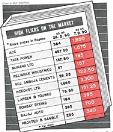
Hopefully, the country may be moving in that direction. Ramakrishna, who has succeeded Dave at SEBI, has ambitious plans: setting up investor education cells, publicising the names of companies which delay the allotment of shares and refunding of share application money, and coordinating the various building blocks that make up the capital market.
However cynics abound. With most feeling that there is too much talk and very little action. And indeed, SEBI's track record is not inspiring. The main problem is that it still lacks teeth: draft legislation which will give it legal status is yet to be tabled in Parliament. So the board's intention of bringing glasnost to the capital markets of the country still remains only that- an intention.
Meanwhile, the market is having the time of its life. Brokers say that many companies' good performance is still not reflected in the price. Says one: "There are still bargains available in the market." They point out that the ratio of share price to earning per share of many companies is still low, meaning there is still scope for increase.
And after this year's good monsoon, rural pockets can be expected to bulge, with healthy effects on the corporate sector. The next series of six-monthly company results will probably be excellent. Observers believe that Diwali will bring a lot of cheer to the stock-market. They expect the BSE Sensitive Index to touch 1,500 by the end of the year.
Says one analyst: "What we have seen is only the trailer, the main show is yet to start." An accurate prediction? Or just famous last words before a crash? The street astrologer with his parrot and cards is as likely to have the answer as the canniest stock analyst.
