Monday, December 27, 2010

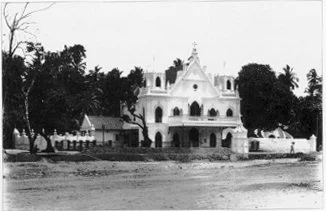
DADAR- PORTUGUESE CHURCH THEN AND NOW -BEFORE ENGLISH STARTED CALLING THE PLACE DADAR(STEPS) IT WAS KNOWN AS 'SALVESONG' BECAUSE OF THE CHURCH OF NOSSA SENORA DA SALVECAO


Portuguese Church - The Church of Our Lady of Salvation was originally built by the Portuguese Outside the Church's main entrance, on what is now the footpath or sidewalk, is a mortuary memorial to a Baretto, built about 200-300 years ago, and which names the location as "Mahim". Indeed, at that time, the Church was one of two Catholic Churches on the then Island of Mahim, with a shallow sea separating it on the east and south sides from other islands of the Bombay Archipelago. 
The name "Dadar" signifies a small stairway built on the eastern edge of Mahim Island; when the British built the Bombay, Baroda & Central India Railways (B.B.&C.I., now the "Western Division" of the Indian Railways), they named the station near these steps as Dadar. The area around the station on either side came to be named after this station by newer immigrants.


 Correa Church mumbai


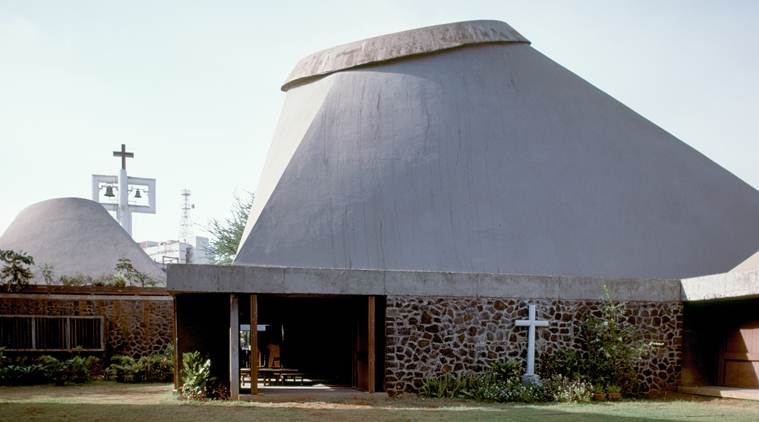
Dadar, Mumbai’s first planned suburb, is in popular imagination a place where culture and politics meet. When the Salvacao Portuguese Church, also called Our Lady of Salvation Church, was renovated in 1977, it was the first-of-its-kind makeover the city had seen. Gone were the steeples, the choir loft, the ascending roof and ornate facade, to be replaced by conical domes connecting the sanctuary (altar), the nave (central aisle), the baptistery (baptismal font), and the oratory (shrine). Charles Correa, by then, was already a Padma Vibhushan awardee, and had held the position of chief architect for Navi Mumbai.

The church was originally built by Portuguese Franciscans in the late 1500s and went through three renovations as it expanded. Correa was commissioned the revamp 

in 1974. In an essay in his book A Place in the Shade, Correa writes of how architecture unites us, despite differences in religious beliefs. 

How the axis mundi (the column of the universe connecting the earth to the sky) is fundamental to the architectonic symbolism in universal places of worship. 

This “open to sky” motif appears in almost every Correa project. In this church, he attempts that with the conical flues, while the interconnected walkways and central courtyard become as much a congregational space as the interiors.

Correa’s other tradition-defying act was to invite MF Husain to do a fresco on glass for the central dome. 

It was his idea of externalising the “social aspect of religion”.

Husain divided the glass into several segments for a stained-glass effect and painted the story of the five loaves and two fish, and the death and resurrection of Christ. On sunny days, it’s ethereal to see the light stream through the painting.
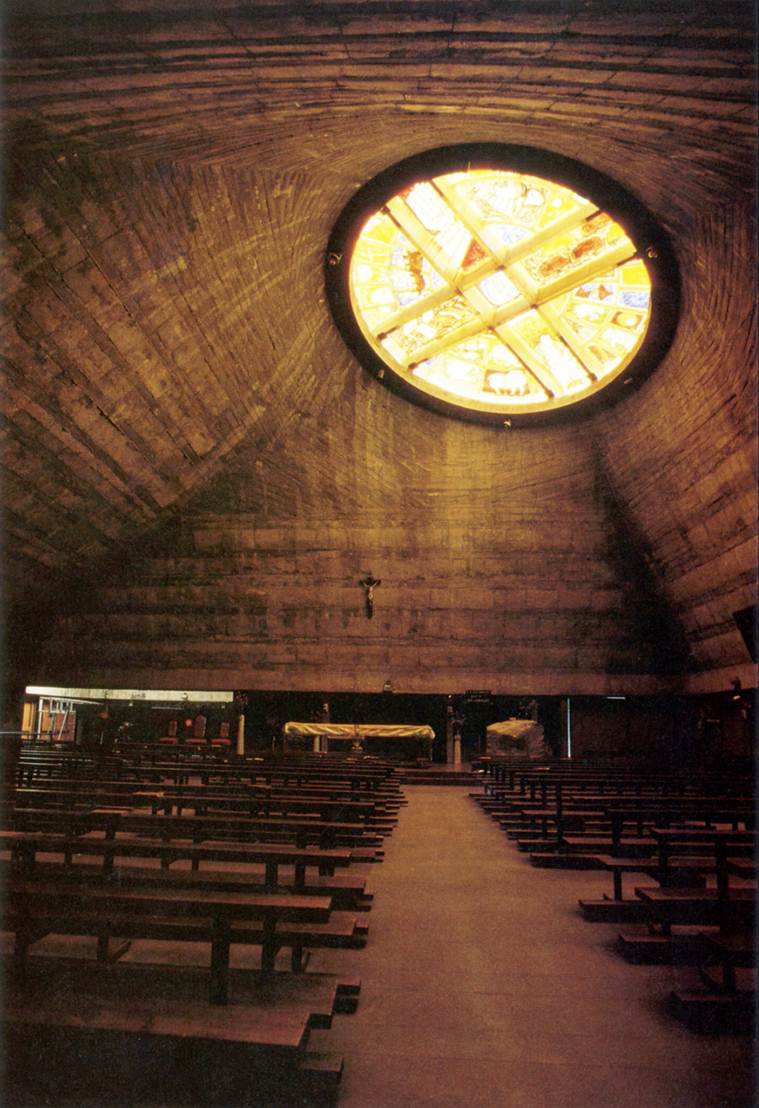
Correa Church mumbai, MF Husain God’s grace: The fresco on glass painted by MF Husain.

“I experienced what a space is for the first time with this building,” says Smita Dalvi, a professor at the Pillai College of Architecture, Navi Mumbai, as she recalls her days as a student architect. “A church is traditionally about the architecture of the interior spaces, and here Correa moves from the inward space to the outward form.”

ACCORDING TO HISTORY:- THE OLDER CHURCH IN DADAR WAS DESTROYED BY SOME  MEMBERS OF THE CHURCH AROUND 1950'S -

TO MAKE  NEW CHURCH WITH  SHAPE OF AN OVERTURNED WASTE PAPER BIN-SAYING THAT IS NEW FASHION !!!

12 most spectacular modern churches ...

There are many old churches in Mumbai (Bombay) and its suburb as it happened to be an old British Presidency. The Church of Our Lady of Salvation, popularly referred to as Portuguese Churth is in Dadar.  Called  Nossa Senhora da Salvação, this historically important church got a face-lift under the guidance of the well-known architect between 1974 and 1977.  The church was originally built in 1596 by the Portuguese Franciscans, who  landed in India to spread the gospel of Christ.

 First built in 1596, the church was rebuilt later in 1651 and 1914. When the church came up for the first time in Dadar, which was then known as lower Mahim  in the sixteenth century. The present structure  is the fourth on the original site.

Portuguese Church, Dadar. Mumbai.Nestopia


The Portuguese Franciscans carried on their work   until 1720  and later they left Mahim and Mumbai. 

It was in 1935, restoration and additions in the porch, etc were made to meet needs of the parish. With funds becoming available, 

in 1940 the presbytery was built and provision made for a new church building. Catholics accounted for  two-fifths of the parish population. 

As the Christian community grew in size, much larger church was built designed by Mr. Charles Correia 
incorporating, the  liturgical specification supplied by Bishop Simon Pimenta.

Simon Pimenta - Wikipedia

 The large baptistery, sacristy and the oratory are inter connected so  the covered seating and standing capacity of the church during congregation will be more than one thousand.
An important heritage feature of historical value is the cross that was built in the in the 19th century, in the late Baroque Portuguese style.  A Portuguese inscription at its base reads, Fabricada por Jacinta Barretto de Vadalla, A. D. 1885. It was installed inside the church compound,and now it is  outside the walls of the Church because a part of the church was given to the municipality for road expansion work. The graveyard is on the northwest corner of the site.
 
https://en.wikipedia.org/wiki/Portuguese_Church_(Mumbai)
Portuguese curch, Dadar, Mumbai, India. mid-day.com

==================================================

portuguese church-GirgaumImage result for portuguese church girgaum

St Theresa's Church (Girgaon Portuguese Church) - Mumbai

wikimapia.org/4008309/St-Theresa-s-Church-Girgaon-Portuguese-Church
St Theresa's Church (Girgaon Portuguese Church) is a church located at OPERA HOUSE in Mumbai. St Theresa's Church (Girgaon Portuguese Church)

Girgaon - Wikipedia, the free encyclopedia

https://en.wikipedia.org/wiki/Girgaon
For the village in Talasari taluka, see Girgaon, Palghar. ... St. Theresa's Church in Girgaon. ... One of these- Khotachi wadi is very famous for its Portuguese style wooden architecture. ... will complete its 121 years of celebration, also there is Jitekarwadi Famous for there idols made using unusual materials like soil and fiber, ...

Correa Church mumbai

Churchgate RAILWAY STATION ,BOMBAY 1930'S

KALBA DEVI- BOMBAY.Kalbadevi used to be residential area. today its a market area

Cotton Exchange BOMBAY 19TH CENTURY

Date: Between 1850s to 1870s Whole Plate Albumen Print from Wet Collodion Glass Negative Maker: Francis Frith

'John Wood Approaching Bombay', c1850. 'John Wood Approaching Bombay', c1850. At this time the East India Company was still governing India. The company was founded in 1600 to challenge the Dutch and Portuguese dominance of the spice trade from the Far East

https://www.meisterdrucke.ie/kunstwerke/1000px/Joseph_Heard_-_John_Wood_Approaching_Bombay_c1850_-_%28MeisterDrucke-708934%29.jpg

Saturday, December 25, 2010

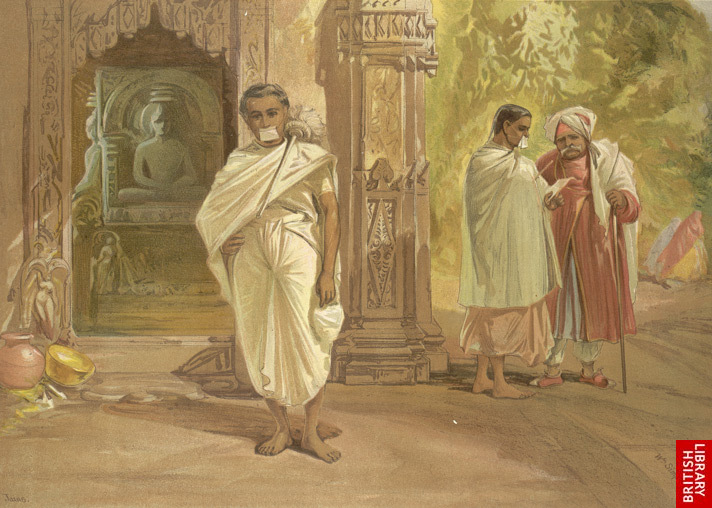
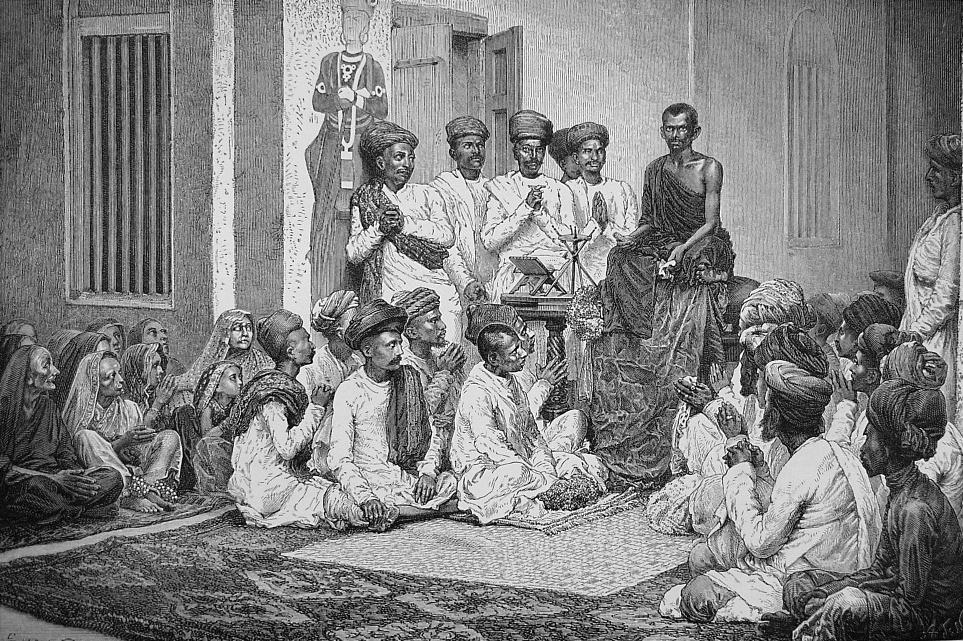
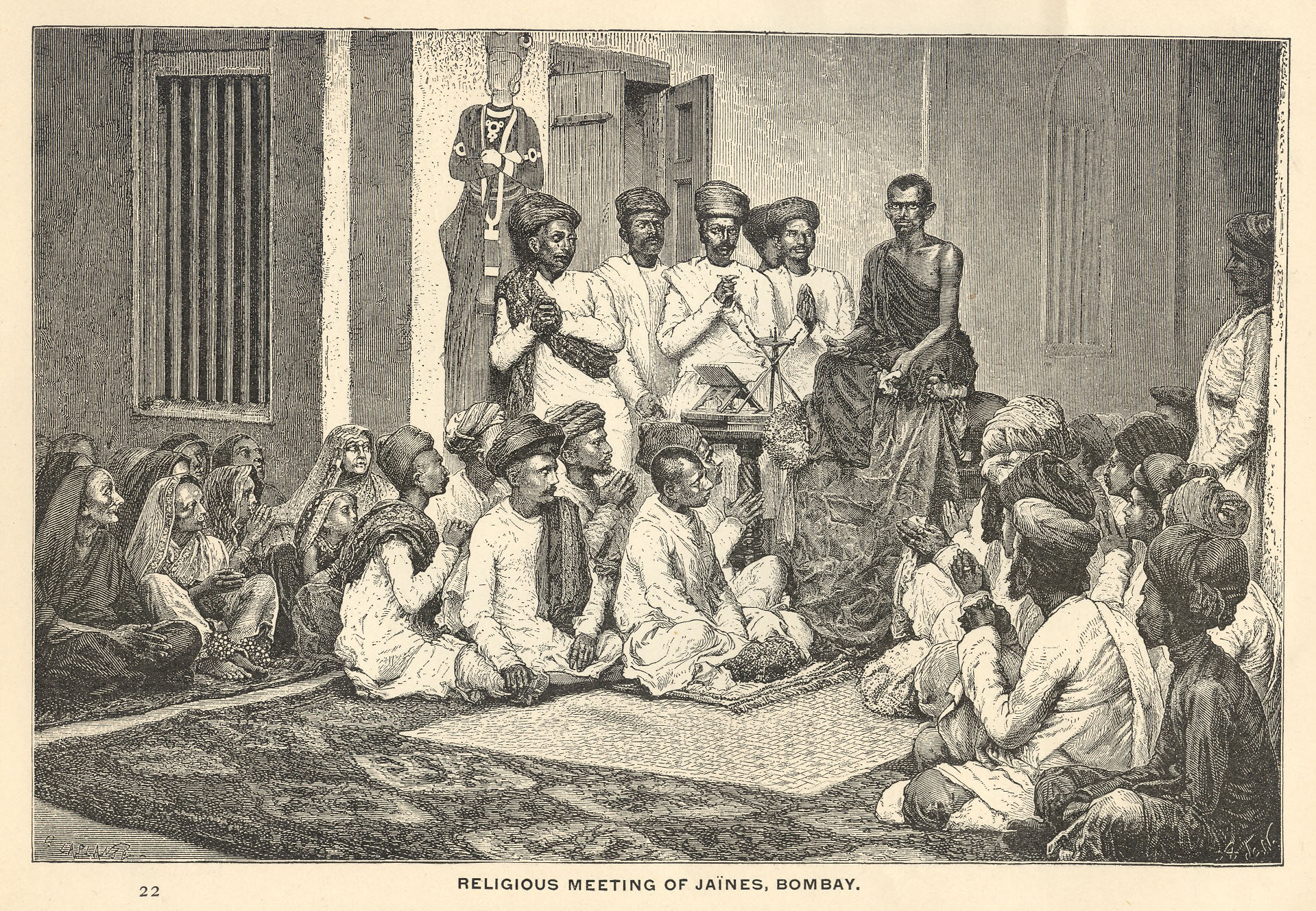
RELIGIOUS MEETING OF JAINES. BOMBAY. (India. Mumbai)


*"Jain Priests," a chromolithograph by William Simpson, 1867* (BL)


"Religious Service of the Jains, Bombay," from the Illustrated London News, 1875; *a very large scan of this engraving, attributed to LaPlante*

Source: ebay, Oct. 2004


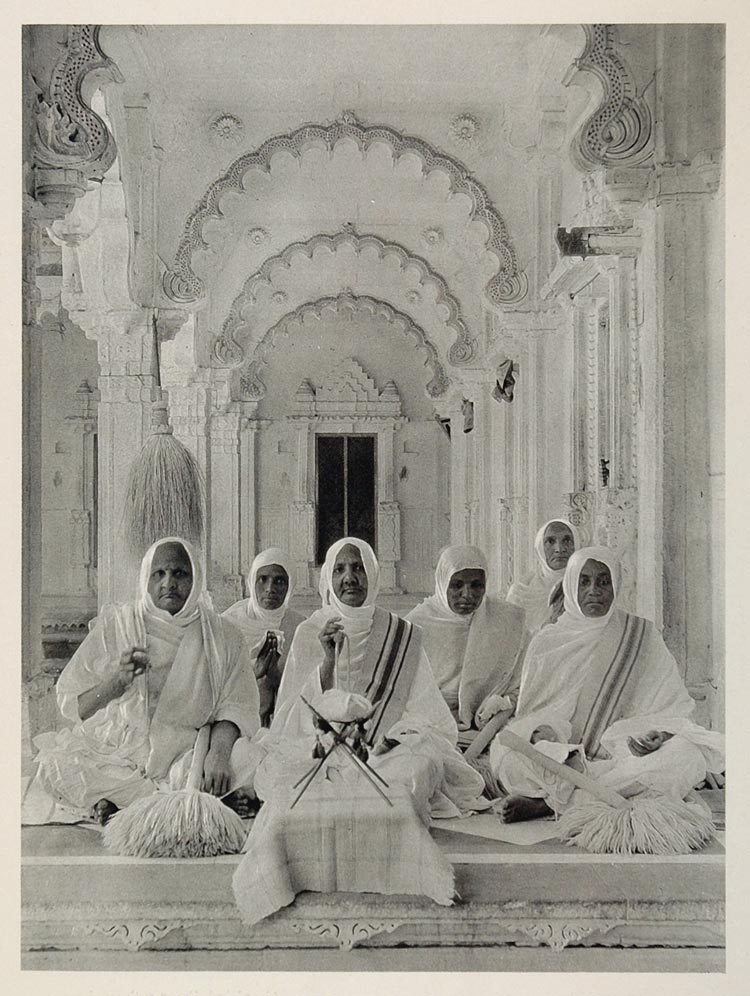
"Jain nuns at Sari temple, Ahmedabad," a photogravure by Martin Hurlimann, 1928

Source: ebay, Feb. 2007


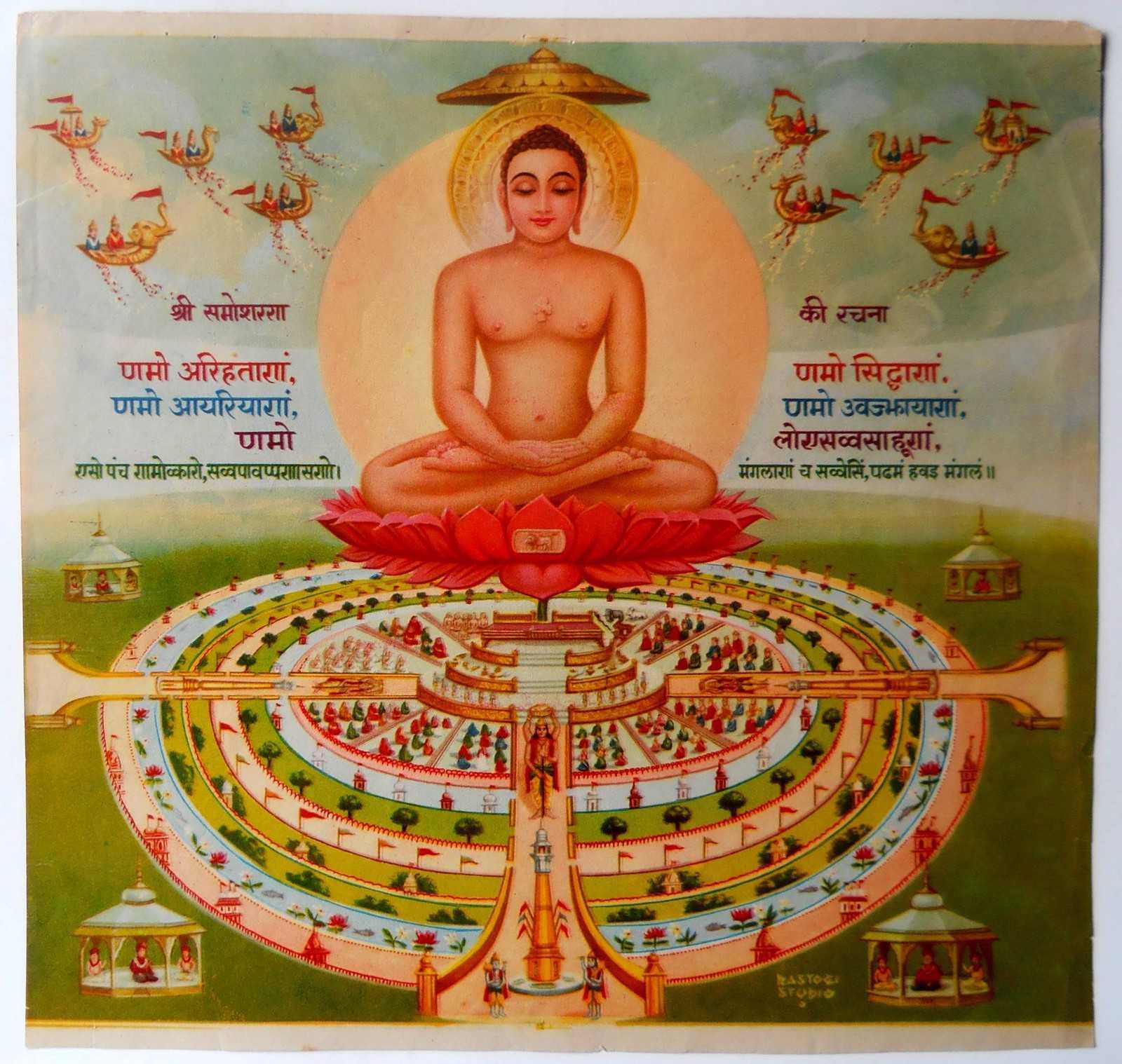
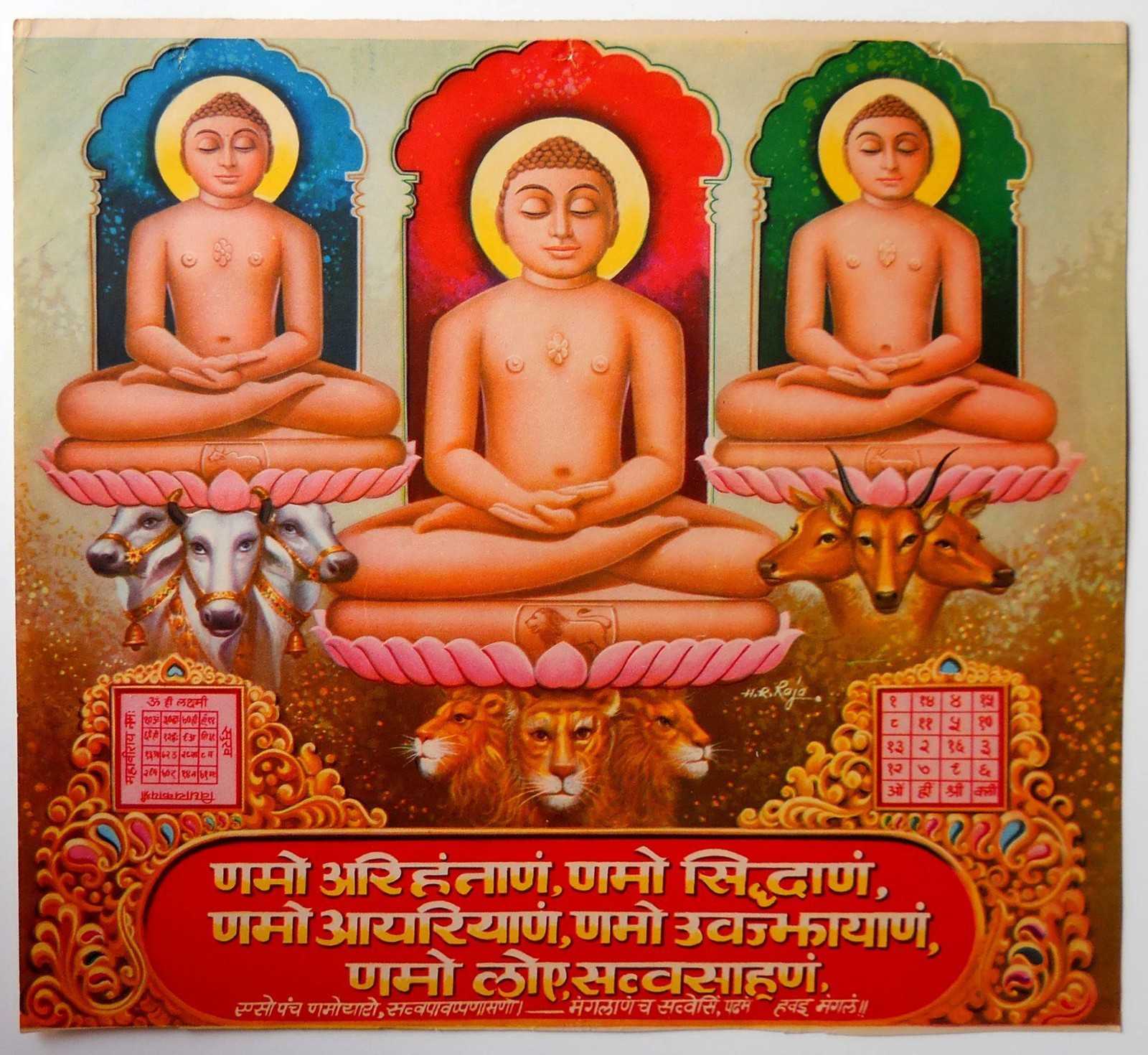
A Jain cosmic view, in a modern bazaar art print; *another, similar print, with yantras*

Source: ebay, Aug. 2012

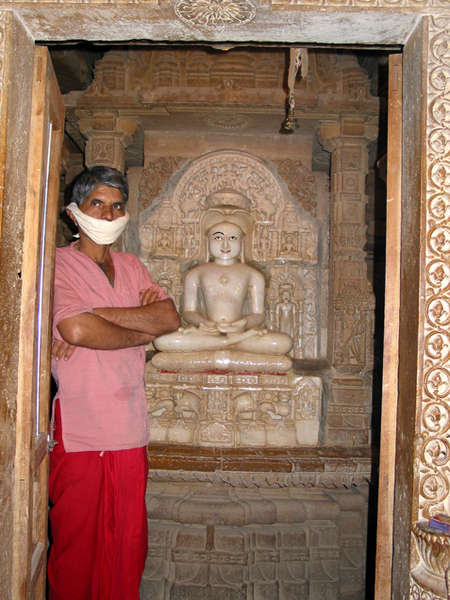
At a Jain temple in Jaisalmer (the mask prevents the inhaling and killing of tiny insects)

Source: http://www.indiamike.com/photopost/showphoto.php/photo/9442/cat/501
(downloaded Nov. 2005)


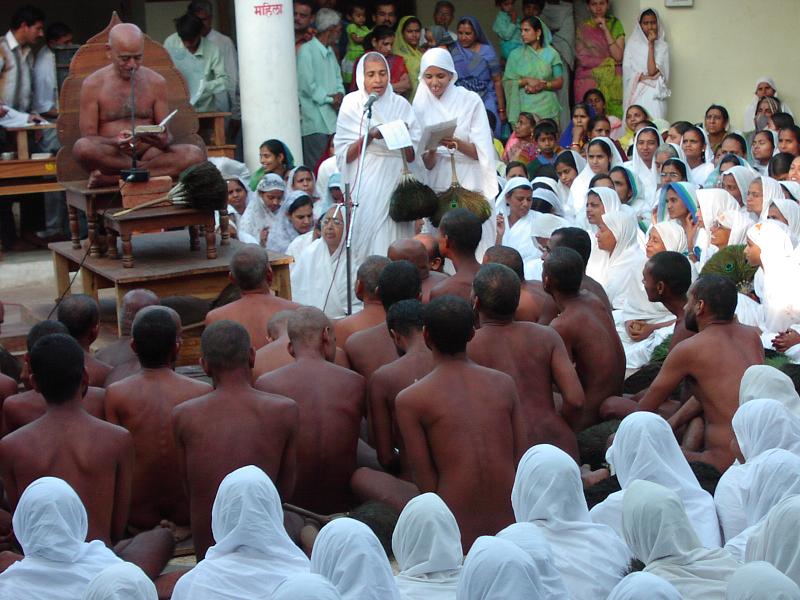
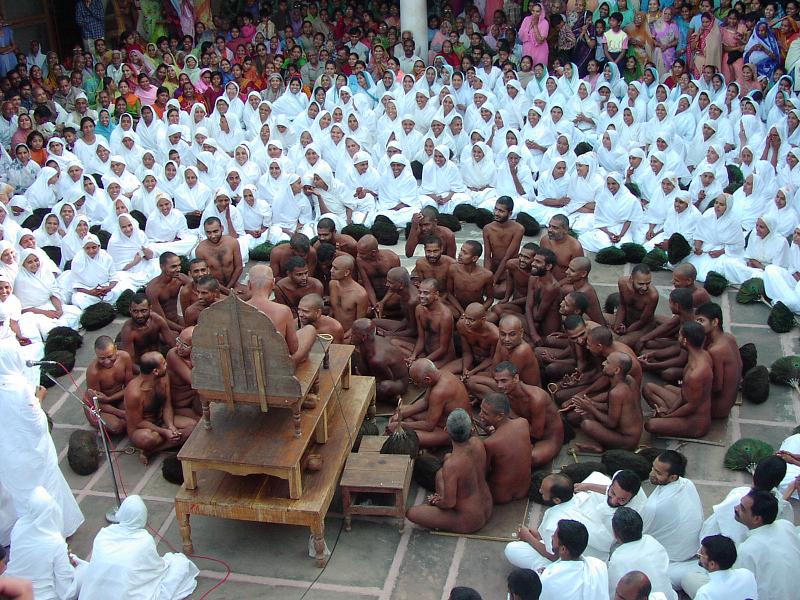
Modern Digambaras: "Sky-clad monks in Kundalpur" and nuns; *a view of the whole gathering*

Source: http://www.indiamike.com/photopost/showphoto.php/photo/10390
(downloaded Feb. 2006)


== Indian Routes index == Indian Routes sitemap == Glossary == FWP's main page ==


VICTORIA TERMINUS (NOW C.S.T.) RAIWAY STATION C.1870


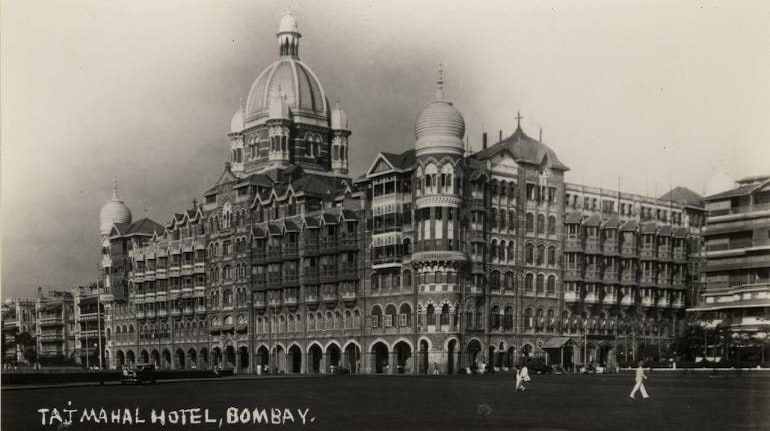
THE TAJ MAHAL PALACE HOTEL ENTRANCE.;

 THE TAJ MAHAL PALACE HOTEL ENTRANCE.;This façade hardly needs an introduction, but this view is slightly flummoxing. On closer scrutiny, those familiar with the iconic landmark might recognize this as the harbor view of the hotel. The main entrance faces west, and, according to one theory, was designed that way to allow access to horse carriages. Another rumor is that the architect misinterpreted the plans and designed the hotel facing the wrong way (inland). The Taj Mahal, built at a cost of £250,000, opened in 1903.

Taj Mahal Palace Hotel, Mumbai: How a rumoured building mistake became a modern design statement

Did the builders of Taj Mahal Palace Mumbai make a mistake in reading the architect's plans? It's a compelling story. But it may not be true. The Tatas deny this story.

 
September 09, 2023 / 16:10 IST
Story goes that the Taj Mahal Palace in Mumbai was built back-to-front. Instead of the front facing the sea, it was the back that faced the sea. The back had a glamorous look while the front appeared relatively simple. (Photo via Wikimedia Commons)

Story goes that the Taj Mahal Palace in Mumbai was built back-to-front. Instead of the front facing the sea, it was the back that faced the sea. The back had a glamorous look while the front appeared relatively simple. (Photo via Wikimedia Commons)

Content warning: Contains mention of suicide.

Taj Mahal Palace is undoubtedly the most famous hotel of India. The sea-facing hotel in Mumbai has played host to powerful guests, from former US President Barack Obama to Facebook’s Mark Zuckerburg. Its enduring moment for the global audience was perhaps during the 26/11 terrorist attacks but its appeal has fascinated all who have visited the grand hotel. Its creation in itself is a sequence of controversial and riveting tales.

The common story is that during the British Raj, Jamsetji Tata was humiliated when a premium Bombay hotel denied access to him – as the hotel did not permit Indians. It was an era when Indians were so routinely discriminated against that even the wealthiest did not think much of it. Tata, however, set out to build a luxurious hotel that would not follow any discriminatory policies. He acquired land on a 99-year lease and set out on his mission. It wasn’t easy. The hotel opened in 1903 at the behest of an astrologer despite not being fully functional. But over a period of time that changed and soon it became the benchmark in luxury, easily outclassing the hotel that rejected entry to Tata. On their part, the Tatas have never verified this narrative.

But there is another story, arguably even more fascinating, about the entrance of the hotel that served as an oddity to the curious observer. The hotel appeared to be built back-to-front. Instead of the front facing the sea, it was the back that faced the sea. The back had a glamorous look while the front appeared relatively simple.

The apparent reason for this was a communication gap. The design was done by an Italian or French architect. He returned home and left his plans in Bombay. Unfortunately, the plans were misinterpreted and the hotel was built incorrectly. In shock, the architect allegedly committed suicide. Time was, however, on the side of the hotel. Trends and styles changed. Flashy designs gave way to subtlety. In Under Seven Flags, author Eve Searle writes that “the irony of it is that today, with modern ideas of architecture, the plain façade facing the harbour is thought to be modern and beautiful, while the fancy, overdecorated back is seldom seen.”

The Tatas, however, had a chance to rectify the mistake. There was a hotel called Green’s next to the Taj. It was built even before the Taj and commanded a young and raw appeal. The Tata’s acquired that hotel, demolished it to make way for the expansion of the Taj. The four-floor Green’s Hotel was gone, and a 21-floor Taj Mahal Tower was built in 1973. The entrance, this time, was changed from a dingy street at the back to the grand entrance that is there today - along the magnificent Arabian Sea. The initial mess-up was rectified.

It's a compelling story. There’s just one problem. It may not be true. The Tatas deny this story. There is a wide constituency which believes that the initial execution was indeed correct. And that the architect was a Britisher who actually did not commit suicide. I suspect there could be merit to that assertion. The Tatas had owned the next-door Green’s Hotel since 1904 after buying it for INR 3.65 lakh. If the Taj entrance was indeed such a terrible error in execution, the rectification could have happened much earlier than it did in 1973. (Admittedly business was tough in the initial years, with prohibition only compounding the stress.)

Does any of it matter today? Not really. The hotel seems to be going from strength to strength. Every wealthy visitor to Mumbai has that hotel on their list of places to stay. The hotel’s legendary journey captures the best of India: where humiliation only raises the ambition, an ‘apparent’ error is rectified through ingenious means and an indomitable spirit exists to rebound even against the greatest odds.

Vishal Bhargava is a real estate enthusiast who views and reviews new projects, when not busy with his newstoon platform Snapnews. The views are personal, and do not represent the stand of this publication.
first published: Sep 9, 2023 03:57 pm

THE BOMBAY CLUB 1845;THE BOMBAY CLUB. Situated in the Fort area, this club, in close proximity to the docks, was founded by members of the Indian Navy in 1845. The building the club occupied in Rampart Row, sometimes called Ropewalk, is now a bank office.


Nariman (formerly Churchgate) Road, with the Mercantile Bank Building (now HSBC) at the left and the Horniman Circle garden in the distance.

                     The Nariman Road offices of the Indian Cotton Mills Federation.

Friday, December 24, 2010

Portrait of Group of Brahmans, of Parbu Caste - Lala Deen Dayal

Cricket Players, in Costume with Cricket Bats[SOME PLAYERS ARE IN LUNGI]

1936 Berlin Olympic Indian Hockey Team


The 1936 Summer Olympics was the fifth Field Hockey tournament at Olympics. All games took place either in the Hockey Stadion or on the Hockey Stadion Field No.2. Both hockey grounds were near by the Olympic Stadium located on the Reichssportfeld. The competition was held from Tuesday, August 4, 1936 to Saturday, August 15, 1936. 

Indian team scored 38 goals but only 1 goal was scored against them. India were the Gold medalists.India won the semi final by 10-0 against France and final by 8-1 against Germany. (Wikipedia)

Indian Workers are on strike in support of Mahatma Gandhi - 1930

Street Coconut Seller - Bombay (Mumbai) - 1930's

BEACH CANDY 1850-[NEAR MALABAR HILL];BOMBAY

"The Enlightenments of Pagett, M.P."