Friday, August 17, 2012
an antique 1900 typewriter in H C Mumbai

The Jetliners - Mignonne - Bombay merry hi.
in 2004, the Sri Lankan pop sensations from the 1960s, The Jet Liners, held a reunion concert in Colombo. As a finale, they performed this song: Bombay Meri Hai – a tune that has been a Bombay party standard since was released four decades ago. The first time I realised that the tune was hugely popular south of the Palk Straits was in 2000, while eating a meal in a Sri Lankan restaurant in the New York borough of Staten Island. As I tucked into my hoppers and curry, a Sinhalese version of Bombay Meri Hai called Ran Ran Ran blasted out of the speakers. I marvelled at how a song composed by a guy who lived around the corner from me in Bombay had spread around the globe like this.

Bombay Meri Hai is among my earliest musical memories. When I was a child, the song was always being played on Saturday Date, the pop music request show on All India Radio. But mostly, I heard the tune being performed week after week by wedding bands at the Bandra Gymkhana, opposite my grandparents’ home. Bombay Meri Hai is among the songs in the “masala” section of Catholic wedding parties – the fast-paced crescendo during which revellers wave white handkerchiefs above their heads to conjure up a long-forgotten aboriginal past as they dance to Marathi and Konkani folk tunes.
Bombay meri hai by naresh fernandes
Perhaps because it’s invariably performed alongside tunes like Galyan Sakli Sonyachi and Sonyachi Kavla, I’d always thought of Bombay Meri Hai as a traditional Bombay Catholic tune. So I was more than a little intrigued when, deep into the graveyard shift at The Times of India in 1991, my Parsi colleague Roxanne Kavarana told me that not only did she know the man who had composed the tune, she was actually related to him. Over the next few years, I’d come to learn a little more about how Mina Kava came to compose the first-ever Indo-pop hit.
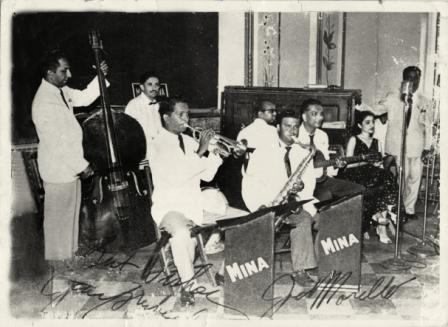 This photo was taken in 1958, when Mina Kava – peering out from behind
the drums – was still a few years away from his burst of success (or at
least success as defined by the standards of the tiny world of Indian
dance music). It was shot at the Bandra Gymkhana when his band, the
Music Makers, was staffed with best-known performers of the Bombay jazz
world: pianist Toni Pinto, trumpet player Chic Chocolate and saxophonist
Norman Mobsby. If you look closely, you’ll see that the photo was
signed at the bottom by two visiting American musicians: Dave Brubeck
and Joe Morello. (Not pictured here are six men who were vital to the
smooth functioning of the Music Makers and indeed, most Bombay dance
bands of the time – well-muscled coolies. “Sure, we had to transport the
piano from venue to venue,” Kava explained.)
This photo was taken in 1958, when Mina Kava – peering out from behind
the drums – was still a few years away from his burst of success (or at
least success as defined by the standards of the tiny world of Indian
dance music). It was shot at the Bandra Gymkhana when his band, the
Music Makers, was staffed with best-known performers of the Bombay jazz
world: pianist Toni Pinto, trumpet player Chic Chocolate and saxophonist
Norman Mobsby. If you look closely, you’ll see that the photo was
signed at the bottom by two visiting American musicians: Dave Brubeck
and Joe Morello. (Not pictured here are six men who were vital to the
smooth functioning of the Music Makers and indeed, most Bombay dance
bands of the time – well-muscled coolies. “Sure, we had to transport the
piano from venue to venue,” Kava explained.)Kava gave his first performance playing the harmonica on AIR’s Children’s Hour. After a stint as the leader of Phiroze Damri’s Hohner Harmonica Band, he began to take piano lessons so that he could start working on his own compositions. He rounded out his musical education with drumming lessons from Karl Lord, who lived around the corner from him, near Almeida Park in Bandra, and Hindustani vocal training with Pandit P Madhukar. After doing two bachelor’s degrees (he got a BA from St Xavier’s College and a BCom from Sydenham), Kava started playing percussion instruments for Hindi film soundtracks. But he gave up when he decided that the film industry was “run by cliques”.
In 1969, the recording company HMV asked Kava and the Music Makers to write a song about the city in which he lived. Kava had already made a few records for the company by then (and had changed his name at the insistence of HMV’s publicists), but his tunes hadn’t quite captured the imagination of the public. Like all the songs he made in English, the lyrics had been written by his formidable wife Naju and carried a whiff of Edwardian innocence about them. In 1966, they’d made their debut with an ode to their home state, which had been born only six years earlier. It was called Evening in Gay Maharashtra. (I have since given a copy to my friend, the queer activist Vikram Doctor, and he says that a remixed version of the tune is played occasionally at parties thrown by his Gay Bombay group.) They followed up with Viva La India. Kava even recorded a couple of bhajans, with vocals by the playback singer Krishna Kalle.
Evening in gay maharashtra by naresh fernandes
But Bombay Meri Hai broke the mould and established the template for the Indo-pop boom that would emerge in the mid-1990s. It had bilingual lyrics, ranged Indian instruments alongside Western ones and had an insanely addictive melody. It accomplished something else none of Kava’s previous recordings had managed: “It made money,” said Maurice Concessio, the long-time bandleader who earned his share of the loot because the B side of the record featured Ritabelle, a tune he’d written about Raj Kapoor’s daughter. The record brought him “lots of royalty cheques”, Concessio told me with evident glee.
The voice that invited listeners to sample Bombay’s delights – idli-dosa, hot samosa, among them – belonged to Uma Pocha. Her younger sister Usha Uthup was already finding her way through India’s pop music world (she won a Padma Shri earlier this year). But for Uma Pocha, music was just a hobby. She would soon earn her medical degree and spend the next few decades working in municipal hospitals. Before she disappeared into the hospital wards, though, she was invited to perform at a concert for the Save the Country Fund in Colombo in 1970.
Ceylon, as the country was then called, was very familiar with latest Hindi film hits. The Indian government had banished film music from All India Radio only a few years after Independence, so Radio Ceylon, left with several powerful transmitters set up by the British for wartime broadcasts during WW II, saw an opportunity to draw in advertising revenue. In 1952, for instance, it started the Binaca Geetmala countdown of Hindi film hits, a show that it continued to broadcast until 1994. Bombay Meri Hai, which was broadcast frequently on Radio Ceylon’s pop programmes, had a great advantage. The dholak-propelled rhythm is remarkably similar to the beat that enlivens the baila songs that Sri Lankans love, so it wasn’t surprising that they adopted Bombay Meri Hai with such a passion.
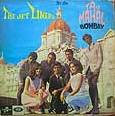 I haven’t had the chance to ask The Jetliners how they discovered Bombay Meri Hai. It’s
entirely likely that they heard it in Bombay, the year it was released.
After all, in 1969, the Sri Lankan group were the house band at Blow
Up, the discotheque of the Taj Mahal Hotel in Bombay and they recorded
two albums when they were in the city: The Jetliners Go Go at Blow Up and The Jetliners at the Taj Mahal Bombay.
I haven’t had the chance to ask The Jetliners how they discovered Bombay Meri Hai. It’s
entirely likely that they heard it in Bombay, the year it was released.
After all, in 1969, the Sri Lankan group were the house band at Blow
Up, the discotheque of the Taj Mahal Hotel in Bombay and they recorded
two albums when they were in the city: The Jetliners Go Go at Blow Up and The Jetliners at the Taj Mahal Bombay.However, back at Almedia Park in Bandra, the passage of time would not be kind to Mina Kava, the man who created the first-ever Indo-pop hit. In conversations with him over the years, I would learn about feuds with his record company about royalty payments, quarrels about property and other baroque disappointments too complicated for me to understand. In 1975, he wrote another Bombay song, this time about the bumala, as Parsis know that famous fish, the Bombay duck. But it didn’t become anywhere near as popular at Bombay Meri Hai.
Bombay duck by naresh fernandes
By the time he passed away in 2002, Kava seemed to
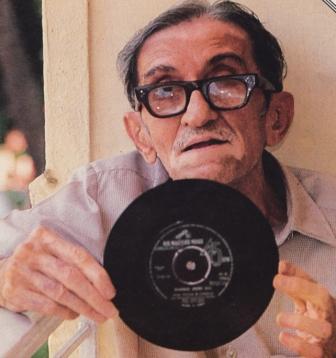 have lost much of the joy evident in Bombay Meri Hai.
But the delight that his tune still brings is proof of how, once it is
released into the world, music acquires a life of its own, independent
of its creators. That’s clear from this Sinhalese version of Bombay Meri
Hai, sung by Milton Silva.
have lost much of the joy evident in Bombay Meri Hai.
But the delight that his tune still brings is proof of how, once it is
released into the world, music acquires a life of its own, independent
of its creators. That’s clear from this Sinhalese version of Bombay Meri
Hai, sung by Milton Silva.Ran ran ran by naresh fernandes
Category: Audio, Bombay, India jazz, Jazz
]]]]]]]]]]]]]]]]]]]]]]]]]]]]]]]]]]]]]]]]]]]]]]]]]]]]]]]]]]]]]]]]]]]]]]]]]]]]]]]]]]]]]]]]]]]]]]]]]]]]]]]]]]]]]]]]]]]]]]]]]]]]]]]]]]
Bombay Meri hai
I found out that no one had submitted this awesome song which is usually played in weddings, it known as "Bombay Meri Hai", so I m posting the TABS for it.. hope you enjoy it
The strumming pattern is,
DUDU pause DUDU and so on..
Verse
(D)Come from England, come from Scotland, come from Ireland(A7)
Come from Holland, come from Poland, come from any land,(D)
If you're looking out for a (G)pleasant holiday,
(A7)Come to Bombay, come to Bombay, Bombay meri hai.(D)
Chorus
(D)Bom bom bom bom
Bombay meri hai(A7)
(A7)Born bom bom bom
Bombay meri hai(D)
(D)Our ladies are nice, they are so full of spice(A7)
Come to Bombay, come to Bombay Bombay meri hai.(D)
(D)Wear a dhoti, put a topi and a small coatie(A7)
Mini or bikini is so good for you honey(D)
If you ain't so gay then you can live the (G)sadhu way
(A7)Come to Bombay, come to Bombay Bombay meri hai.(D)
Verse
(D)Puri bhaji, bhelpuri you can try and tell(A7)
Idli dosa, hot samosa you will like it well(D)
Once you come to stay then you won't like to (G)go away
(A7)Come to Bombay, come to Bombay Bombay meri hai.(D)
Bombay duck
naresh fernandes

http://soundcloud.com/naresh-fernandes-1http://soundcloud.com/naresh-fernandes-1

COURT HISTORY IN BRIEF
n exhibition at Central Hall of Bombay High Court takes us through over 300 years of the citys judicial past
Sunil.Baghel @timesgroup.com
As a court reporter sitting through case after case,making sure that every technicality is covered and that no detail is missed or misunderstood,it is easy to forget what the corridors of the Bombay High Court have stood for decades.An exhibition at the Central Hall of the High Court's second floor is showcasing a fascinating compilation of the most significant documents in the city's over 300-year-old judicial history.
From King George II's 1753 charter creating Mayor's court,Royal charters for the creation of the Supreme Court and High Courts to India's most famous lawyer M K Gandhi's application and eventual debarment from the advocate's roll,the exhibition is a unique collage of Indian judiciary under and after the British Raj.
As the Chief Justice of Bombay High Court Mohit Shah notes in the visitor's book: "This exhibition is simply wonderful.It takes back to those days when the judges,barristers and advocates as well as the prothonotary's office were literally laying the foundation of our judicial system,dating back to more than 300 years."
The month-long exhibition was thrown open to the public on Thursday.Here are a few of the most important documents being showcased at the HC's Central Hall.
VENUE:
Central Hall,Second Floor,Bombay High Court,Fort
ENTRY:
Free
TIMINGS:
10 am to 6 pm


(From right) On display at the Central Hall are an attorneys roll between 1824 and 1976,one of the first typewriters in the Bombay HCs history dating back to 1905 (the earliest known typewriter is said to have come to HC in 1900),the gown of a prothonotary and a judges wig.The Central Hall on the second floor of the Bombay High Court where the month-long exhibition started on Thursday.It is the same Central Hall where three sedition trials against Lokmanya Balgangadhar Tilak were conducted between 1897 and 1916.
 Also on display were applications by the likes of Lokmanya Tilak,Mohammed Ali Jinnah seeking admission as advocates.On display were Gandhis June 1891 certificate,his November 1891 application to be enrolled as an advocate,and his eventual debarment in January 1923
 Queen Victorias 1862 charter by which four High Courts were established in India --Bombay,Delhi,Madras and Calcutta.Though names of three of these cities may have changed,their High Courts are still known by the original names.
 King George IVs 1823 charter to establish the Indian Supreme Court --called as Letters Patent.The exhibition also displayed a 1753 charter of establishment of the Mayors court.
 Justice M C Chagla -- the first Chief Justice of Independent Indias Bombay High Court.Also on display are the certificate issued to him by the Inner Temple dated June 28,1922,and the application written by Justice Chagla requesting to be enrolled as an advocate at the Bombay High Court on September 14,1922.
 The Chief Justices mace,which is placed on front of the dais in whichever court he presides on.The Indian Emblem replaced the British Emblem after the country gained Independence,but rest of the body remains the same as it was during the British Raj.
 Pictures of Bombay between 1900 and 1914 at the Central Hall.The pictures are a part of personal collection of Solicitor Rajan Jayakar.
 A visitor looks at Dr.Bhimrao Ambedkars certificate for Utter Barrister,issued by the Society of Grays Inn dated June 28,1922.
 Mahatma Gandhis application seeking admission as an advocate to the Bombay High Court dated November 16,1891.
 Sardar Vallabhbhai Patels certificate issued by the Middle Temple in January 1913,and his application seeking enrollment
 Lower denomination stamp papers of King Edward VII -- 2 annas,3 annas and 5 annas -- and high denomination stamp paper of Rs 25,000 by King George VI
Sunil.Baghel @timesgroup.com
As a court reporter sitting through case after case,making sure that every technicality is covered and that no detail is missed or misunderstood,it is easy to forget what the corridors of the Bombay High Court have stood for decades.An exhibition at the Central Hall of the High Court's second floor is showcasing a fascinating compilation of the most significant documents in the city's over 300-year-old judicial history.
From King George II's 1753 charter creating Mayor's court,Royal charters for the creation of the Supreme Court and High Courts to India's most famous lawyer M K Gandhi's application and eventual debarment from the advocate's roll,the exhibition is a unique collage of Indian judiciary under and after the British Raj.
As the Chief Justice of Bombay High Court Mohit Shah notes in the visitor's book: "This exhibition is simply wonderful.It takes back to those days when the judges,barristers and advocates as well as the prothonotary's office were literally laying the foundation of our judicial system,dating back to more than 300 years."
The month-long exhibition was thrown open to the public on Thursday.Here are a few of the most important documents being showcased at the HC's Central Hall.
VENUE:
Central Hall,Second Floor,Bombay High Court,Fort
ENTRY:
Free
TIMINGS:
10 am to 6 pm
(From right) On display at the Central Hall are an attorneys roll between 1824 and 1976,one of the first typewriters in the Bombay HCs history dating back to 1905 (the earliest known typewriter is said to have come to HC in 1900),the gown of a prothonotary and a judges wig.The Central Hall on the second floor of the Bombay High Court where the month-long exhibition started on Thursday.It is the same Central Hall where three sedition trials against Lokmanya Balgangadhar Tilak were conducted between 1897 and 1916.
Also on display were applications by the likes of Lokmanya Tilak,Mohammed Ali Jinnah seeking admission as advocates.On display were Gandhis June 1891 certificate,his November 1891 application to be enrolled as an advocate,and his eventual debarment in January 1923 Queen Victorias 1862 charter by which four High Courts were established in India --Bombay,Delhi,Madras and Calcutta.Though names of three of these cities may have changed,their High Courts are still known by the original names. King George IVs 1823 charter to establish the Indian Supreme Court --called as Letters Patent.The exhibition also displayed a 1753 charter of establishment of the Mayors court. Justice M C Chagla -- the first Chief Justice of Independent Indias Bombay High Court.Also on display are the certificate issued to him by the Inner Temple dated June 28,1922,and the application written by Justice Chagla requesting to be enrolled as an advocate at the Bombay High Court on September 14,1922.The Chief Justices mace,which is placed on front of the dais in whichever court he presides on.The Indian Emblem replaced the British Emblem after the country gained Independence,but rest of the body remains the same as it was during the British Raj. Pictures of Bombay between 1900 and 1914 at the Central Hall.The pictures are a part of personal collection of Solicitor Rajan Jayakar. A visitor looks at Dr.Bhimrao Ambedkars certificate for Utter Barrister,issued by the Society of Grays Inn dated June 28,1922. Mahatma Gandhis application seeking admission as an advocate to the Bombay High Court dated November 16,1891. Sardar Vallabhbhai Patels certificate issued by the Middle Temple in January 1913,and his application seeking enrollment Lower denomination stamp papers of King Edward VII -- 2 annas,3 annas and 5 annas -- and high denomination stamp paper of Rs 25,000 by King George VI
TRYST WITH THE PAST-restored Bhau Daji Lad Museum
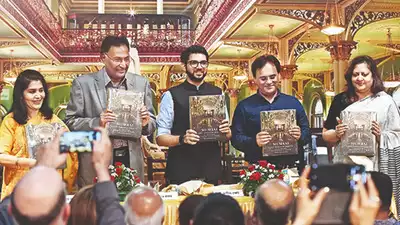

TRYST WITH THE PAST
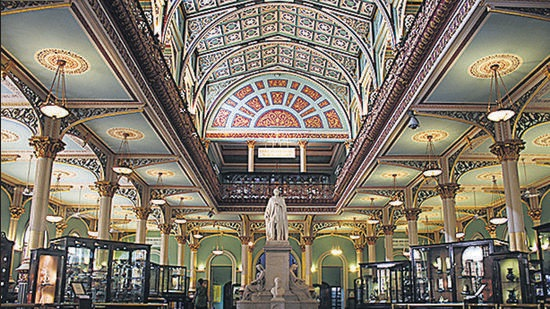
Visitors to the painstakingly restored Bhau Daji Lad Museum on Independence Day,were curious about a certain statuesque gentleman who was there with his family.Kabir Bedi with his companion Parveen,and grandchildren Alia,13 and Omar,12 was taken on a grand guided tour of the museum by Honorary Director Tasneem Mehta.The Bedis spent over two hours exploring the museums treasures and the section which will soon be open to the public with restored storage cottages and workshops spaces.We hear there are plans to make the museum more attractive by introducing a caf,a space for special art projects and public sculpture,as well as an audio visual centre.We cant wait.
Monday, July 30, 2012
Mumbai for me: Bandra residents united multiple government agencies Bella Jaisinghani, TNN | Jul 30, 2012, 05.42AM IST
0

MUMBAI: The challenge to beautify the precincts of Mumbai's forts arises from the fact that multiple agencies own the land on which the monuments stand. Bandra's residents, who refurbished Land's End garden on the precincts of the Portuguese fort, were able to bring these different arms of the government to common ground, which was the secret of their success.
The project was completed in 2001 at a cost of nearly Rs 1 crore. Arup Sarbadhikary , of the Bandra Bandstand Residents' Association , takes a deep breath as he recalls the struggle put up before the dream was realized. "The main garden, where the amphitheatre stands, belongs to the BMC, while the lawns that stretch to the shore come under the collector. The broken wall with the gate is owned by the state department of archaeology and museums. We collaborated with all three guardians and, with MP funds from Shabana Azmi, Dilip Kumar and Priya Dutt, created this verdant haven," he says. "We continue to pay staff salaries for the upkeep and water the garden as well."
The road was littered with legal battles against land sharks who were hoping to appropriate the prime proper ty. However, the Land's End garden was finally beautified in keeping with heritage norms. Old stones from the fort's ruins and Behramjee Jeejeebhoy's mansion were used. Hundreds of trees were planted as well.

Architect P K Das, who undertook the project, says, "In Mumbai, a fort may come under the Archaeological Survey of India or state department of archaeology , while the land may variously belong to the BMC, state government, collector or Mumbai Port Trust. That is the tragedy of Mumbai's development, several agencies often work at cross purposes . Citizens, who remain the neutral factor, can bring these conflicting interests to common ground. We at Open Mumbai have demanded that each fort and its precinct be considered an area that needs to be conserved so that a comprehensive plan is implemented ."

The Land's End experiment has served as an inspiration to residents of Carter Road and Juhu, with residents investing serious sums to develop parks.
==========================================================================


The project was completed in 2001 at a cost of nearly Rs 1 crore. Arup Sarbadhikary , of the Bandra Bandstand Residents' Association , takes a deep breath as he recalls the struggle put up before the dream was realized. "The main garden, where the amphitheatre stands, belongs to the BMC, while the lawns that stretch to the shore come under the collector. The broken wall with the gate is owned by the state department of archaeology and museums. We collaborated with all three guardians and, with MP funds from Shabana Azmi, Dilip Kumar and Priya Dutt, created this verdant haven," he says. "We continue to pay staff salaries for the upkeep and water the garden as well."
The road was littered with legal battles against land sharks who were hoping to appropriate the prime proper ty. However, the Land's End garden was finally beautified in keeping with heritage norms. Old stones from the fort's ruins and Behramjee Jeejeebhoy's mansion were used. Hundreds of trees were planted as well.
Architect P K Das, who undertook the project, says, "In Mumbai, a fort may come under the Archaeological Survey of India or state department of archaeology , while the land may variously belong to the BMC, state government, collector or Mumbai Port Trust. That is the tragedy of Mumbai's development, several agencies often work at cross purposes . Citizens, who remain the neutral factor, can bring these conflicting interests to common ground. We at Open Mumbai have demanded that each fort and its precinct be considered an area that needs to be conserved so that a comprehensive plan is implemented ."
The Land's End experiment has served as an inspiration to residents of Carter Road and Juhu, with residents investing serious sums to develop parks.
==========================================================================
Mumbai for me: Rendezvous at the ruins anyone?
The precincts of Mumbai's six forts have been neglected, abused and encroached. The organizers of Open Mumbai, an exhibition currently on at Nehru Centre, have proposed that spaces for public leisure be created in their precincts.


In fact, the state department of archaeology as well as central Archaeological Survey of India (ASI) had earlier announced similar plans to develop gardens, promenades and cafes in the precincts of the Sewri, Worli and Bandra forts. A similar plan was also in place for Vasai Fort in Thane district. But so severe was the damage to the monuments during restoration work that the larger plan to create public spaces in the precincts was truncated.

The only site where the dream took shape was in the precincts of Bandra Fort, where residents along with architect P K Das managed to create public and cultural spaces, though here too the state department of archaeology's restoration of the fort itself was a tragedy.
The six forts are at Sewri, Bandra, Worli, Mahim and Sion (two forts). Of these, Sion Fort is the largest, covering 53,810 sq m, and Kala Killa, also at Sion, is the smallest at 1,293 sq m.
Architect Vikas Dilawari agrees that the precincts surrounding forts should be turned into public spaces and tourist destinations. Indeed, all planners seem to be on common ground on certain issues, including demarcating these natural assets in the city's Development Plan (DP). It is another matter that these structures are anyway supposed to be 'protected' due to their historic status.
Dilawari suggests, "The revised DP, being prepared right now, should acknowledge these forts as our rich cultural assets, something missing in the earlier DPs. Once this is done, the restoration interventions proposed should encourage local, regional and national tourism . The easiest way to protect the historical structure is to have a recreational zone that serves the area, as in the case of Bandra Fort."
He adds that the precinct around the fort should be regulated but residents should be allowed to perform necessary repairs. "However, there should be no highrises , which engulf the very presence and setting of the monument," Dilawari says. The ASI monuments now have a new central law to protect them, which needs to be integrated with the revised DP, he adds.
Architect Chetan Raikar says the government neither has the resources nor the willingness to conserve forts, and hence "adaptive reuse" is the only viable option to maintain them. "This is possible if these places are converted into open spaces to attract tourists and locals. Mumbai is devoid of such open spaces and the public would be more than willing to even pay if these forts are developed as parks while maintaining the identity of the ruins. This does require willingness from the government, though," he says.
Dilawari says the government should also encourage small history museums as part of the adaptive reuse. The museums could have information about the forts as well as the locality. Subtle illumination could also draw attention to the structures. For instance, commuters who use the Bandra-Worli sea link pass the Worli Fort, but hardly know of its presence.
The organizers of the Open Mumbai exhibit say that by connecting the fort precincts to neighbourhoods, their isolation and abuse would be halted.
In fact, the state department of archaeology as well as central Archaeological Survey of India (ASI) had earlier announced similar plans to develop gardens, promenades and cafes in the precincts of the Sewri, Worli and Bandra forts. A similar plan was also in place for Vasai Fort in Thane district. But so severe was the damage to the monuments during restoration work that the larger plan to create public spaces in the precincts was truncated.
The only site where the dream took shape was in the precincts of Bandra Fort, where residents along with architect P K Das managed to create public and cultural spaces, though here too the state department of archaeology's restoration of the fort itself was a tragedy.
The six forts are at Sewri, Bandra, Worli, Mahim and Sion (two forts). Of these, Sion Fort is the largest, covering 53,810 sq m, and Kala Killa, also at Sion, is the smallest at 1,293 sq m.
Architect Vikas Dilawari agrees that the precincts surrounding forts should be turned into public spaces and tourist destinations. Indeed, all planners seem to be on common ground on certain issues, including demarcating these natural assets in the city's Development Plan (DP). It is another matter that these structures are anyway supposed to be 'protected' due to their historic status.
Dilawari suggests, "The revised DP, being prepared right now, should acknowledge these forts as our rich cultural assets, something missing in the earlier DPs. Once this is done, the restoration interventions proposed should encourage local, regional and national tourism . The easiest way to protect the historical structure is to have a recreational zone that serves the area, as in the case of Bandra Fort."
He adds that the precinct around the fort should be regulated but residents should be allowed to perform necessary repairs. "However, there should be no highrises , which engulf the very presence and setting of the monument," Dilawari says. The ASI monuments now have a new central law to protect them, which needs to be integrated with the revised DP, he adds.
Architect Chetan Raikar says the government neither has the resources nor the willingness to conserve forts, and hence "adaptive reuse" is the only viable option to maintain them. "This is possible if these places are converted into open spaces to attract tourists and locals. Mumbai is devoid of such open spaces and the public would be more than willing to even pay if these forts are developed as parks while maintaining the identity of the ruins. This does require willingness from the government, though," he says.
Dilawari says the government should also encourage small history museums as part of the adaptive reuse. The museums could have information about the forts as well as the locality. Subtle illumination could also draw attention to the structures. For instance, commuters who use the Bandra-Worli sea link pass the Worli Fort, but hardly know of its presence.
The organizers of the Open Mumbai exhibit say that by connecting the fort precincts to neighbourhoods, their isolation and abuse would be halted.
============================================================================
SION FORT
SEWRI FORT

SEWRI FORT 17TH CENTURY BELOW

Sunday, July 29, 2012
The course that’s been changing lives in Mumbai
MUMBAI: Every evening, when St Xavier's College turns on its yellow lights, a thousand canteen boys, sweepers, hawkers, labourers, milk vendors, clerks and receptionists wrap up a tough day's work and rush in for their lectures. Once in, they are in a world where all they are expected to do is hold a pen and pay attention.
Few in the city know about the evening course at the college. Started 24 years ago, the commerce section is perhaps a little out of sync with the loud Malhar and the campus fashion a sharp contrast to what one sees in top colleges. Also, most students don't return to a home or comforting security each day. Principal Errol Fernandes said, "The morning section was started to provide excellent education. The criterion to admit students is merit. The evening classes were started to cater to the distressed section of society and give them hope of a better life."
The classes begin with a short prayer of silence. "Students are asked to take a deep breath so they can get rid of the grime and tiredness of the day," Fernandes explained.
As the section enters its silver jubilee year, it has turned autonomous. Unlike other colleges, the attendance here is high, probably because the reason to study is different. There are no free lectures, and very often extra classes for weaker students are held on the train, during the faculty's journey back home.
For long, excellent education has mostly been the privilege of the moneyed and the meritorious. The commerce section at St Xavier's was started with the aim of breaking away from that norm. "These students are the ones who really need the help," said economics professor Kamaji Bokare. "The rate of change of life you see here is really high."
Akshay Shetty, who used to run a roadside stall outside Old Custom's House, is today a senior executive at a mutual fund firm. "I went on to do my master's and am also a cost accountant. The biggest change has been the respect I get today," says a proud Shetty. Till about five years ago, Prabhakar Poojary was a canteen boy in BEST earning Rs 600 a month. Today, he heads the Singapore, Dubai and Mauritius markets of a private fund and takes home an enviable pay packet of Rs 30 lakh. "When tough life becomes a routine, the rest becomes easy," he says.
Teachers take pride in the fact that two ex-students have made the Indian Institute of Management-Ahmedabad—one is the vice-president of a private bank—but most importantly, they speak of the values the course has instilled in their students. Ravi Gaba was always a bright student; he bagged several cash awards in his years at St Xavier's. "When he graduated, he gave us all the cash prizes (totaling Rs 18,000) that he had won and said he wanted to leave it back for another needy student," recalled accounts professor Rajesh Vora.
Going to college means different things to different people. For some, collegiate education rebuilds their lives, for some others it is the bridge to a better path. For many others, it's a plunge out of a dark night...to a day that shines as bright as the lights on the campus they walk to each evening.
Few in the city know about the evening course at the college. Started 24 years ago, the commerce section is perhaps a little out of sync with the loud Malhar and the campus fashion a sharp contrast to what one sees in top colleges. Also, most students don't return to a home or comforting security each day. Principal Errol Fernandes said, "The morning section was started to provide excellent education. The criterion to admit students is merit. The evening classes were started to cater to the distressed section of society and give them hope of a better life."
The classes begin with a short prayer of silence. "Students are asked to take a deep breath so they can get rid of the grime and tiredness of the day," Fernandes explained.
As the section enters its silver jubilee year, it has turned autonomous. Unlike other colleges, the attendance here is high, probably because the reason to study is different. There are no free lectures, and very often extra classes for weaker students are held on the train, during the faculty's journey back home.
For long, excellent education has mostly been the privilege of the moneyed and the meritorious. The commerce section at St Xavier's was started with the aim of breaking away from that norm. "These students are the ones who really need the help," said economics professor Kamaji Bokare. "The rate of change of life you see here is really high."
Akshay Shetty, who used to run a roadside stall outside Old Custom's House, is today a senior executive at a mutual fund firm. "I went on to do my master's and am also a cost accountant. The biggest change has been the respect I get today," says a proud Shetty. Till about five years ago, Prabhakar Poojary was a canteen boy in BEST earning Rs 600 a month. Today, he heads the Singapore, Dubai and Mauritius markets of a private fund and takes home an enviable pay packet of Rs 30 lakh. "When tough life becomes a routine, the rest becomes easy," he says.
Teachers take pride in the fact that two ex-students have made the Indian Institute of Management-Ahmedabad—one is the vice-president of a private bank—but most importantly, they speak of the values the course has instilled in their students. Ravi Gaba was always a bright student; he bagged several cash awards in his years at St Xavier's. "When he graduated, he gave us all the cash prizes (totaling Rs 18,000) that he had won and said he wanted to leave it back for another needy student," recalled accounts professor Rajesh Vora.
Going to college means different things to different people. For some, collegiate education rebuilds their lives, for some others it is the bridge to a better path. For many others, it's a plunge out of a dark night...to a day that shines as bright as the lights on the campus they walk to each evening.
Mumbai’s ‘oldest’ school to shift to new-age International Baccalaureate

MUMBAI: It's a fact that the only thing constant in society is change. And keeping this in mind, possibly the oldest school of Mumbai has decided to change its affiliation to International Baccalaureate (IB). Robert Money Technical High School in Grant Road completed 176 years of imparting education in the city and is currently busy renovating its century-old structure. Their IB section will start from the next academic year.
"We still have close to 330 students from the SSC section who will finish their schooling the same board but, simultaneously , we will start the new IB batch in our renovated building," said Rev Sharad Balid, administrator of the school. As of now, the Marathi medium and junior college sections have been receiving grants from the government while the rest is run by the Bombay Diocesan Society BCS). The IB school is a joint effort of BCS and Chanakya Gyan Kendra, and will be open students from 2013.
The trend of changing affiliations from state board to other central and internation-boards has been a part of the educational system for ages now. Christ Church School in Byculla has weathered the ups and downs of academia for more than a century . "Old schools are awakened by the challenges put forth by newer schools. We have an advantage because of our history but we cannot rest on our laurels," said principal Carl Laurie. After changing their affiliation to ICSE in the 1970s, the school also introduced the CIPP program (an evaluation model) a year ago. Similarly, the school may be looking to launch the IGCSE program in the near future. Since we didn't want to be a has-been school, we realized that we had to make certain changes that would help us adapt to this rapidly changing environment," added Laurie.
The Cathedral and John Connon School is considered one of the city's premier institutions for junior education. The key is to embrace the new without throwing out the old," said principal Meera Isaacs. Cathedral has never had any trouble keeping up with changing times. In fact, the school was the first in the city to establish a Learning Resource Center. To celebrate its 150th anniversary, Cathedral released a special commemorative stamp in 2010.
Tradition has proven to be equally important to St Mary's High School in Mazgaon to the extent that it has maintained its uniform for more than a century. "Tradition implies that there is something good in . There is a sentimental value attached to the boys' uniforms. No one has ever tried to change this tradition," said principal Fr Kenneth Misquitta.
The Alexandra Girls English Institution in Fort is one of the oldest girls schools in the city and is ready to celebrate 150 years of existence. The school is preparing for an enormous celebration, which includes the release of a special postal cover, an interschool fest, ex-students' reunion and a grand show in April where the school souvenir will be released. However, it has no intention of changing affiliation any time soon. "The state board syllabus has evolved over the years and is at par with other boards, so we will continue our loyalty to the board. We'd rather focus on co-curricular activities to encourage children in all aspects of life," said principal Freny Mehta. The school will start its 150 years celebration from September 1.
"We still have close to 330 students from the SSC section who will finish their schooling the same board but, simultaneously , we will start the new IB batch in our renovated building," said Rev Sharad Balid, administrator of the school. As of now, the Marathi medium and junior college sections have been receiving grants from the government while the rest is run by the Bombay Diocesan Society BCS). The IB school is a joint effort of BCS and Chanakya Gyan Kendra, and will be open students from 2013.
The trend of changing affiliations from state board to other central and internation-boards has been a part of the educational system for ages now. Christ Church School in Byculla has weathered the ups and downs of academia for more than a century . "Old schools are awakened by the challenges put forth by newer schools. We have an advantage because of our history but we cannot rest on our laurels," said principal Carl Laurie. After changing their affiliation to ICSE in the 1970s, the school also introduced the CIPP program (an evaluation model) a year ago. Similarly, the school may be looking to launch the IGCSE program in the near future. Since we didn't want to be a has-been school, we realized that we had to make certain changes that would help us adapt to this rapidly changing environment," added Laurie.
The Cathedral and John Connon School is considered one of the city's premier institutions for junior education. The key is to embrace the new without throwing out the old," said principal Meera Isaacs. Cathedral has never had any trouble keeping up with changing times. In fact, the school was the first in the city to establish a Learning Resource Center. To celebrate its 150th anniversary, Cathedral released a special commemorative stamp in 2010.
Tradition has proven to be equally important to St Mary's High School in Mazgaon to the extent that it has maintained its uniform for more than a century. "Tradition implies that there is something good in . There is a sentimental value attached to the boys' uniforms. No one has ever tried to change this tradition," said principal Fr Kenneth Misquitta.
The Alexandra Girls English Institution in Fort is one of the oldest girls schools in the city and is ready to celebrate 150 years of existence. The school is preparing for an enormous celebration, which includes the release of a special postal cover, an interschool fest, ex-students' reunion and a grand show in April where the school souvenir will be released. However, it has no intention of changing affiliation any time soon. "The state board syllabus has evolved over the years and is at par with other boards, so we will continue our loyalty to the board. We'd rather focus on co-curricular activities to encourage children in all aspects of life," said principal Freny Mehta. The school will start its 150 years celebration from September 1.
Saturday, July 28, 2012
Mumbai’s oldest girls school turns 150 Published: Monday, Apr 16, 2012, 8:26 IST By Puja Pednekar | Place: Mumbai | Agency: DNA | |
| |

Subscribe to:
Posts (Atom)