


Page Navigation
Sunday, May 29, 2016
British Steamship " CITY OF GENOA (photo published on request by anonymous reader of this blog)

| City of Genoa | 1906 | ex- Windhuk, Hamburg America Line, 1919 war reparations, 1921 renamed City of Genoa, 1928 sold to Portugal renamed Joao Belo. | 6,365tons |
more information :-
SUN SHIPPING Co.
/ HALL LINE steamships
|
|||
| Vessel | Built | Years in Service | Tons |
| Aston Hall | 1882 | 1901 taken over by JRE, 1909 scrapped after collision in Bosphorus. | 3,568 |
| Borderer | 1904 | 1917 purchased from Border Union SS Co, Glasgow, 1929 sold to Germany renamed Emmy Friederich. | 4,372 |
| Branksome Hall (1) | 1875 | 1881 sold to Cia Trasatlantica Espanola renamed Panama. | 2,086 |
| Branksome Hall (2) | 1888 | 1898 sold to P.& O. S.N.Co., renamed Tientsin. | 3,839 |
| Branksome Hall (3) | 1904 | 1906 transferred to Glen Line renamed Glenavon, 1910 reverted to JRE renamed Branksome Hall 1918 torpedoed and sunk by UB-105 off North Africa. | 4,662 |
| Branksome Hall (4) | 1905 | ex- Arensburg, Hansa Line, 1919 war reparations, 1920 renamed Branksome Hall, 1933 scrapped after collision. | 4,467 |
| Bretton Hall | 1881 | 1885 wrecked on coast of Devon. | 2,421 |
| Childwall Hall | 1876 | 1877 sold to James Wood & Sons, Liverpool. | 2,017 |
| City of Adelaide (1) | 1917 | 1918 torpedoed and sunk off Malta by U.63. | 8,389 |
| City of Adelaide (2) | 1920 | 1944 torpedoed and sunk by Japanese submarine I-8 in Indian Ocean. | 6,589 |
| City of Agra (1) | 1903 | 1932 scrapped. | 4,808 |
| City of Agra (2) | 1936 | 1965 scrapped. | 6,361 |
| City of Athens | 1923 | 1942 torpedoed and sunk by U.179 off Capetown. | 6,558 |
| City of Auckland | 1915 | ex- Weissenfels, Hansa Line, 1919 war reparations, 1921 renamed City of Auckland, 1947 sold to Christopher SS Co., renamed Karteria. | 8,336 |
| City of Baltimore | 1855 | 1874 purchased from Inman Line, 1882 sold to J. Ripolles, Valencia renamed Fivaller, then Benicarlo. | 2,292 |
| City of Barcelona | 1930 | 1958 scrapped. | 5,787 |
| City of Baroda (1) | 1911 | 1917 torpedoed and sunk by UC.53 off Ireland. | 5,032 |
| City of Baroda (2) | 1918 | 1943 torpedoed and sunk by U.509 off Luderitz Bay, South Africa; loss of 14 lives. | 7,129 |
| City of Bath | 1926 | 1942 torpedoed and sunk by U.508 off Trinidad. | 5,079 |
| City of Bedford (1) | 1924 | 1940 lost in collision with s/s Bodnant (Elder Dempster) off Iceland. | 6,407 |
| City of Bedford (2) | 1950 | 1972 scrapped. | 7,341 |
| City of Birkenhead | 1950 | 1971 sold to China Marine Investment, Hong Kong renamed Liberty Trader. | 7,942 |
| City of Birmingham | 1911 | 1914-1916 troopship, 1916 torpedoed and sunk by U.32 in Atlantic. | 7,498 |
| City of Bombay (1) | 1910 | 1932 scrapped. | 5,186 |
| City of Bombay (2) | 1937 | 1942 torpedoed and sunk by U.159 in South Atlantic. | 7,140 |
| City of Boston | 1912 | ex- Dusseldorf, Deutsche-Australische Line, 1919 war reparations to France, 1921 ceded to Britain renamed City of Boston, 1927 sold to North German Lloyd renamed Grandon. | 5,885 |
| City of Brisbane (1) | 1918 | 1918 torpedoed and sunk off Newhaven by UB-57. | 7,138 |
| City of Brisbane (2) | 1920 | 1940 bombed and sunk in Thames Estuary. | 7.138 |
| City of Bristol | 1912 | 1936 sold to Barry Shipping renamed St. Woolas. | 6,741 |
| City of Brooklyn | 1949 | 1967 sold to Panama renamed Lefkadios. | 7,557 |
| City of Cairo | 1915 | 1942 torpedoed and sunk by U.68, south of St. Helena; loss of 104 lives. | 7,882 |
| City of Canton | 1916 | 1943 torpedoed and sunk by U.178 off Beira. | 6,982 |
| City of Cape Town | 1937 | 1962 sold to Harbour Line, Bermuda renamed Mangrove Harbour. | 8,046 |
| City of Cardiff | 1926 | see Langton Hall 1918. | |
| City of Carthage | 1906 | 1907 wrecked Japan. | 5,524 |
| City of Chester (1) | 1910 | 1934 scrapped. | 5,413 |
| City of Chester (2) | 1944 | 1971 sold to Panama renamed Chester for final voyage to breakers. | 8,380 |
| City of Chicago | 1950 | 1967 sold to Greece renamed Kaptamarco. | 7,622 |
| City of Christiania | 1921 | 1957 scrapped. | 4,940 |
| City of Colombo | 1909 | 1921 wrecked Nova Scotia. | 5,598 |
| City of Corinth (1) | 1913 | 1917 torpedoed and sunk by UB-31 off Lizard Point, Cornwall. | 5,870 |
| City of Corinth (2) | 1918 | 1942 torpedoed and sunk off Trinidad by U.508. | 5,318 |
| City of Coventry | 1949 | 1967 sold to Liberia renamed Ingrid. | 7,568 |
| City of Delhi | 1970 | see City of Winnipeg 1955. | |
| City of Dundee | 1926 | see Sandon Hall 1921. | |
| City of Dunedin | 1917 | ex- Porta, North German Lloyd, 1919 war reparations, 1921 renamed City of Dunedin, 1928 sold to North German Lloyd renamed Lippe. | 7,857 |
| City of Dunkirk | 1912 | 1950 sold to Italy renamed Marilen. | 5,861 |
| City of Durban | 1921 | 1952 renamed City of Gloucester, 1957 scrapped. | 5,850 |
| City of Durham | 1911 | 1933 scrapped. | 5,356 |
| City of Eastbourne | 1923 | 1953 sold to Italy renamed Ninin Pittaluga. | 5,563 |
| City of Evansville | 1922 | 1957 sold to Pan Norse SS Co., renamed Dorca. | 6,528 |
| City of Florence (1) | 1914 | 1917 torpedoed and sunk by UC-17 while 188 miles off Ushant. | 5,399 |
| City of Florence (2) | 1918 | 1956 sold to Theodorides, London renamed Mount Olympus. | 6,862 |
| City of Genoa | 1906 | ex- Windhuk, Hamburg America Line, 1919 war reparations, 1921 renamed City of Genoa, 1928 sold to Portugal renamed Joao Belo. | 6,365 |
| City of Glasgow (1) | 1920 | 1956 sold to Westport Shipping, London renamed Marianne B. | 5,321 |
| City of Glasgow (2) | 1971 | see City of Hereford 1958. | |
| City of Gloucester | 1952 | see City of Durban 1921. | |
| City of Guildford (1) | 1928 | see Romeo 1919. | |
| City of Guildford (2) | 1957 | 1979 sold to Greece renamed Eurydice. | 4,945 |
| City of Hankow | 1915 | 1942 wrecked Saldanha Bay, South Africa. | 8,420 |
| City of Hereford (1) | 1927 | 1955 sold to Williamson & Co, Hong Kong renamed Inchona. | 5,101 |
| City of Hereford (2) | 1958 | 1971 renamed City of Glasgow, 1978 sold to Greece renamed Myrna. | 4,954 |
| City of Hull | 1947 | 1967 sold to Panama renamed Essex for final voyage to breakers. | 8,458 |
| City of Johannesburg (1) | 1926 | see Melford Hall 1920. | |
| City of Johannesburg (2) | 1947 | 1970 sold to Greece renamed Filothei. | 8,207 |
| City of Khartoum | 1946 | 1968 sold to Ben Line renamed Benalligin. | 9,955 |
| City of Khios | 1925 | see Rydal Hall 1925. | |
| City of Lahore | 1911 | 1933 scrapped. | 6,948 |
| City of Lancaster | 1958 | 1979 sold to Greece renamed Lancaster. | 4,949 |
| City of Leeds | 1971 | see City of Ottawa 1950. | |
| City of Lille | 1928 | 1957 sold to Liberia renamed Union Capitol. | 6,588 |
| City of Lincoln | 1911 | 1934 scrapped. | 5,867 |
| City of Liverpool | 1948 | 1967 sold to Panama renamed Kavo Grossos. | 7,612 |
| City of Lucknow (1) | 1917 | 1917 torpedoed and sunk by UB.50 off Tunisia. | 8,293 |
| City of Lucknow (2) | 1945 | 1963 sold to Liberia renamed Lisboa. | 9,961 |
| City of Lyons | 1926 | 1960 scrapped. | 7,063 |
| City of Madras (1) | 1903 | 1931 scrapped. | 4,684 |
| City of Madras (2) | 1945 | 1961 sold to Far Eastern Nav. Corp., renamed Wei Lee. | 8,520 |
| City of Manchester | 1935 | 1942 torpedoed and sunk by Japanese submarine I-153 off Java. | 8,917 |
| City of Manila | 1916 | 1942 torpedoed and sunk by U.406 off the Azores. | 8,340 |
| City of Marseilles | 1913 | 1947 scrapped. | 8,250 |
| City of Melbourne | 1919 | 1942 torpedoed and sunk off Leeward Islands by U.156. | 6,630 |
| City of Mysore | 1914 | 1915 wrecked Ceylon. | 5,294 |
| City of Nagpur | 1914 | 1917 wrecked Delagoa Bay, South Africa. | 8,331 |
| City of Naples | 1908 | 1926 wrecked Japan. | 5,739 |
| City of New York | 1947 | 1967 sold to Greece renamed Kavo Matapas. | 8,420 |
| City of Newcastle (1) | 1914 | 1915-1917 requisitioned as transport, 1951 sold to Panama renamed Marinucci. | 7,280 |
| City of Newcastle (2) | 1956 | 1968-70 chartered to Ben Line renamed Benratha, 1970 reverted to City of Newcastle, 1978 sold to Singapore renamed Eastern Envoy. | 7,727 |
| City of Newport | 1943 | ex- Samtweed, 1947 purchased from MOWT renamed City of Newport, 1961 sold to Greece renamed Istros II. | 7,270 |
| City of Norwich | 1913 | 1955 sold to Panama renamed Marinucci. | 6,382 |
| City of Osaka | 1923 | ex- Colorado, 1924 transferred from Wilson Line renamed City of Osaka, 1930 wrecked Aberdeen. | 6,614 |
| City of Ottawa | 1950 | 1971 renamed City of Leeds, 1976 sold to Gulf Shipowners Ltd, London renamed Gulf Venture. | 7,622 |
| City of Pekin | 1920 | 1930 wrecked on rock at Brook Island between Korea and Japan. | 6,960 |
| City of Philadelphia | 1949 | 1967 sold to Greece renamed Kaptaspyro. | 7,591 |
| City of Pittsburg | 1921 | 1942 wrecked Alexandra Harbour. | 7,377 |
| City of Poona | 1946 | 1968 sold to Ben Line renamed Benarkle. | 9,962 |
| City of Rangoon | 1914 | 1945 sold to Ministry of War Transport renamed Oscar III. | 6,633 |
| City of Roubaix | 1928 | 1941 destroyed at Piraeus when CLAN FRASER, loaded with explosives was bombed and blew up. | 7,108 |
| City of Salford | 1926 | see Merton Hall 1905. | |
| City of Salisbury | 1924 | 1938 wrecked Boston, Mass. | 5,946 |
| City of Shanghai | 1917 | 1941 torpedoed and sunk by U.103 off Brazil. | 5,528 |
| City of Singapore (1) | 1923 | 1943 torpedoed and sunk by U.515 off Freetown. | 6,550 |
| City of Singapore (2) | 1951 | 1975 sold to Gulf Shipping Lines Ltd renamed United Mariner. | 7,738 |
| City of Stockholm | 1925 | 1927 sold to Venatus Shipping Co, London renamed Prunus. | 5,075 |
| City of Swansea | 1946 | 1968 sold to Ben Line renamed Benkitlan. | 9,959 |
| City of Sydney (1) | 1914 | ex- Freiburg, Deutsche-Australische Line, 1919 war reparations, 1921 renamed City of Sydney, 1923 resold to Deutsche-Australische Line renamed Luneburg. | 5,775 |
| City of Sydney (2) | 1930 | 1958 sold to Tsavliris Shipping Ltd, London renamed Nicholaos Tsavliris. | 6,986 |
| City of Tokio | 1921 | 1940-41 Naval stores ship at Freetown, 1951 scrapped. | 6,993 |
| City of Vienna | 1914 | 1918 wrecked Sambro, N.S. | 6,111 |
| City of Wellington (1) | 1925 | 1942 torpedoed and sunk by U.506 off Freetown. | 5,733 |
| City of Wellington (2) | 1956 | 1978 sold to Liberia renamed Eastern Enterprise. | 7,702 |
| City of Westminster | 1916 | ex- Rudelsburg, Hansa Line, 1919 war reparations, 1920 renamed City of Westminster, 1923 wrecked off Cornwall. | 6,094 |
| City of Winchester (1) | 1914 | 1914 captured and scuttled on maiden voyage by German cruiser Konigsberg in Indian Ocean. | 6,800 |
| City of Winchester (2) | 1917 | 1941 torpedoed and sunk west of Dakar by U.103. | 7,891 |
| City of Winnipeg | 1955 | 1968-1970 chartered to Ben Line renamed Benedin, 1970 reverted to JRE renamed City of Delhi, 1976 sold to Liberia renamed Fexl Glory. | 7,716 |
| City of Worcester (1) | 1922 | 1955 sold to Italy renamed Scillin II. | 5,469 |
| City of Worcester (2) | 1960 | 1979 sold to Greece renamed Maria Diamanto. | 4,790 |
| City of Yokohama | 1922 | 1958 sold to Liberia renamed Trinity Pioneer. | 7,341 |
| Crewe Hall | 1898 | 1901 to JRE, 1929 scrapped. | 4,218 |
| Crosby Hall | 1903 | 1927 sold to Greece renamed Georgios P. | 4,052 |
| Croxteth Hall (1) | 1905 | ex- Claverhill, 1909 purchased from Claverhill SS Co., renamed Croxteth Hall, 1913 sold to W. Crosby & Co., Melbourne renamed Ooma. | 3,991 |
| Croxteth Hall (2) | 1917 | 1917 mined and sunk off Bombay. | 5,872 |
| Croxteth Hall (3) | 1909 | ex- Etha Rickmers, Rickmers Line, 1914 captured by Russia renamed Kaca, 1920 war reparations renamed Croxteth Hall, 1929 wrecked in fog off Belgium. | 4,243 |
| Denbigh Hall | 1906 | 1914-1918 Indian Government transport, 1918 torpedoed and sunk by U.55 while 90 miles SW of Bishops Rock. | 4,943 |
| Eden Hall | 1883 | 1901 to JRE, 1928 scrapped. | 3,610 |
| Haddon Hall (2) | 1895 | 1901 to JRE, 1913 wrecked Saldanha Bay, South Africa. | 4,177 |
| Hardwick Hall | 1896 | 1901 to JRE, 1903 wrecked Farquhar Island, Madagascar. | 4,175 |
| Hermiston | 1901 | 1917 purchased from Borderdale Shipping Co., Glasgow, 1919 sold to Greece renamed Athena. | 4,389 |
| Kioto | 1918 | 1942 torpedoed and sunk in Atlantic by U.514. | 4,397 |
| Kirby Hall | 1882 | 1896 sold to Austro-Americana SS Co., Trieste renamed Aquileja. | 2,691 |
| Knowsley Hall (2) | 1903 | 1928 sold to Greece renamed Wanda. | 4,190 |
| Langton Hall (1) | 1905 | 1915 captured and sunk by U.33 near Malta. | 4,437 |
| Langton Hall (2) | 1918 | 1926 renamed City of Cardiff, 1942 torpedoed and sunk by U.566 off Finisterre. | 5,661 |
| Locksley Hall (2) | 1888 | 1899 sold to P.& O. S.N.Co., renamed Pekin. | 3,957 |
| Locksley Hall (3) | 1893 | ex- Prome, 1901 purchased from Burmah SS Co renamed Locksley Hall, 1917 torpedoed and sunk by U.32 off Malta; loss of 6 lives. | 3,580 |
| Marina | 1870 | 1873 purchased from Donaldson Bros, Glasgow, 1881 sold to Italy renamed Maria. | 1,358 |
| Melford Hall (1) | 1911 | 1917 torpedoed and sunk by U.100 off Ireland. | 5,514 |
| Melford Hall (2) | 1920 | 1926 renamed City of Johannesburg, 1942 torpedoed and sunk off East London, South Africa by U.504. | 5,669 |
| Merton Hall (1) | 1881 | 1889 sold to Donaldson Bros, Glasgow renamed Amarynthia. | 4,053 |
| Merton Hall (2) | 1889 | ex- Knight Templar, 1903 purchased from Greenshields, Cowie & Co, Liverpool renamed Merton Hall, 1918 torpedoed and sunk by U.53 off Ushant; loss of 57 lives. | 4,327 |
| Merton Hall (3) | 1905 | ex- Santa Cruz, Hamburg South America Line, 1919 war reparations ship, 1921 acquired and renamed Merton Hall, 1926 renamed City of Salford, 1933 scrapped. | 4,988 |
| Methley Hall | 1886 | 1901 to JRE, 1908 scrapped. | 3,492 |
| Netherby Hall (1) | 1890 | 1898 sold to L. Dixon & Sons, Belfast renamed Belfast. | 3,316 |
| Netherby Hall (2) | 1905 | completed as Glenearn for Glen Line, 1910 returned to JRE renamed Netherby Hall, 1917 captured and sunk by German raider MOEWE off Pernambuco. | 4,461 |
| Newby Hall | 1905 | 1930 sold to Greece renamed Yiannis. | 4,391 |
| Pinemore | 1898 | 1901 purchased from Wm. Johnston, 1902 sold to Leyland Line renamed Oxonian. | 6,306 |
| Romeo | 1919 | launched as War Midge, 1928 renamed City of Guildford, 1943 torpedoed and sunk by U.593 off Madeira. | 5,157 |
| Rufford Hall (1) | 1888 | 1898 sold to P.& O. S.N.Co., renamed Nankin. | 3,840 |
| Rufford Hall (2) | 1914 | 1915 wrecked near Omazaki. | 5,506 |
| Rydal Hall (2) | 1871 | 1874 sold to West Indian & Pacific S.N.Co renamed Chilean. | 2,114 |
| Rydal Hall (3) | 1878 | 1881 sold to Navigazione Generale Italiana renamed Nilo. | 2,708 |
| Rydal Hall (4) | 1889 | 1901 to JRE, 1917 torpedoed and sunk by UC-75 near Eastbourne. | 3,315 |
| Rydal Hall (5) | 1925 | 1925 renamed City of Khios, 1955 sold to Pacific Export Lines, Hong Kong renamed Empire Merchant. | 5,574 |
| Sandon Hall (1) | 1906 | 1918 torpedoed and sunk by Austrian submarine U.40 near Malta. | 5,134 |
| Sandon Hall (2) | 1921 | 1926 renamed City of Dundee, 1957 scrapped. | 5,273 |
| Speke Hall | 1878 | 1885 sank in cyclone while 180 miles from Aden; loss of 58 lives. | 2,672 |
| Stanley Hall | 1894 | 1901 to JRE, 1928 scrapped. | 4,104 |
| Sutton Hall | 1905 | 1916-1917 on loan to France, 1930 scrapped. | 4,460 |
| Trafford Hall | 1905 | 1934 scrapped. | 5,321 |
| Trentham Hall (1) | 1876 | 1881 sold to Cia. Trasatlantica Espanola renamed Mexico. | 2,101 |
| Trentham Hall (2) | 1897 | 1901 to JRE, 1917 wrecked in River Mersey. | 4,173 |
| Walton Hall | 1907 | 1931 scrapped. | 4,923 |
| Werneth Hall | 1882 | 1900 laid up, 1902 sold to MacBeth & Co, Glasgow. | 4,100 |
| Wistow Hall (1) | 1878 | 1886 sold to Navigazione Generale Italiana renamed Bosforo. | 2,674 |
| Wistow Hall (2) | 1890 | 1901 to JRE, 1912 wrecked Buchan Rocks, Aberdeen; loss of 54 lives. | 3,314 |
| Worsley Hall | 1886 | 1901 to JRE, 1920 sold to Hydra SS Co., London. | 3,489 |



One could read all the works of F.R.Leavis's 'The Great Tradition', and never know that Britain once had an Empire.
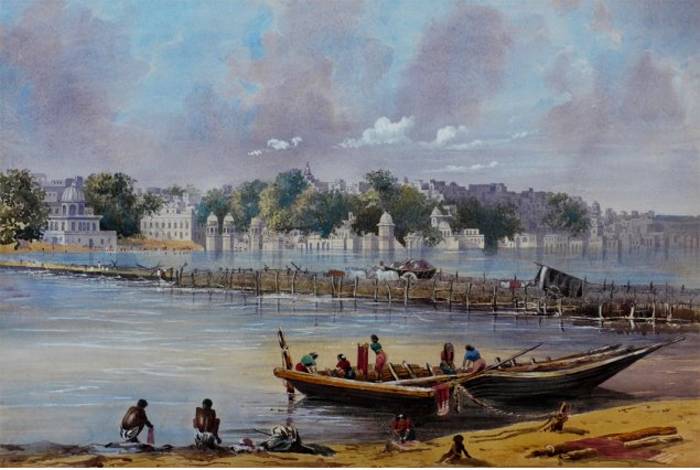
Benares - Veranisi ~ Watercolour by Welby Jackson 1856
Steam-powered liners, the aeroplanes of their time, were the lifeline of the British Empire, ensuring the steady flow of people and goods to the remotest corners of the world. Travel on the liners was often seen as glamorous, but the harsh conditions for the lascar sailors working in the hold and firing the boilers attest to a different reality.
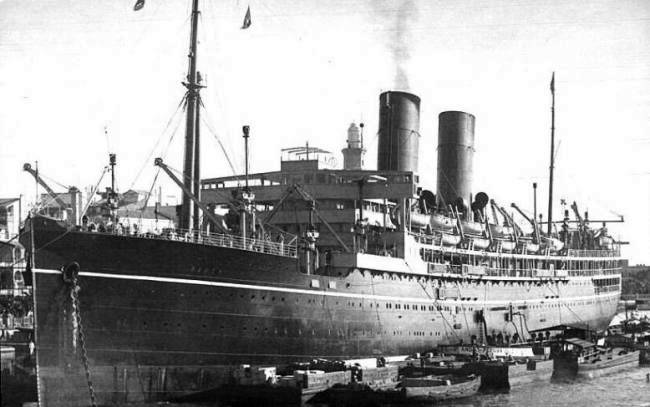
ss Ranchi, loading for Bombay
'Bombay ships in those days certainly carried a great many interesting and important people: Governors of Presidences or Provinces of India; Maharajas and their enormous retinues, demanding special accommodation and cooking facilities in accordance with their religious faith; famous figures in politics or society going out to enjoy what was then a popular winter pastime of the wealthy - cold weather in India.' Captain D.G.O.Baillie, 'A Sea Affair'.
(Captain Baillie served in the P&O for more than fifty years and retired as Commodore of the Fleet in command of the 28,000 ton 'Himalaya'.)
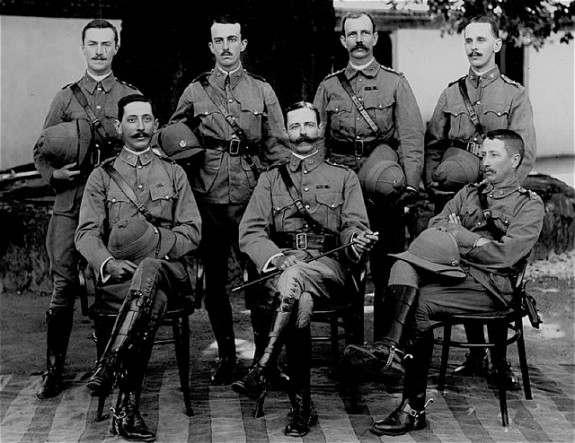
Rupert Scott-Padgett, Pukka Sahib
My Father and Mother and I lived in a bungalow at Madras, where I would sit on the floor and read about the great nations, the great empires: the Roman Empire, the Ottoman Empire, the British Empire, they all came and they all went. In my mind I can still picture the big, airy rooms, the large windows screened against the sun's rays by green jalousies. Over-furnished and intensely 'fussy' by modern standards, these rooms nevertheless radiated a peace and happiness I have seldom since experienced. The heavy draped punkahs wafted lazily to and fro, actuated by a simple device - a cord over a pulley in the wall and tugged at by the prehensile toe of a native servant squatting drowsily in the passage outside. The 'punkah wallah'. I can sense the bearded, kindly Diljhan, the Butler, moving through those rooms with the confidence of a shipmaster on his navigating bridge. He was my Mother, the Memsahib's, right hand man - and through him alone, the orders went to the lesser servants, the cook, the cleaners and the coachman.

"The pukka sahibs are the salt of the earth. Consider the great things they have done – consider the great administrators who have made British India what it is...... And consider how noble a type is the English gentleman! Their glorious loyalty to one another! The public school spirit! Even those of them whose manner is unfortunate – some Englishmen are arrogant, I concede – have the great, sterling qualities that we Orientals lack. Beneath their rough exterior, their hearts are of pure gold." George Orwell.
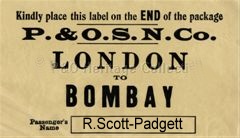
I was born in India and travelled backwards and forwards to England on the P & O. As a youthful passenger with my nanny or ayah, some of my earliest memories are from those voyages on board P & O ships, and they remain sharp and vivid. It was a wonderful time, to be an Englishman and to sail aboard such magnificent ships. Gone now alas. I fear we shall not see their like again.
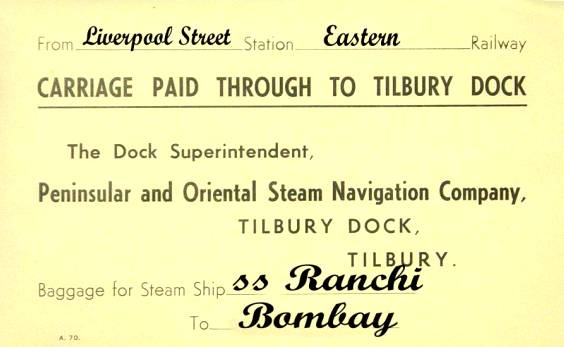
With my leave over, I bade farewell once again to dear Mama and Pa, forlorn figures waving to me from the front door steps. Mama dabbing her eyes with one corner of her lace handkerchief, as Pa hummed tunelessly to himself, busily filling his old briar pipe. Now retired from the Colonial Service, he had served his country well in the Aden Protectorate and India.
I left Liverpool Street at 11.30am for the Tilbury Docks, and went on board P&O's ss Ranchi.
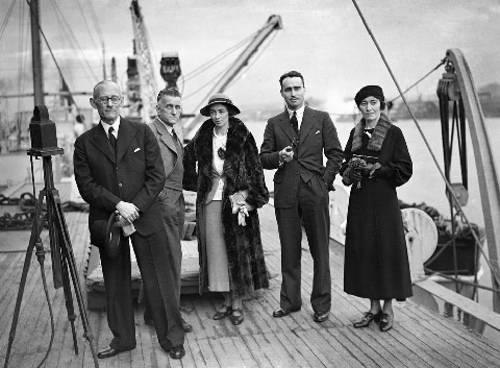
Our VIP Passengers, the advance party for the latest Everest Expedition, the sixth such British expedition.
My luggage was delivered to my cabin and unpacked by my friendly Goan cabin steward, Mr Fernandes. He laid out my dinner jacket and boiled shirt, wrinkled his nose, then took them away for pressing. One does not dress for dinner on the first night on board. Good form is always observed with P&O.
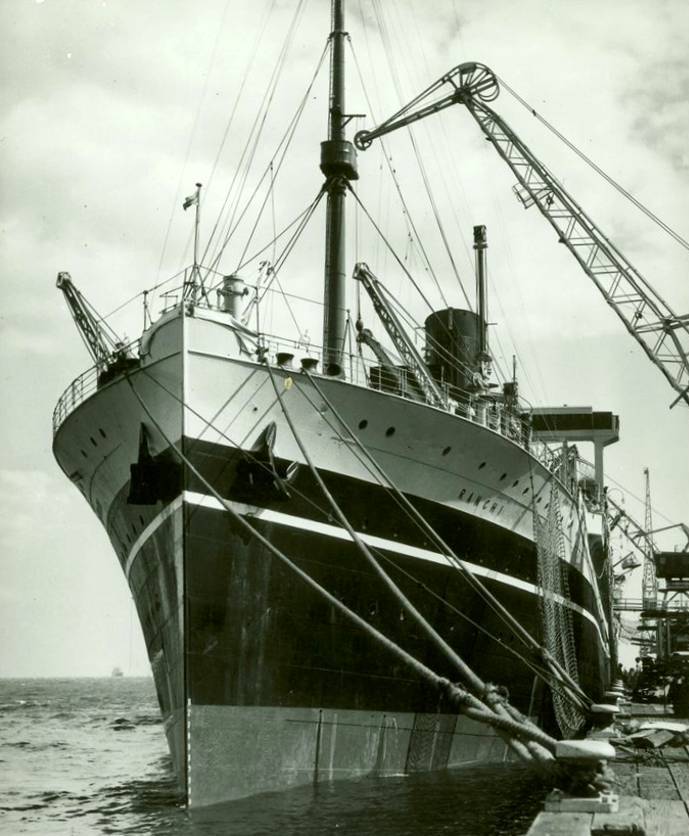
The ss Ranchi was built for P&O by Hawthorn Leslie & Co. at Newcastle Upon Tyne, and was launched on 24th January 1925. Her gross registered tonnage was 16,650, her length 547 feet and her beam 71 feet. She was one of the Company's R-class liners, and like her sisters, Rawalpindi, Rajputana and Ranpura, had much of her interior designed by Lord Inchcape’s daughter, Elsie Mackay. Named after Ranchi, the capital city of Jharkhand state in eastern India, she sailed on a regular route between England and Bombay. The P&O liners called at Gibraltar, Marseilles, Port Said, Aden and arrived at Bombay on Friday - just three weeks after departure Tilbury.
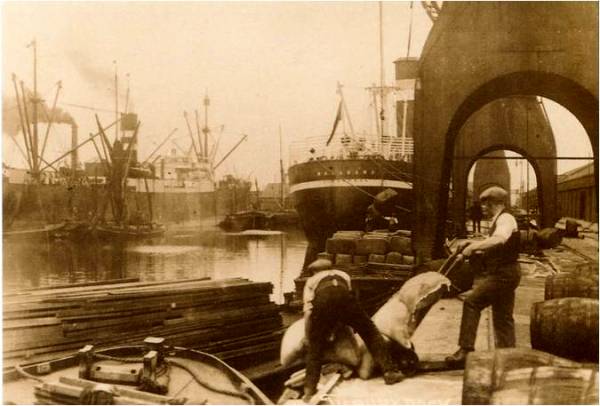
Tilbury docks were all hustle and bustle
We started backing out of the dock at 1.20 pm and locked into the river at 2.25. We had to wait for the ss Strathnaver, one of the P&O's beautiful new five White Sisters, to lock in, fresh from Fremantle Australia. Our ship is very drab by contrast, with a black-painted hull and funnels, while the latest Strath class ships are white with buff yellow funnels.
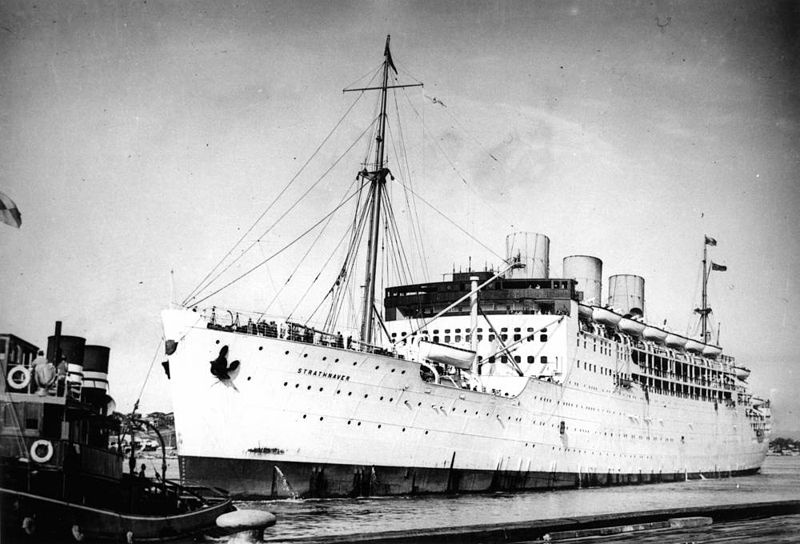
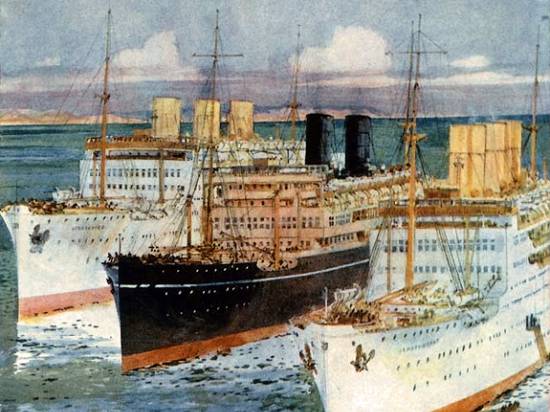
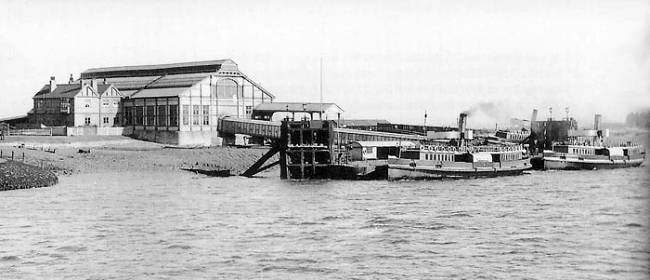
The Gravesend-Tilbury ferry jetty
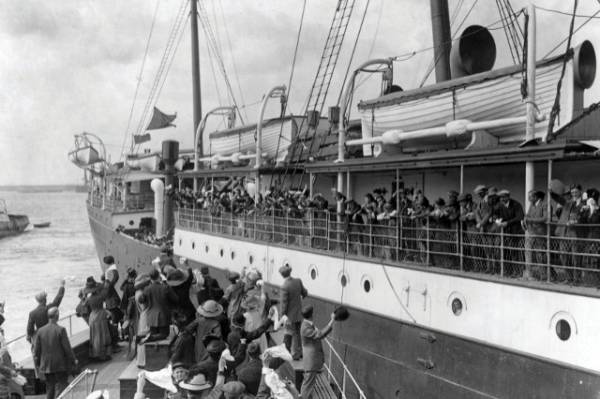
The Orient steamer ss Otway, making her tearful departure for Australia off Tilbury.
Weather, fine and warm. Dropped pilot at Dover. Calm in Channel. Found an old friend on board as ship’s surgeon. Put into Southampton briefly, in order to load mail and specie. My cabin 64, a rather luxurious suite on the ship's port side, is spacious and airy and ideally suited for an outbound voyage. Coming home to England on leave, my preference was always to accommodate myself on the starboard side, as the intense heat of the Indian Ocean and Red Sea was always more bearable if one had a cabin on that side of the ship. The state rooms for first and second class passengers are on A and B decks, with the public rooms situated amidships.
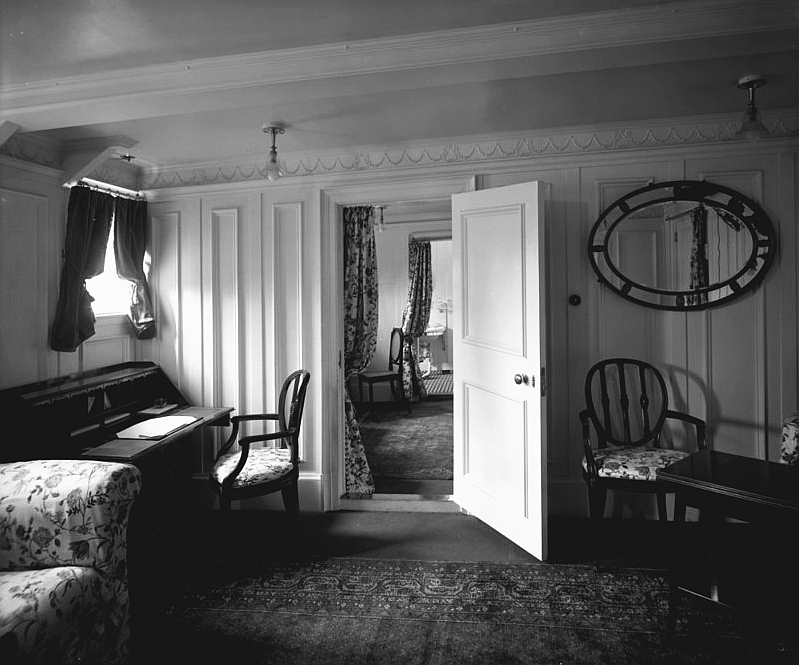
My bachelor cabin, number 64 - sitting room, bedroom and bathroom, all of which I occupy in solitary splendour.
The SS Ranchi is a fine ship, built for the Peninsular & Oriental Steam Navigation Company by Hawthorn Leslie & Co at Newcastle Upon Tyne. She was launched on 24 January 1925. She is 547 feet long and most of her interiors were designed by Lord Inchcape's daughter Elsie Mackay. She is named after the capital city of Jharkhand state in eastern India, and has been sailing on a regular route between England and Bombay, for some years. She has two quadruple-expansion steam engines, and a service speed of 17 knots.
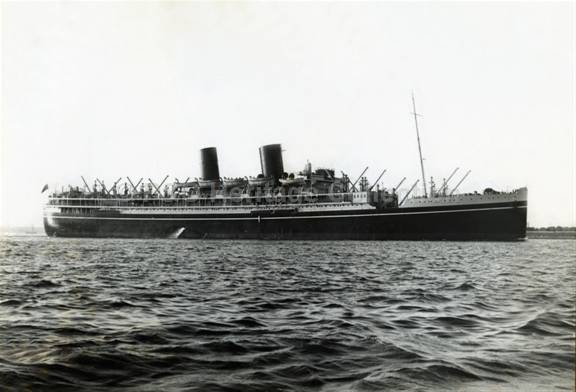
ss Ranchi, underway in the River Thames
The first night on board ship is generally one of great confusion. The passengers seem to be in everybody’s way; but immediately after leaving port the baggage is stowed away, the purser allots the seats at table, and everything goes on with the greatest regularity. The passengers on board form a perfect epitome of the great world ashore. The line of division is sharply drawn between the various sets or cliques. Many never condescend to notice numbers of their fellow-passengers during the whole voyage; but for the most part fraternisation becomes general after the first fortnight has passed. A three week voyage enables a man to form a juster appreciation of the character of his fellow-passengers. than many years’ residence in the same neighbourhood would do on shore; hence it often happens that life-friendships of the warmest kind are formed on board ship. On steamers bound for Bombay, representatives of almost every class are to be found. Judges returning to their duties after a holiday all too short; colonial statesmen with sufficient time on their hands to allow of their formulating a policy to meet every conceivable combination among their parliamentary opponents; and squatters and merchants returning to the Sub-Continent to look after their property or their business. These men are generally very much preoccupied, and their only anxiety appears to be to get as speedily as possible to their destination. I quickly settled into the routine of the ship. My days begin with my Goan cabin steward tapping lightly on my door each morning at about 7 o'clock, bearing a tray of juice, coffee and biscuits, (little cookies, not too sweet). Children's breakfast is served at 7:30 and the nannies are there to help the children. They cut their meat and wipe their faces - and keep the peace between their charges while the mothers leisurely dress for breakfast at a later time.
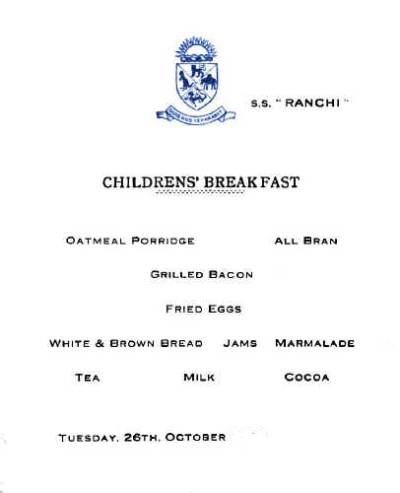
The food and service are quite excellent. Breakfast is served at 8:30, coffee at 10, lunch at 12:30. Then at 4 it is teatime with little cakes and pastries. Dinner is served at 7 and, at 10 a buffet is laid out with little sandwiches and sweets. When we aren't eating, we passengers spend our time sitting on deck, talking, reading, card playing, etc.
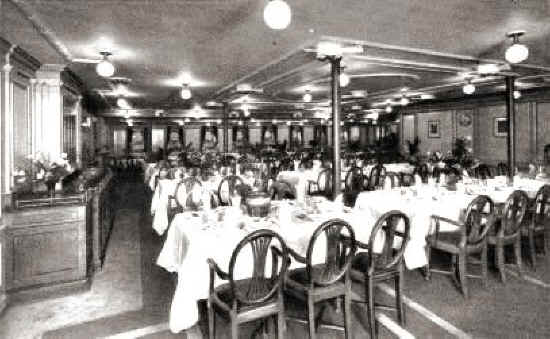
The ship has two spacious dining saloons, a forward one and another nearer the bow, for the second class passengers.
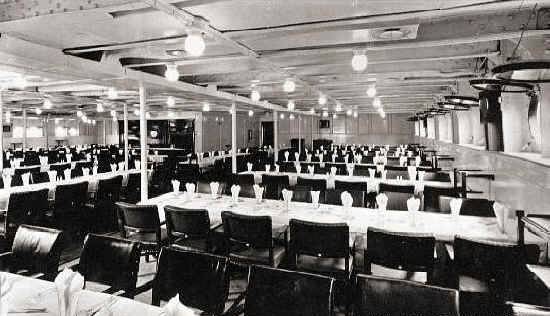
The life of a steward on board one of these ships is not an enviable one. He has to be up at work at four o’clock, washing and scrubbing the saloon; to wait at table four times a day; to make the beds, and attend to the cabins; and to be generally useful amongst the passengers, rarely finishing before ten o’clock at night. My steward was a very handy fellow. He informed me he had a brother in Calcutta, in practice as a doctor, who wanted him to settle there, but he preferred “a life on the ocean wave.” He strongly recommended us to bathe frequently in salt water, saying it “was good for the spin-ial origins!”
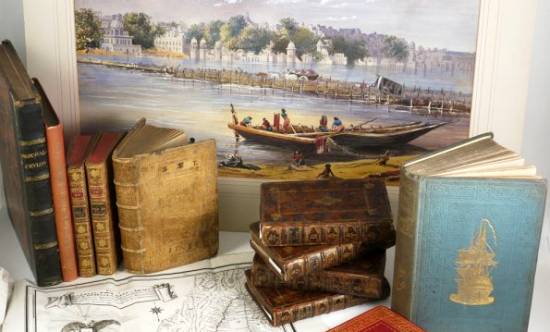
My cabin is my home for three weeks and I have my pictures and books for company.
The ship is quite full, with 302 First and 275 Second class passengers.
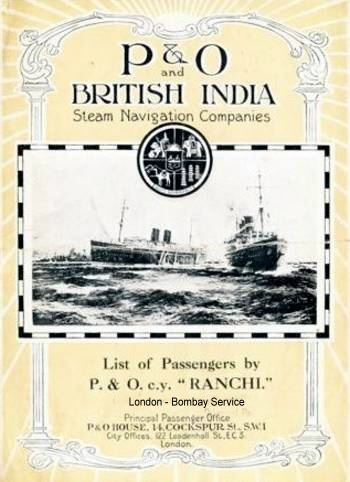
The Passenger List is a who's who of the Indian Colonial Service, Armed Forces and notables.
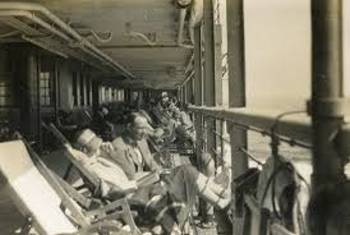
In fine weather, I can be found sitting on deck, breathing the salt sea air, with my head inside a good book.
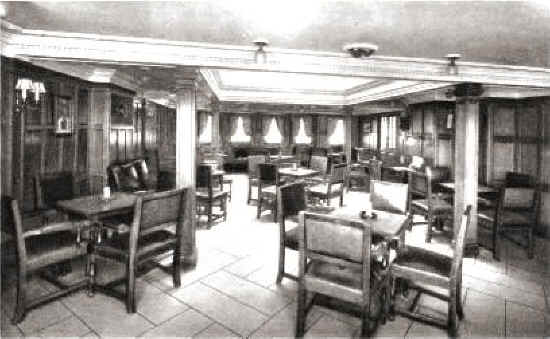
But if the weather is inclement, I normally withdraw to a corner of the smoking room or writing room.
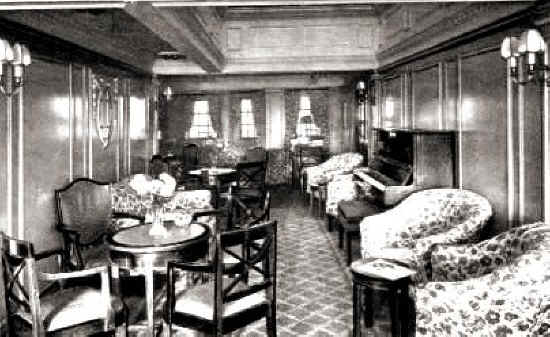
One enjoys a sense of tranquillity in the writing room
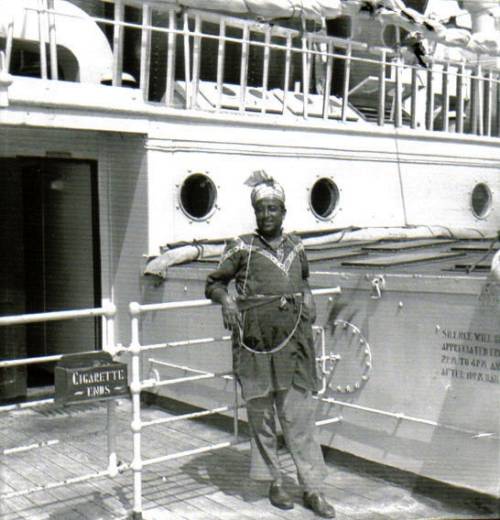
In keeping with P&O tradition, our ship has an Indian 'lascar' crew, headed by the Serang, a chief petty officer, who reports to the Chief Officer, the 'Burra malim sahib' as they call him in their colourful Hindi language. I am reliably informed that the word Lascar is derived from the Persian lashkar, meaning an army, a camp or a band of followers. The first European use of the word dates back to the Portuguese employment of Asian seamen in the early 1500s. Lascars have been employed as crews aboard P&O ships for many years and are loyal, hard-working company men. Once a week, they are called to emergency stations, then, after fighting an imaginary fire, they parade on deck, in all their finery, with red hats and silver chains and whistles marking out the more senior men.
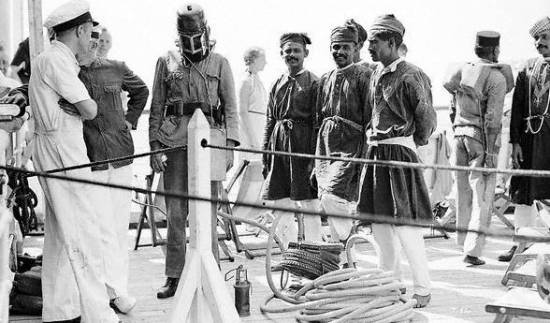
The hard labour and commitment of lascar sailors ensures the smooth flow of trade, vital to the growth of the British empire. The common perception among ship-owners and the public is that lascars are essential, as they can stand the fiercest heat of the tropics better than any other race. In reality, however, it is their low wages that make them an attractive labour force. While Indian lascars are officially British subjects, they are employed on ‘Asiatic’ contracts, which means that they receive much lower pay than their British counterparts.
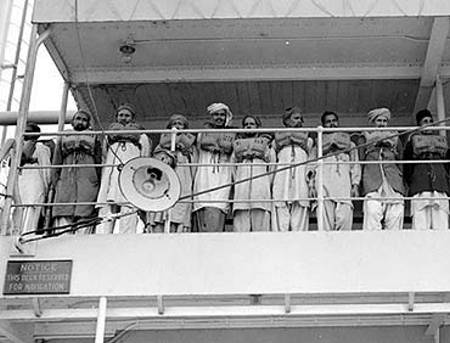
Engine room crew at their Boat Stations
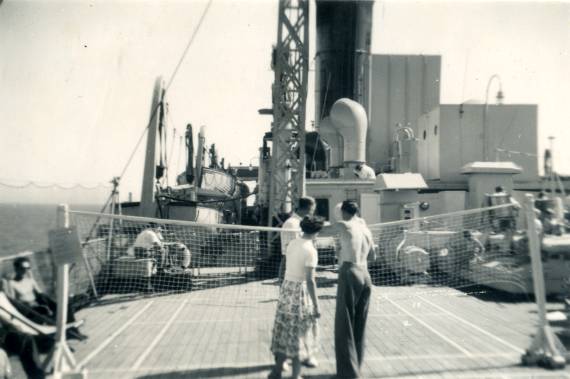
With the Bay of Biscay behind us, calm days dawn; fair weather and gracious living on deck. Bathers toss quoits back and forth in the pool. Passengers lounge in deck-chairs. Parents dress for dinner and evening entertainment, while the nursery organizes meals and activities for the children. My Pa still keeps a printed dinner menu from our first passage to India - a cherished memento of good times together.
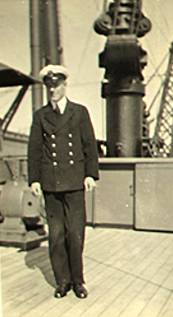
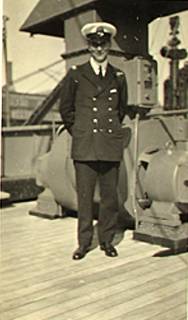
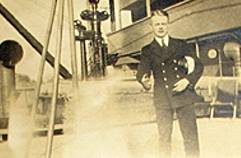
The ship is well officered and the Commander friendly but firm; a company man to his fingertips. The officers give their orders quietly, in Hindi-Urdu, and treat their crew well and with great respect. In return, the crew go about their daily chores with a cheerful countenance and a friendly 'Salam sahib' whenever they meet us on deck. The Chief Officer is a fine fellow, and new to the ship, having just been promoted from the Moloja, where he was Second. Undoubtedly an excellent seaman, he was uneasy with his new role - particularly that of chairing the ship's Sports Committee. This particularly British institution manages to form itself, voyage after voyage; the ingredients are always there: the born organiser, the games enthusiast, the public-spirited and the energetic, and, of course, the busy-body and the exhibitionist who must always be in on everything. It's up to the Chief Officer to sound out the potential, and appoint someone who is acceptable to all, as Chairman. Personally, I have always shrunk from such thankless responsibility. Preferring to leave it to others to lead us heavenly father lead us...
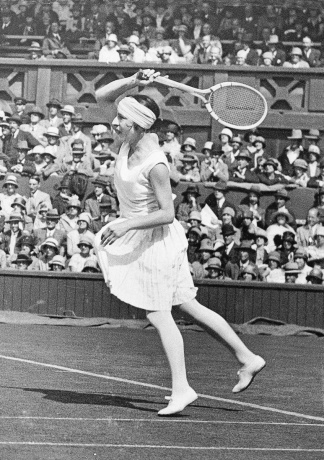
Fortunately, the Chief Officer found the ideal candidate: a sporty young lady who had played tennis at Wimbledon only recently, and who had done rather well too. Our always smiling, handsome Chief Officer, felt a warm glow of gratitude in his heart directly he recognised this willing filly, who would take much of the burden off his shoulders, leaving him free to delve into his indents and manifests, and wallow happily among his paint-pots. It would be totally indiscreet of me to suggest that romance was in the air. Suffice to say that her dance card was always full....
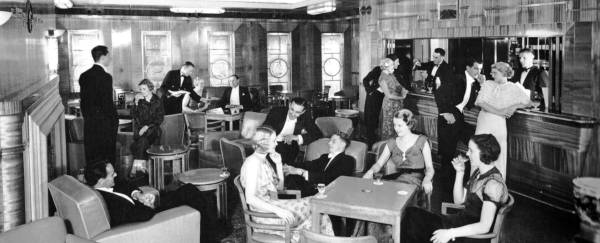
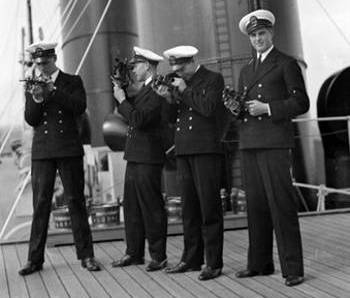
The ship has four Officer Cadets, and each day at noon, they assemble on the bridge to shoot the sun with their sextants, under the supervision of the ship's Third Officer. Polite young men, public school boys, their shoes well polished and their uniforms smartly turned out.
The Rock of Gibraltar
Ranchi's first port of call after leaving England. There was no time to go ashore as we only stopped long enough to discharge twenty sacks of the Royal Mail from number two hold, into a lighter.
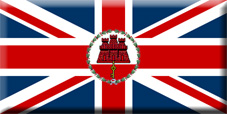
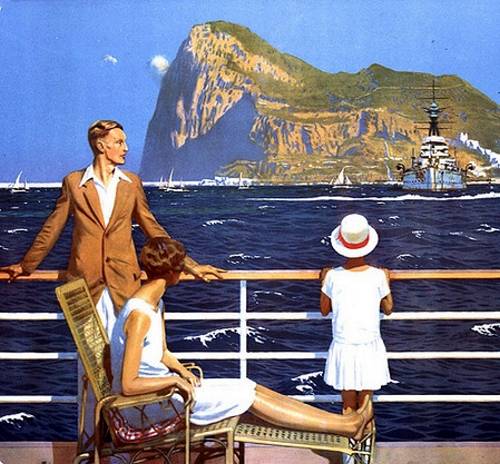
As portrayed in travel posters...
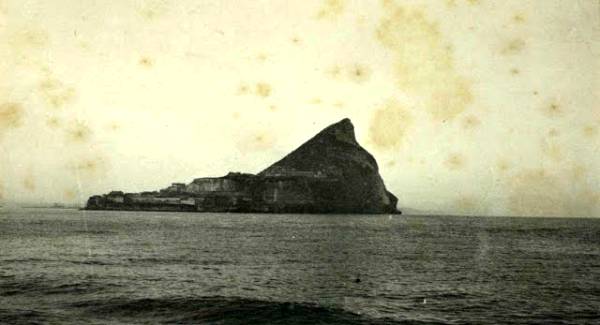
The reality.....
The Rock of Gibraltar has been used as a naval fortress guarding one of the world’s most important trades routes for centuries. Gibraltar was seized by the British in 1704, as part of operations against the French in the War of the Spanish Succession.
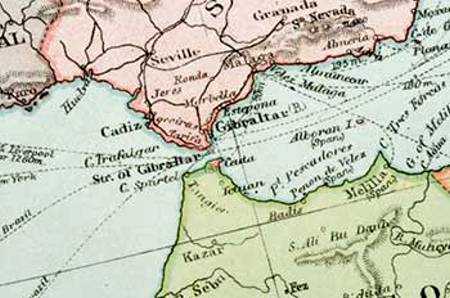
The winds in the strait tend to be either easterly or westerly through the Straits of Gibraltar. Shallow cold-air masses, invading the western Mediterranean from the north, often stream through as a low-level, high-speed easterly wind, known locally as a levanter. A surface current flows eastward through the centre of the channel, except when affected by easterly winds. The existence of the strait prevents the Mediterranean from becoming a shrinking salt lake.
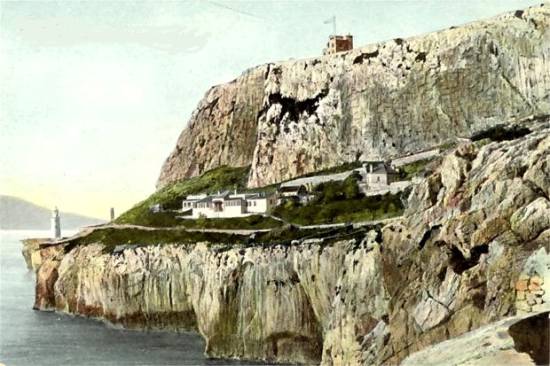
Europa Point Lighthouse stands at the southern-most point of Gibraltar. Situated at the gateway between the Atlantic and the Mediterranean, it has served as a landfall and waypoint for vessels passing through the Strait, since 1841.
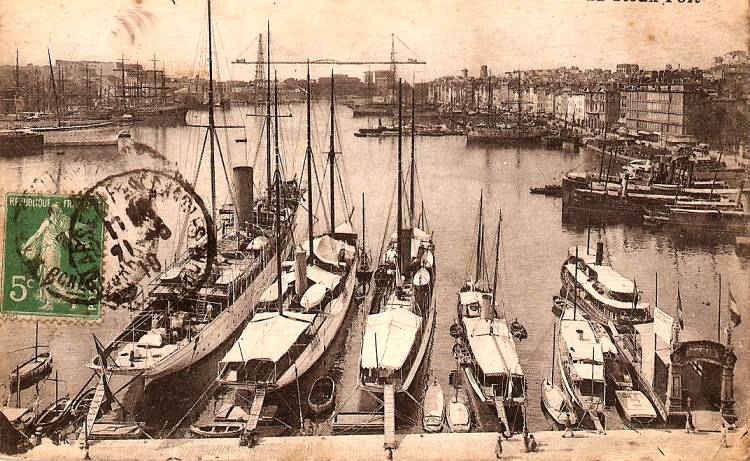
Marseilles - the main trade port of the French Empire.
In my opinion, the Vieux Port, founded in around 600 BC by Greek mariners is the one redeeming feature of Marseille.
We arrived at eight in the morning, on schedule, and stayed for six hours, long enough to embark a few dozen passengers, who had chosen to travel overland from London rather than risk seasickness in the Bay of Biscay. I took a taxi to the old port, enjoyed a cafe au laite and croissant, and purchased a postcard. It was good to get back on board again. Only then did I discover that mine host, Monsieur Le Patron of the harbour-side cafe, had sold me a dud postcard - stamped and used.....so much for the entente cordiale!
Port Said, Egypt
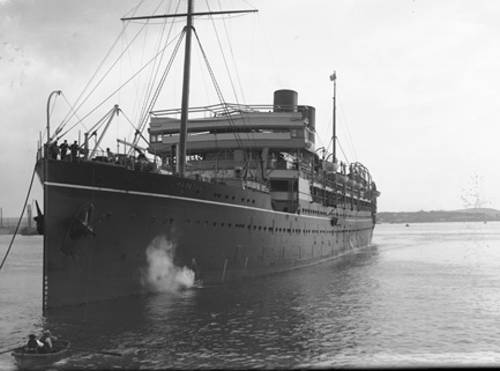
We moor to buoys, with the help of a native 'bum-boat'
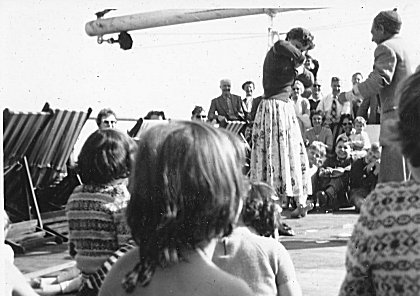
The 'Gully-Gully Man' entertains the children
The bulging, jocular, slightly sinister Gully Gully Man boards the ship at Port said, while we moor and await the departure of our south-bound convoy through the Suez Canal. Producing baby chicks from everywhere on his person and yours, the children are enthralled, but the adults less so.
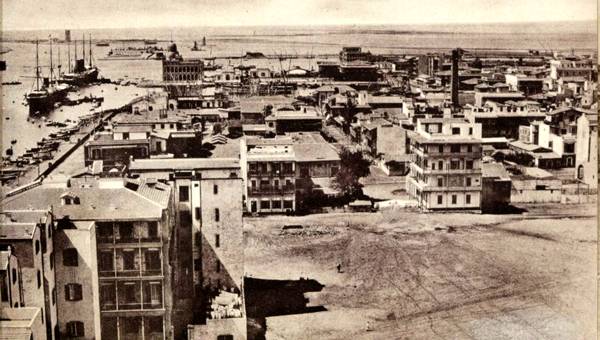
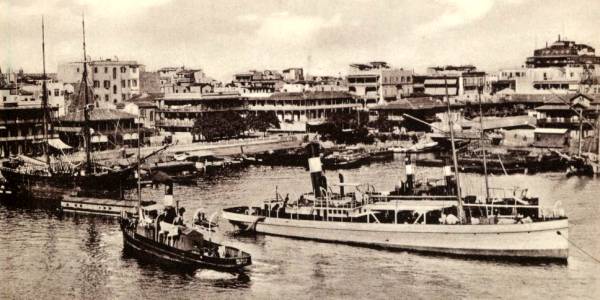
The origins of Port Said is that of a working camp founded in 1859 by Said Pasha, to house men working on the Suez Canal. By the late 19th century, it was an important port where all the major maritime powers had consulates. Much of the city is built on a section of Lake Manzala, which has been reclaimed from the sea.
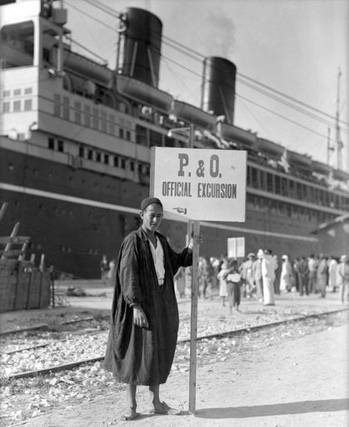
Many of my fellow travellers disembarked, for an excursion to Cairo and the pyramids, with a good lunch at Shepheard's Hotel.
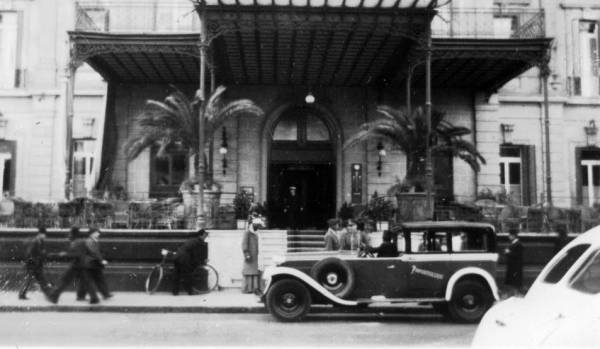
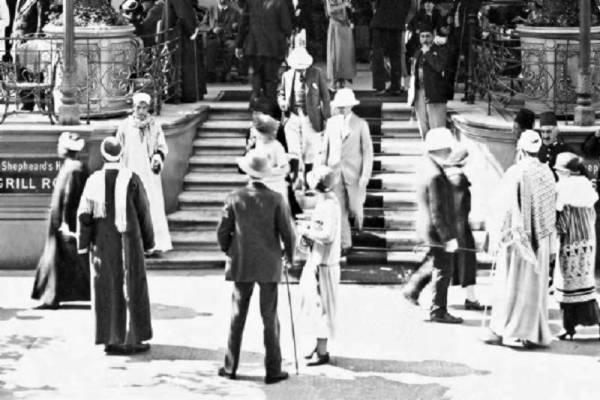
As much as I love Samuel Shepheard's fine hotel, I decided to stay on board, spending my time usefully, on my correspondence, writing a number of letter-cards and postcards to my family and friends.
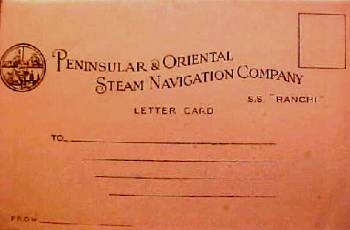
I purchase these from the Purser's Office, the 'Bureau' in the language of P&O, and they convey a sense of the ship, with their fine illustrations and photographs.
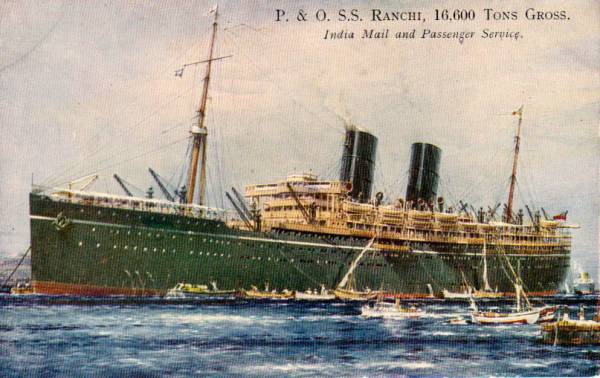
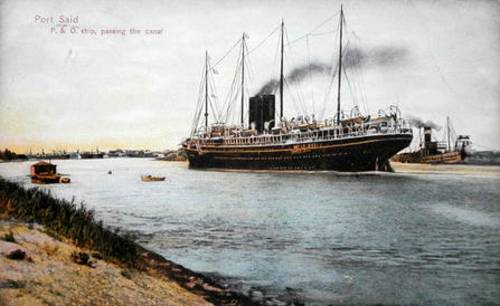
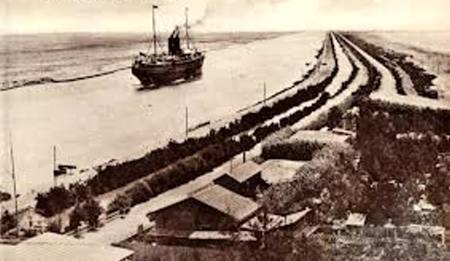
Shortly after tea, we slipped our moorings and carefully navigated the entrance to the canal.
It is believed that the first canal was constructed between the Nile River delta and the Red Sea in the 13th Century BC. During the 1,000 years following its construction, the original canal was neglected and its use finally stopped in the 8th Century. The first modern attempt to build a canal came in the late 1700s, when Napoleon Bonaparte conducted an expedition to Egypt. He believed that building a French controlled canal on the Isthmus of Suez would cause trade problems for the British as they would either have to pay dues to France, or continue sending goods overland - or around the southern part of Africa. Studies for Napoleon's canal plan began in 1799 - but amazingly, a miscalculation in measurement showed the sea levels between the Mediterranean and the Red Seas as being too different for a canal to be feasible - and construction work immediately ceased. The next attempt to build a canal occurred in the mid-1800s, when a French diplomat and engineer, Ferdinand de Lesseps, convinced the Egyptian viceroy, Said Pasha, to support the building of a canal. In 1858, the Universal Suez Ship Canal Company was formed and given the right to begin construction of the canal and operate it for 99 years, after which time, the Egyptian government would take over control of the canal. At its founding, the Universal Suez Ship Canal Company was owned by French and Egyptian interests. The canal opened on 17th November 1869 and cost $100 million. In 1875, debt forced Egypt to sell its shares in ownership of the Suez Canal to the United Kingdom. However, an international convention in 1888 made the canal available for all ships from any nation to use.
.jpg)
The statue of Ferdinand de Lesseps is quite majestic
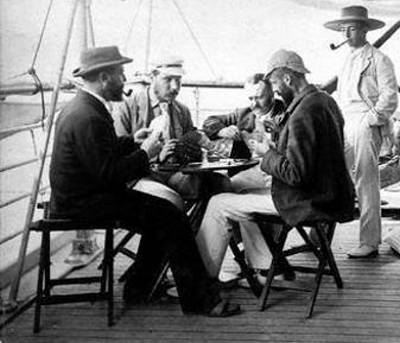
The weather being still quite mild, I dressed in a jacket before joining a group of my fellows for a game of whist, on the boat deck, which was great fun but somewhat noisy! Fortunately, it is considered bad form to dress for dinner while we negotiate the Suez Canal. Some of my fellows went so far as to wear outrageous head gear, that to my eye, was more akin to the English climate. Harry Johnson, a shipbroker from the City, declared that three pounds, seven shillings and sixpence was a steep price to pay for a tour to the pyramids that only lasts for a day.
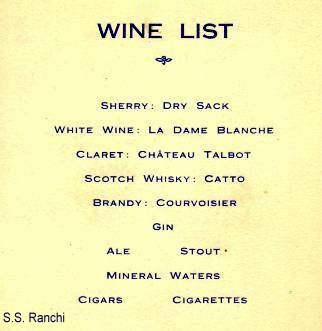
Thanks to our fine Purser, the ship also has an inexhaustible supply of Allsopp's lager beer. Samuel Allsopp is credited as being the first brewer to export Burton Pale Ale to India in 1822. It is thought that he copied the recipe for his India Pale Ale from Hodgson's of London. No matter what the events were, his strategies in both brewing and marketing have turned the company into a very profitable business. And as a shareholder, in a small way, I have to agree! The ship's officers are convinced that the Directors of P&O own shares in the brewery, as it's often the only beer obtainable on board.

As we concentrated on our cards, the ship seemed to crawl along, but we did see the occasional camel, resting alongside their feed boxes. One looks out over a vast expanse of desert to port and starboard, with the occasional oasis, surrounded by rich vegetation to gladden the eye. One is aware of the stillness, broken only by the subdued, rhythmic motion of the ship's propeller.
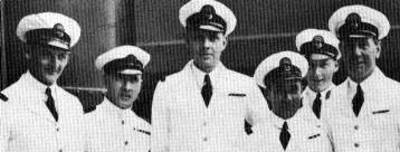
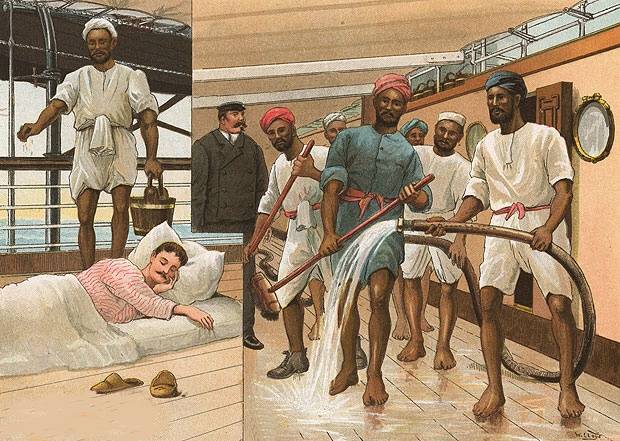
As we proceed south, the weather becomes noticeably warmer, and by the time we reach Suez itself, the officers have exchanged their navy blue uniforms for white cotton suits and buckskin shoes. On one passenger asking if the heat in the Red Sea was as terrible as his fellow-passengers anticipated, the Chief Officer described it as being like that as an oven, when the door is opened to check the joint of beef roasting therein. Heat as hot as anyplace on earth, he had divulged, with a knowing expression. Some of our passengers prefer to take their nightly rest on deck......until they are awoken by the Serang and his men, cheerfully hosing and scrubbing the upper decks at crack of dawn!"
At Suez, we moored, waiting for the excursion passengers to arrive, giving me the opportunity to stretch my legs ashore. There, much to my delight, I was able to purchase a fine painting.
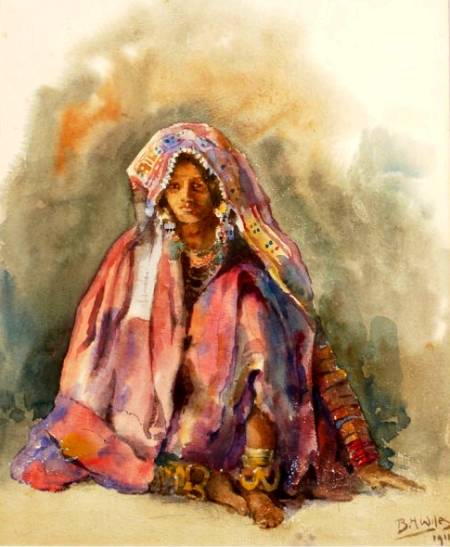
Bernard Harper Wiles has long been a favourite of mine, and this watercolour of a North African Woman, was painted in 1911.
The Red Sea
Then we steamed forth into the Red Sea, rolling hereabouts as blue as sapphire, the ship running gaily along at fourteen knots an hour, in full chase of the Orient steamer Otway, outward bound for West Australia, which started an hour or two before us from the buoys at Suez.
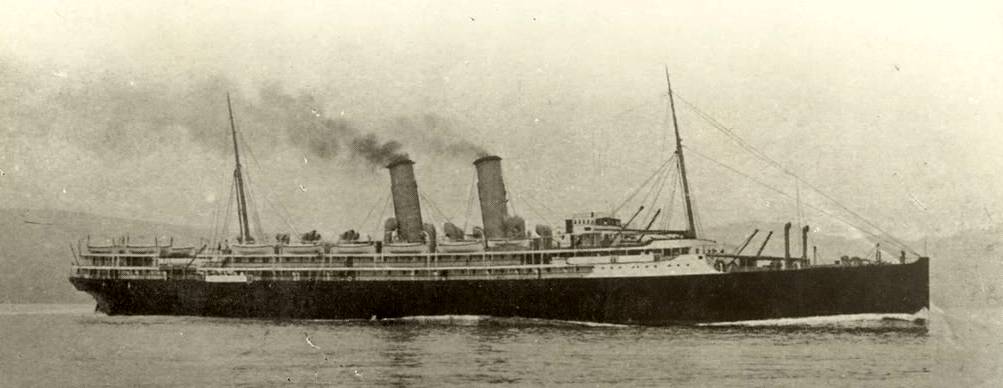
Our third Sunday on the waves falls in the Red Sea, off the ancient port of Kossayr, on a splendid but burning-hot dawn. There are few religious functions, I think, more impressive than a service on the open waters in the saloon of such a fine vessel; and some of those amongst us, who seldom go to church ashore, are drawn to bear part in the simplicity and pathos of this maritime act of reverence. The table draped with the Union Jack and Blue Ensign; the hymnals all "coiled down" against the moment when the bells shall resound; the books of worship decorously laid out by the quartermaster for the Commander's use; the Commander himself, gallant, solemn, his hair "sable-silvered," his gold eye-glasses rigged to tackle properly and with a fair course the psalms and prayers; the long rows of beautiful or gentle and high-bred feminine faces, of brave and dutiful English gentlemen bound on the service of the King, or the honourable toils of business abroad—all these assembled upon the bosom of the great deep for worship, combine into a noble picture of British gravity and veneration.
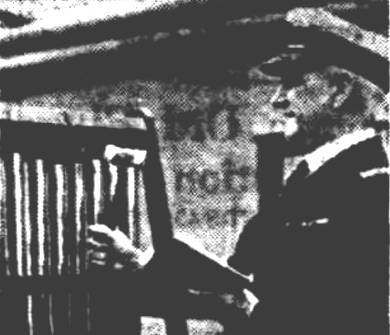
Our gifted Commander, Captain. Frederick Sudell, FRGS, RD, RNR,. although not knowing a note of music, plays the hymns on a set of bells for the church service held on board everv Sunday morning. Last night he entertained the passengers with conjuring tricks, another of his many accomplishments. He spends much of his spare time carving wood, and has some wonderful pieces to prove his skill. Captain Sudell has overcome his lack of musical knowledge by having the eight notes of the bells numbered, and has his hymns set out in numbers instead of notes. All that is needed then is to hit the right numbered bell. Talking of this, he recalled his first amusing experiences with the instrument. He began to play, but was quickly stopped by a friend who informed him that he was wrong. On investigating. Captain Sudell found that the bells were not arranged like other musical instruments, but the scale was reversed. He had been playing the tune backwards without being aware of it!. The bells make a terrific noise if played loudly on the deck, and drive all the passengers below to the church service,' explained Captain Sudell, with a wry grin. 'That is why the offeritories are so big on the Ranchi' . And to receive the collection the Commander has carved two offertory bowls from solid pieces of oak. One is beautifully encrusted with ivy leaves. He has also carved a hymn board 3 ft. 6 in. high and 18 ins wide, from a solid slab of mahogany. Ivy leaves are entwined on a lattice background, with the word 'hymns' painted in gold across the top. It took Captain Sudell two years to complete this carving. Capain Sudell, who has been on the Royal Naval Reserve for 20 years, was called up for service during the war, and was in command of a parent ship to submarines during the early stages, and was later commodore of convoys in the Mediterranean. He was torpedoed, 13 lives being lost in a crew of 30. This brave soul has been a fellow of the Royal Geographical Society since 1914.
O eternal Lord God, who alone spreadest out the heavens, and rulest the raging of the sea;
who hast compassed the waters with bounds, until day and night come to an end;
Be pleased to receive into thy Almighty and most gracious protection, the persons of us thy servants, and the ship in which we sail.
And when the good Captain has finished his supplication, the bells, skilfully struck, lead off a song of pious praise, and the sound of a hundred blended voices passes with the wind over the blue expanse upon which we are speeding. The little children, kneeling round their mothers ; the dark-skinned ayahs in their gay saris, grouped outside the saloon-doors; the Indian boys at the window, in snow-white garments and scarlet turbans, dreamily polishing the brasswork; the beat of the tireless screw; the hiss of the sweeping seas; the rattle of cordage and chains, and the ship's bell striking the watches, furnish elements of grace, colour, and incident to our little floating church, which deepen the solemn effect when the good Captain's voice is heard praying for the peace and welfare of the King, and of that glorious British Empire, of which we are here a small moving, isolated fragment. No wild theorist has as yet proposed to democratise a ship. There are famous men in plenty on board the ss Ranchi; men with names known all over the civilised world, but the authority of our Commander is disputed in nothing; what he says and does is law for all alike; we live under a benevolent but absolute monarchy, our accepted sovereign being the man who, by forty years of experience, knows better than anybody else, what is safe for the ship, and has, the lives of all of us on board, in his capable hands.
After church, a little sherry is in order, before a stroll around the promenade decks can be relied upon to work up a good appetite.
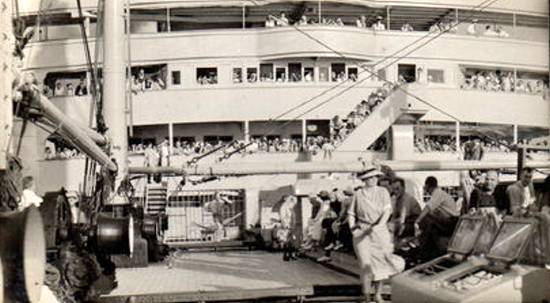
In the hotter climes, my own preference is for a curry lunch - something the P&O has prided itself on for over a century. Designed to offend no palate, it contains neither beef - forbidden to Hindus; pork - forbidden to Muslims; and generally comprises lamb, chicken, or vegetables.
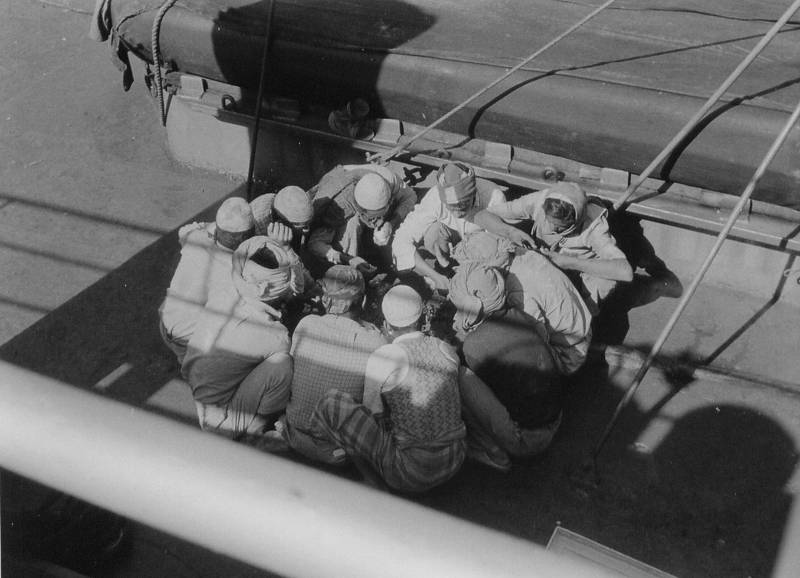
Our noble crew favour eating in the open air rather than in their mess room;
squatting around a large communal dish, they chatter away in a most convivial manner.
After lunch and a glass of Allsopps lager, I generally retire to my cabin for a relaxing siesta.....
what I call my 'daily correctly structured and restorative sleep episode'.
My own quarters are spacious, light and airy, which is more than may be said for many of my fellows, especially those travelling in second class cabins, where space is limited, and two and three-berth accommodation is the norm.
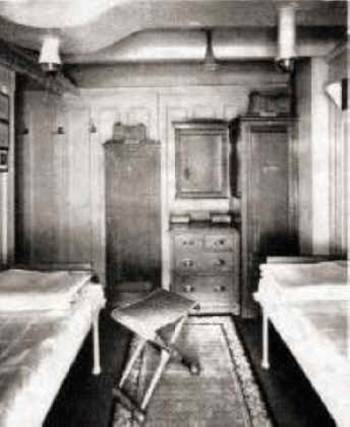
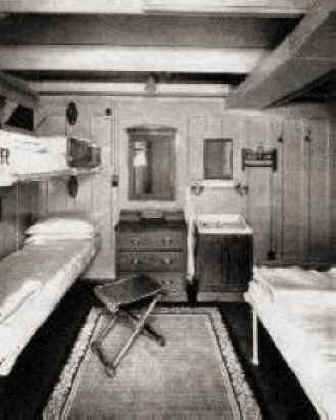
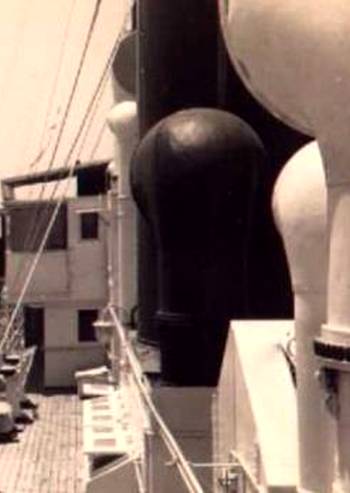
Modest ventilation is provided by fresh air, trunked below decks from large cowled ventilators on the upper decks, supplemented by 'wind-scoops' that can be secured to portholes, thereby 'scooping' the fresh salty air as we make good speed through the water. All of them are , of course, completely ineffective when we are at anchor, moored, or alongside in harbour. At such times, only the electric fans, gently whirring above us, keep the sultry, stifling air, moving.
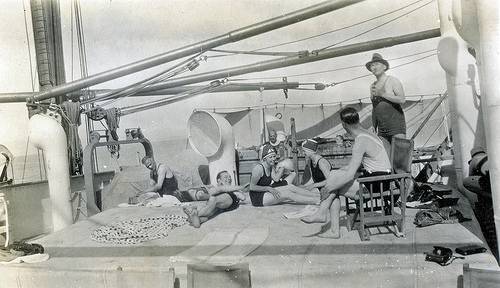
Second Class passengers sunbathing on deck
Our ship's crew, numbering some 350 souls, are all accommodated in the forward section of the ship, with the exception of the Navigating Officers, who live in their own accommodation beneath the bridge.
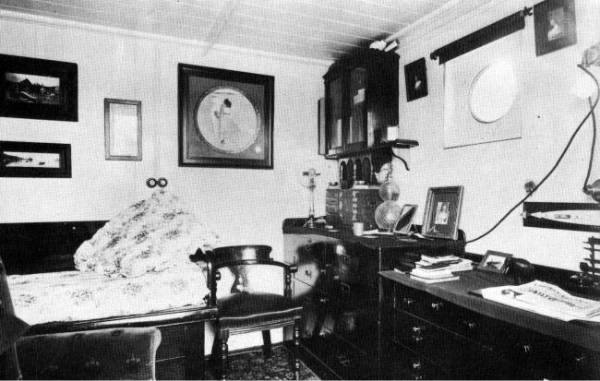
The Chief Officer's cabin, with all the comforts of home.
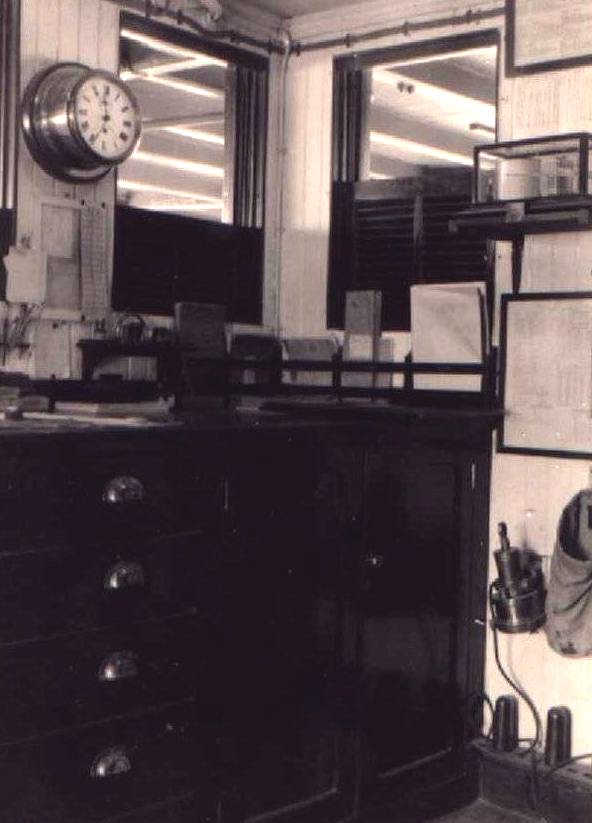
The Chartroom
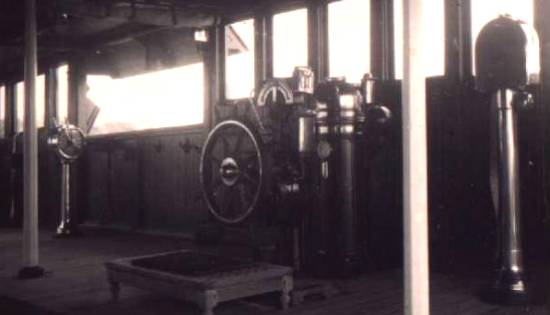
The Wheelhouse
This Perim’s an island
Devoid of a tree,
A baked bit of dry land.....Below the Red Sea.
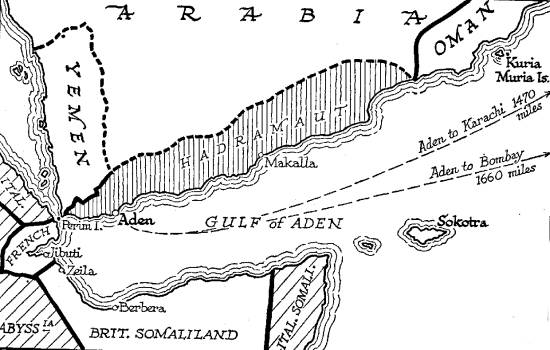
Passing through the Straits of Bab-el Mandeb, which separate the Island of Perim from the mainlands of Africa and Arabia, we shaped our course for Aden. The Straits have been rightly named. They consist of a broad and a narrow strait, and are 11 miles and one and a quarter miles wide respectively at their narrowest points. In Arabic ‘bab’ means door and ‘mandeb’ sorrow, and veritable doors of sorrow they have been. They are usually called the ‘Gates of Tears’ but the literal translation ‘doors of sorrow’ is correct. The safeguard of the broad strait is Balfe Point light, and Obstruction Point light protects the mariner in the narrow strait, but in addition to these minor lights there is the principal or high light in the centre of Perim Island which warns the navigator at about 21 miles of his approach to the Island, while the two lesser lights guide him through these ‘doors of sorrow’. However, the door of sorrow par excellence, is the narrow strait - on account of its narrowness and strong currents.
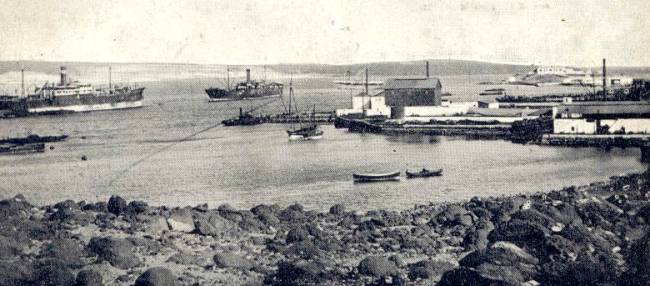
Before the advent of oil-fired ship's boilers, Perim Harbour was a routine coaling port for P&O steamers. Perim’s decline came fast, due to its failure to grab a share of the fast-growing oil fuel business which was being quickly cornered by Aden. The older coal-burning steamers were fast being retired from the late 1920s onward - and with them, went Perim’s fortunes.
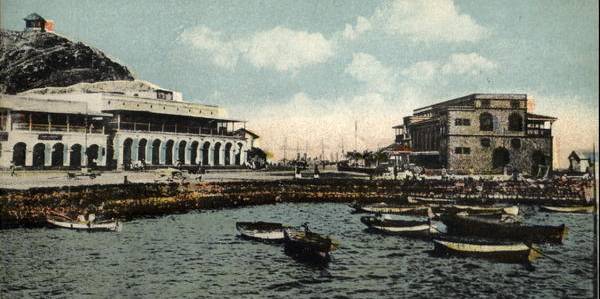
Steamer Point, Aden
We moored between buoys and waited for the launches to take us ashore, watching as the bunkering hoses were winched aboard in the stifling heat. Ranchi, like all the P&O steamers, would be taking on enough fuel to take her on to Bombay, and back to Aden again on the return voyage to England.
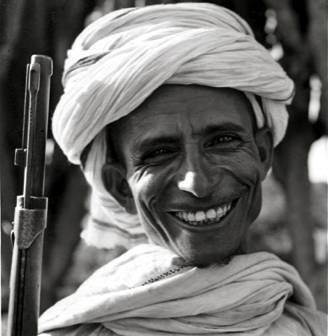
Abdullah, once my father's retainer, greeted me with a broad smile as I stepped ashore. A camel train has just arrived, bearing silks and spices, and he excitedly wanted me to see it. His ancient Mauser rifle marking him out as a man of some importance.
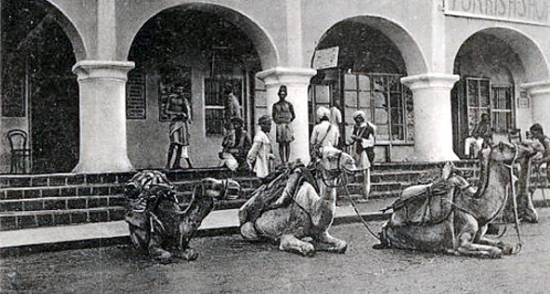
After several cups of sweet tea in the Turkish Cafe, I bade him farewell, passing over the two letters entrusted to me by my father. One of them containing five pristine Bank of England five-pound notes. A warrior of the the Beni Qasid tribe, Abdullah was a brave, proud man, with a passion for camel racing, and, more importantly, had once saved my father's life.
The Arabian Nights fancy dress party was in full swing when I went up on deck later that night, and the loom of the lighthouse on Socotra was still visible some way off, on Ranchi's starboard beam, reminding me of the tragic loss of P&O's ss Aden. A fine oil painting of this unfortunate ship has pride of place in the officer's wardroom - perhaps as a reminder to those in charge, both above and below decks. In 1897, while on a voyage from Yokohama to London, she laid off the eastern end ofthe Island in order to work her deck cargo of coal down into her bunkers. She drifted and struck rocks one mile northeast of Ras Radressa whereupon the engine room flooded and power was cut off. A number oflifeboats were smashed and those that were launched were soon swamped. A total of seventy-eight passengers and crew were lost but the remaining forty-six were rescued by the Indian Marine steamer, Mayo.
I have an excellent map amongst my modest travelling library, published in Allain Manesson's 1683 description of the World.
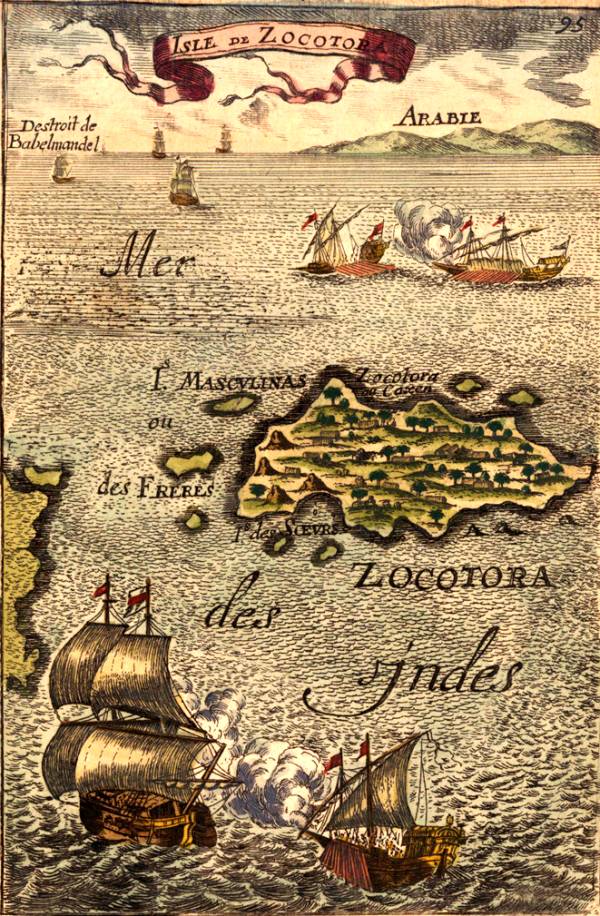
Socotra is a magical island where an ancient language is spoken and where endemic plants and animals continue to thrive. Its name originated from one old forgotten language-dialect spoken at one time by the hardy people who sailed these waters. They called it Eipheba Sakhotora, which used to mean The Island of Happiness. Learned academics and Oriental historians may pronounce the name in four different ways: Asqo'ter, Soqutri, Sou'qatra and Soqotra. The Ancient Greeks called it Dioscorida, while the Romans named it Dyo-Socor-Yahlas, and Dyo-Sotori. Moreover, one ancient Greek language gave it the names Fia-Soqa'tra and Soqater. The common belief among island inhabitants is that the name derived from the combining of two words Al-Souq - in Arabic, meaning the market, and Qatra, the Arabic for a single drop of any liquid. To my untutored mind, this explanation may be the origin of the term Soqotra, because the island was known to Greek, Roman and Arab alike, as a market for selling rare liquids. Liquids such as frankincense, black oblillnum, which some call incense, and the sap of the Dracaena cinnabari, the Dragon's Blood Tree, highly prized in the ancient world, where it was used as a medicine. The people of Socotra still use it, in general wound healing, as a coagulant, as a cure for diarrhoea, for dysentery diseases, for lowering fevers, for ulcers in the mouth, throat, intestines and stomach.
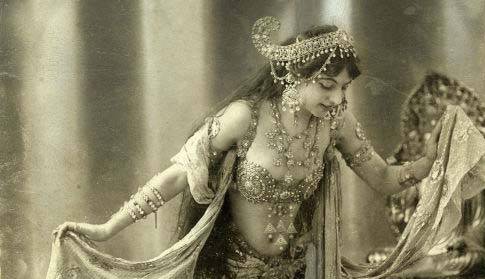
As I joined the party, the mistress of the Maharaja of Ranchipur, a woman so beautiful she could stop any red-blooded Englishman's heart at twenty paces, was dancing for her many admirers, Above us, the night sky was a mass of stars, while the moon bathed the faces of the partygoers with its eerie light. Some of my fellows had gone to enormous lengths with their attire - eastern potentates and caftan-wearing colonial officers, their faces flushed with wine and excitement - seeming to outnumber those in more modest Bedouin costume, purchased from the bazaars of Aden. Some of the younger memsahibs had entered into the spirit of the occasion, with gaily adorned sandals and saris, while the older ladies looked on with something approaching disapproval - as the mistress of the Maharaja of Ranchipur, continued to mesmerise their intoxicated men-folk. The stewards had scurried around all day, wrapping tables in bright pink cloths and piling fruits- figs, mangoes, paw-paw and sweetmeats - and Turkish Delights on the tables. The sailors had hung coloured lights along the ship's side rails, and what was normally the first class sports deck, had been magically transformed into a sultan's tent. It was well past midnight when I went down to my cabin, sleeping soundly beneath the whirring fan.
1,660 nautical miles from Aden to Bombay according to the second officer's track chart. I watched as he moved the little red drawing pin to our noon position. Satisfied with his work, he turned to me and smiled.
"Did you enjoy the party? Some of the passengers were a little the worse for wear this morning."
I assured him that it had been a great success and that all concerned with its arrangements had done sterling work. "In the best traditions of the P&O." Out of the corner of my eye, I could not help but notice one of my table companions, the daughter of the tea-planter from Assam, coming unsteadily down the stairs. Pale-faced from lack of sleep and air, she sank into a deck chair, closed her eyes, interlaced her fingers, and fell asleep. The second officer winked at me, knowingly, and made his way back to the bridge. I remembered dancing, somewhat enthusiastically, with the young lady in question, during the ladies' excuse me, only to have her leave my embrace for that of a much younger man, who was wearing a bright orange caftan and Bedouin sandals with turned up toes. Then it dawned on me - of course it had been him - the ship's second officer. Well, I never, I muttered to myself, as I took a brisk stroll around the promenade deck. Whatever would Sunita think of me?.....
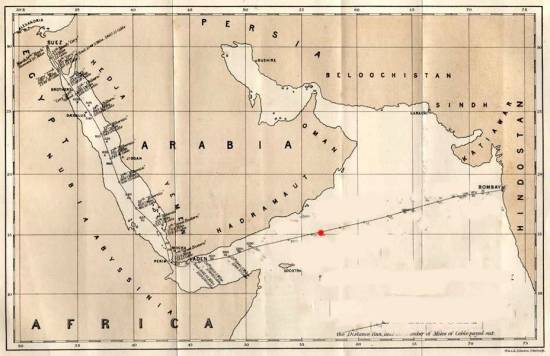
Bombay morning....
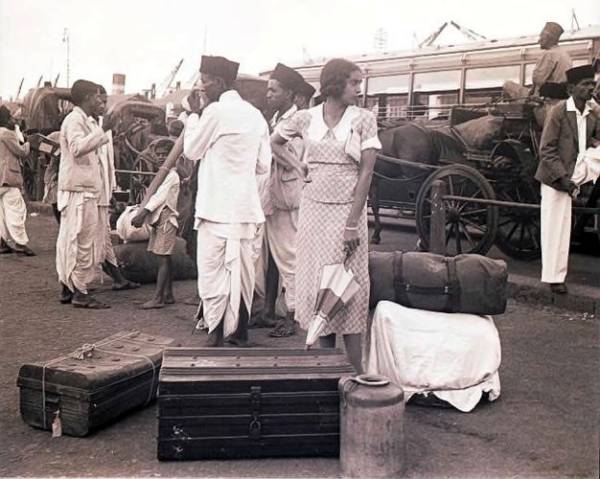
With tugs fast fore and aft, we were gently nudged into our berth on Ballard Pier, where a throng excitedly awaited our arrival.
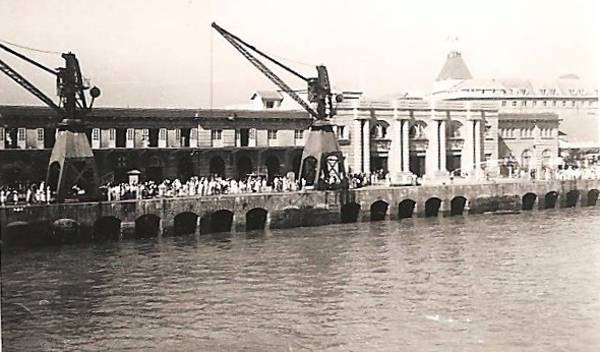
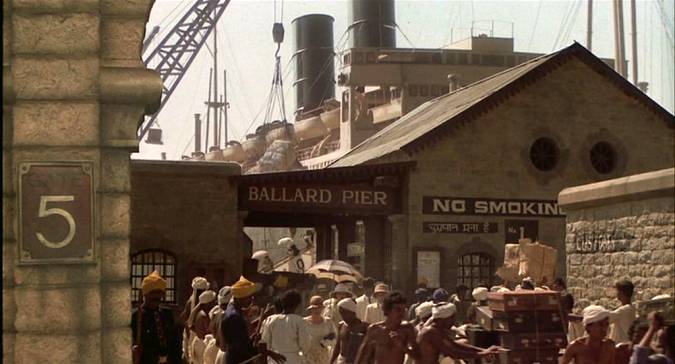
Image from the movie, A Passage to India 1984
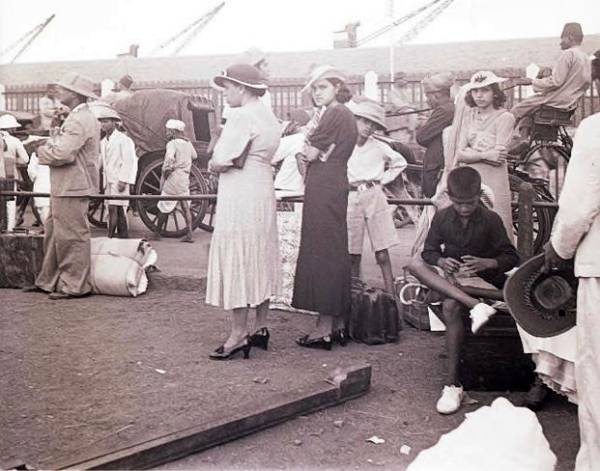
My heart leapt with pure joy when I spotted my lovely Sunita amongst the welcoming throng - refined and elegant, she was all smiles as she caught sight of me, waving like mad from the gangway. Strong-willed, as are all her namesakes - courageous, courteous and trustworthy. Sunita is the love of my life, and embracing her, I feel I have really come home again.
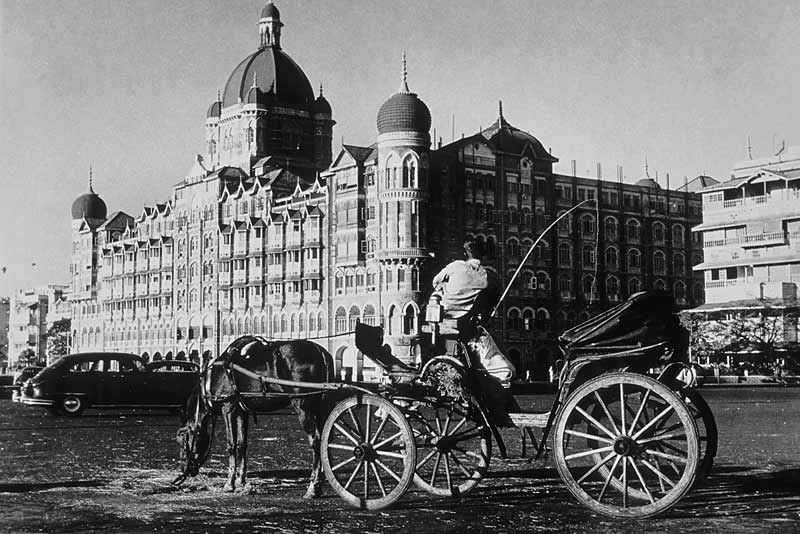
With the sun well over the yardarm, it was time for tiffin at the Taj, where our comfortable suite overlooked the Gateway to India and the waterfront. Sunita had made the reservation herself, knowing that 206 was my favourite room. Later that afternoon, we strolled, arm-in-arm, along the Apollo Bandar, and through the mighty arch of the Gateway. Completed in late 1924, its basalt arch commemorates the arrival of King George V and Queen Mary, who took passage in P&O's, beautiful RMS Medina, for the Delhi Durbar in 1911, the year the foundation stone was laid. For many, it was the first glimpse they had of India, known to many travellers as the 'Taj mahal of Bombay'.
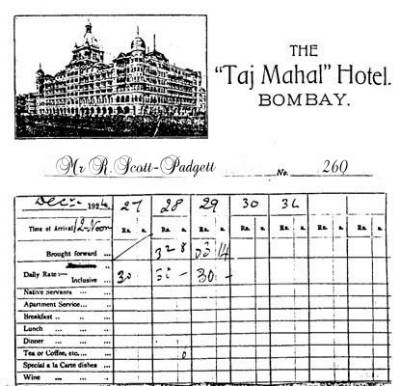
Please Note: Rupert Scott-Padgett is an entirely fictitious character, of my own creation - but my references to Captain. Frederick Sudell, FRGS, RD, RNR are factual, and drawn from the archives of the Adelaide Mail Newspaper.
"For the P & O way of life as described here is gone for ever. It was a very special way of life, as different from that aboard the 'Western Ocean' ferries as can well be imagined - stiff perhaps, but leisurely and hot, with exotic ports of call and exotic curries on the menu - and what curries! - and Indian crews and tropic nights and louvred doors." Peter Padfield - Under The House Flag of the P&O

No comments:
Post a Comment